


When starting to pay attention to what the audience thinks of your brand online, you might become overwhelmed by some commonly used terms, such as brand mentions, PR mentions, brand references, company mentions, social mentions, brand tagging, online mentions, influencer callouts, press mentions, and so on.
Believe it or not, more than 35 synonyms or words with similar meanings are used to describe whenever someone mentions your brand online. No wonder you’re confused!
However you call them, brand mentions have been gaining traction lately because of Google’s algorithm changes and the rise of generative search engines like Perplexity, ChatGPT, the latest Chinese DeepSeek, and Alibaba’s Queen.
All these new search engines check your brand reputation online before they recommend your brand to users. What does it mean?
Figuratively speaking, it means that every time someone mentions your brand with positive connotations, your brand gets one plus in the eye of AI search engines. Whenever someone places a negative comment about your brand, you get a minus in the AI calculations, and if you don’t answer the negative comment, you get a minus two.
The problem is the negative mentions, which can easily escalate and damage your reputation along with leaving your brand out of any search engine results. That’s why you need to pay close attention to what people are saying about your brand on social media, forums, and within reviews.
And that’s why we’re explaining here what brand mentions are, why brand monitoring is important, how that affects SEO, and how to track your brand mentions like a pro.
Table of Contents
What is a Brand Mention?
A brand mention is when a brand’s name, product, or service is referenced in online content, such as social media posts, blog articles, forums, news websites, or reviews.

These mentions can be direct (explicitly stating the brand name) or indirect (referring to the brand without naming it outright, like mentioning a product feature or slogan).
So, based on where these mentions occur, we can differentiate five different types of mentions:
1. Social Media Mentions
Everyone is on social and every brand wants to know what customers are talking about. That’s how it should be because your target audience is out there reading what other people say about you.
And not only them…
Social mentions might influence your Google ranking and ChatGPT recommendation. You see, they are all ears — listening to what people have to say about your brand. Based on that, the (AI) search engines conclude if your brand is worth mentioning in recommendations or placing on the first page of search results.
So, when users talk about a brand on platforms like X, LinkedIn, Bluesky, Instagram, or any other, that’s a social mention.
2. PR Mentions
On the other hand, when media outlets, bloggers, or industry experts write or talk in a podcast about a brand, that’s PR mentions.
How does it differentiate from social mentions? Well, the most important thing is that news or blog mentions have more credibility (because they are well-researched and an expert is behind those mentions); therefore, your target audience and search engines will probably give more value to that type of brand mention.
The second difference is that for most brands, social mentions have a higher volume than media mentions.
3. Forum & Community Mentions
Now, there’s one more informal type of mention: when people discuss a brand on platforms like Reddit, Quora, or niche communities. If that’s the case, then we talk about forums and community mentions.
These are very important and you should monitor brand mentions in these channels because your potential customers check on forums or communities about the brands they are interested in. They might ask a question about what tool or product others would recommend in niche discussions, and that’s where your brand might pop up in a positive or negative mention.
Another important fact is that Google and Reddit have extended their partnership since February 22nd, 2024.
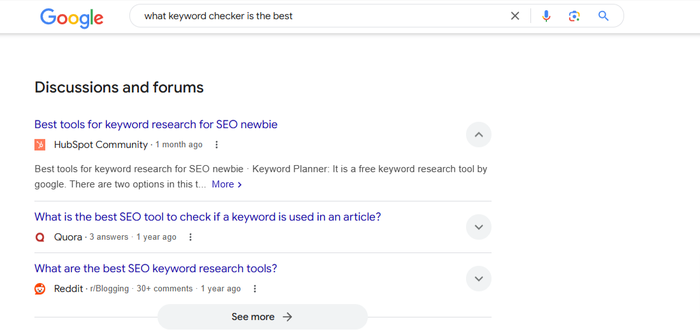
You probably noticed that whatever query you type into the Google search bar, at least one of the results on the first page will be from Reddit. If not there, then definitely in Discussion and Forums.
4. Reviews
We all love to check reviews, and they might impact your ranking big time. Reviews are basically mentions made by your customers. They can leave reviews on:
- eCommerce marketplaces such as Amazon, Etsy, eBay
- Reviewing platforms such as TrustPilot, G2, Google Review, Capterra, Yelp, etc.
- Social media such as Facebook Recommendations & Reviews
- App Stores & SaaS reviewing platforms such as Google Play, Apple App Store, GetApp, Software Advice, etc.
- Industry-specific review platforms, such as TripAdvisor for travel and hotels or Uber Eats for restaurants.
You’ll get the full picture of the importance of these mentions when we tell you that 75% of consumers always read reviews before purchasing, and 93% of them expect brands to answer their reviews.
5. Comparisons
This happens when both you and your competitor (one or more) are mentioned in comparisons, reviews, discussions, or industry reports. These mentions can help you understand market positioning, customer sentiment, and opportunities for differentiation.
Here’s why it matters: Customers love to compare — whether it’s features, pricing, durability, or overall value. These comparison mentions play a crucial role, not just in AI search engine visibility but also in influencing purchase decisions.
The challenge? You often have no control over them.
If you run a SaaS business or sell equipment, gadgets, or any kind of machinery, chances are your potential customers are checking these comparison sites before making a decision.
Now, these comparisons could be everywhere online, from articles and blog posts to social media or forum discussions, tools that provide feature comparisons, and YouTube and TikTok reviews.
Why You Should Monitor Your Brand Mentions
As you can see, all types of mentions are very important from the marketing perspective.
That’s why you need to track them through brand monitoring tools to find out when these mentions happen.
You can easily turn them into backlinks or use them for UGC campaigns. Or you can promptly react to mentions that have a negative sentiment.
But let’s go through the reasons for monitoring your brand mentions one by one.
1. To Safeguard Your Brand Reputation
Remember, even the most well-established brands have crises. The only difference between those popular brands and those just entering the marketing field is that the first ones are well prepared for any unpredictable situation that might occur.
So, you’ve probably got it by now that tracking brand mentions is fundamental for crisis management. You can easily spot negative mentions and comments and act promptly to avoid escalation.
This has a dual effect — it calms the tensions and enables the smooth implementation of reputation marketing.
Crises can bring down even the most shiny star, but if handled correctly, it might give a boost to your brand.
2. To Measure Your Brand Awareness
If you’re struggling to measure your brand awareness, tracking brand mentions can give you the insights you need.
You can analyze how much your brand visibility grew, assess the overall sentiment (whether mentions are positive, negative, or neutral), and see how your brand compares with competitors in online discussions.
One key metric for this is Share of Voice. It helps you determine what percentage of the conversation your brand occupies compared to your competitors. The more your brand is mentioned, the greater your influence in your industry.
3. To Improve Your Rankings on Google & AI Search Engines
Whispers or shootouts, Google hears them all! Yes, that’s how it is today. After a long period where social networks were just for collecting leads and keeping your community together, with the new AI search optimization techniques, mentions got a special place in overall ranking criteria.
While Google is tightly bonded with Reddit, ChatGPT seems to check reviews before recommending your brand.
That’s why you need to track brand mentions and jump in whenever you see some negative emotions rising up around your brand. Your online reputation might be the stumbling stone for your Google rankings and recommendations from other search engines.
Do Brand Mentions help SEO?
Yes! Brand mentions — whether linked or unlinked — help SEO.
While backlinks are still valuable, search engines now consider brand signals as well. Consistent mentions across different platforms, even without links, contribute to your E-E-A-T (Experience, Expertise, Authority, and Trustworthiness), which improves your organic ranking.
Google and AI search engines analyze how frequently your brand appears in discussions, news articles, and social media to determine credibility. This means brand mentions can increase brand authority, drive organic traffic, and improve search rankings.
Keep an eye on your brand online, and don’t forget that your reviews need to be positive if you want to rank on ChatGPT search.
Track ALL Your Brand Mentions Everywhere Online
With Mentionlytics you can have the full picture of where your brand is mentioned online, from social media to the entire web, with or without being linked or tagged!
How to Track Brand Mentions in 5 Steps
Have you ever tried to track brand mentions manually? Probably not, and if so, you’ve discovered that it’s almost impossible to do right.
Too much scattered data. You need an army of marketing team members to collect and process all of them, and you still end up with a scattered puzzle.
Luckily, you don’t have to do it the hard way! Let’s explain how you can do it automatically and stress-free.
Step 1: Select a Reliable Brand Monitoring Tool
This first step might be the most challenging. Why? Because there are so many good tools on the market, it’s very difficult to find the one that fits your needs.
When choosing a brand mentions tracker, your specific needs should come first. But beyond that, reliability is key.
That’s why Mentionlytics provides four essential features every great brand monitoring tool should have:
- High-quality data – To get accurate analyses
- AI algorithms – Offer AI-powered analysis for sentiment and trends
- As many as possible data sources – Support multiple platforms (social media, news, blogs, forums, reviews)
- Great customer support – They are your saviors whenever you get stuck (and when starting, it’s not avoidable)
Step 2: Set Up Your Account
Once you’ve chosen your tool, setting up your account correctly is crucial. The key is tracking multiple variations of your brand name, including:
- Brand name (e.g., “Nike”)
- Misspellings (e.g., “Nkie,” “Nyke”)
- Hashtags (e.g., #NikeSneakers)
- Campaign names (e.g “Nike Just Do It”)
- Product names (e.g., “Air Jordan”)
- Competitor names (e.g., “Adidas” and “Reebok” — for competitive analysis)

Step 3: Gather All Your Brand Mentions Automatically
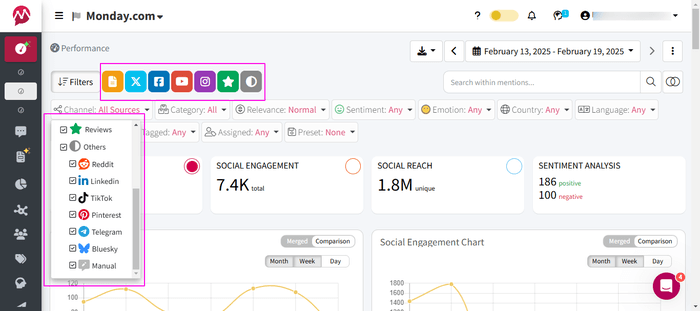
Gone are the days of manually searching for brand mentions! With an AI-powered tool, your brand mentions are collected automatically and accurately across multiple sources, including:
- Social media (X, Bluesky, LinkedIn, Instagram, Facebook, TikTok, etc.)
- Blogs & news sites
- Online forums (Reddit, Quora, niche communities)
- Review platforms (G2, TrustPilot, Capterra, Google Reviews)
Step 4: Analyze Them with AI
As the number of social media channels grew over time, it became impossible to analyze data manually. There’s no Excel sheet that can help you with that. That’s why we enhanced our software with AI features to make your life easier.
For example, we have several AI-powered features that make your job less stressful and more enjoyable.
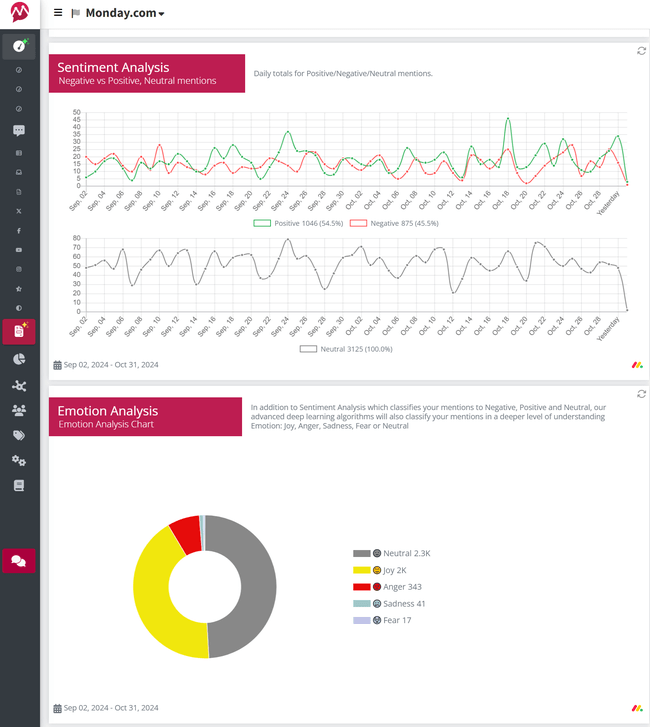
1. Sentiment Analysis — What does your audience feel? Are your customers satisfied with your products or services? What’s their biggest pain point related to your brand? Sentiment analysis allows you to understand their emotions and find out what they like, dislike, and expect from your brand. It’s a must-have feature for crisis management too.
2. Top Mentioners — Want to find the perfect influencer or perhaps advocates? This feature gives you insight into who is talking about your brand the most and how many people follow them, too.

Example of a Top Mentioners list for Monday.com, ranked by number of followers by Mentionlytics
3. AI Mention Clustering — All the hot topics are just a click away! You don’t have to go through anything; this feature does that for you. No matter the language or the source, it collects and clusters every hot topic around your brand!

4. SIA — AI Social Intelligence Advisor (SIA) provides you with actionable insights about your brand by analyzing your online presence through mentions across the web and social media to help you improve and stay competitive!

Step 5: Get Your Full Report
If you’re tracking brand awareness or measuring your impact on social media, reports are a must. They help you understand trends, assess sentiment, and compare your performance against competitors. Without them, you’re making decisions in the dark instead of using data to guide your next move.
But imagine having to assemble them manually — sounds exhausting, right?
With ready-to-use templates, you can generate customizable and downloadable reports packed with insights using Mentionlytics. Perfect for every meeting and every team.
Let Data Speak to You the Way You Understand
Raw data means nothing if it doesn’t drive action. Turn mentions into insights, spot trends, and stay ahead of your competitors!
Track All Your Brand Mentions for Free
Who says there is no free lunch? There is, with Mentionlytics!
And we did it because we know how overwhelming it can be to step into something new. New terms, new tools, and that lingering question: “Do I really need all of this?” It’s a lot, but we’re here to make it easier.
We’ve shown you how to track brand mentions, but now it’s time for a first-hand experience!
We dare you to try Mentionlytics for free and see for yourself if it helps you capture, analyze, and use valuable insights from mentions of your brand.
Don’t just take our word for it — Experience the easiest brand mention tracking process!


