What do you do every time you want to find more information about a brand? You type the brand name into Google search, and ta-da! Their website pops up at the top of the result page — in most cases.
That means you have used one of their branded keywords to get the results you want. Branded keywords work as precise pointers into the direction of a brand, unraveling everything that’s associated with it.
Branded keywords have navigational intent.
This means they perform best in the middle part of the funnel when a lead already knows your brand and wants to learn more about your offerings or even purchase immediately.
That’s why the keywords of your brand have higher conversion rates than non-branded ones with informational or even commercial intent.
So, you should invest in your branded keyphrases, if increasing your sales is your ultimate goal. Alternatively, your competitors can take advantage of it.
In this article, we’ll help you clarify what branded keywords are in essence, why they’re important, and how you can track them easily.
Table of Contents
What are Branded Keywords?
Branded keywords are phrases containing your brand name or product/service name that people use on search engines and social media to search for your brand and offerings.
For example, “Mentionlytics login” is one of our branded keyphrases.
However, branded keywords aren’t always a priority for SEOs and digital marketers.
That’s because they work in the middle part of the funnel when a lead is moving from the Interest down to the Action stage of the AIDA model.
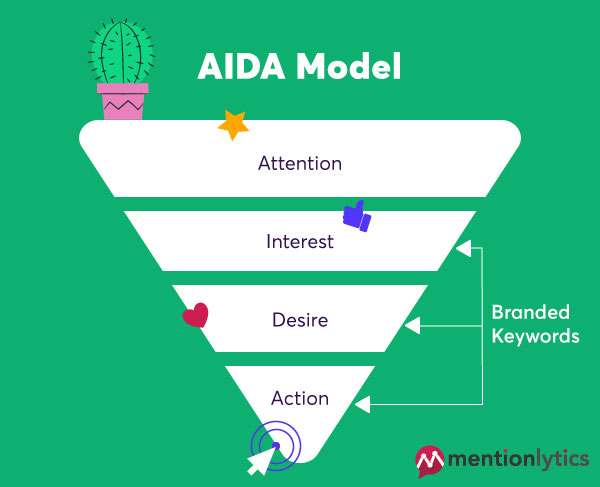
But that’s a mistake as nothing guarantees that you’ll rank first in your branded queries.
In fact, it’s possible for your competitors to rank higher than you if they have optimized their websites or have dedicated search ads for your branded keywords.
So, that way they essentially try to steal your potential customers!
And with 54% of consumers placing search engines as the top source of pre-purchase information, you can’t let your competitors rank higher for your branded queries.
Branded VS. Non-Branded Keywords
Let’s make things clear. Non-branded keywords are literally every search term or phrase that doesn’t include your brand name or your product or service special names.
Non-branded keywords are generic phrases.
For instance, take a look at some branded queries versus their non-branded ones:
“Netflix action movies” VS “action movies”
“How to take care of UGG boots” VS “How to take care of boots”
“Big Mac ingredients” VS “burger ingredients”
Besides containing your brand or product name, branded keywords differ from non-branded ones as they aim for different actions from your audience.
Usually, optimizing your content for non-branded keywords intends to increase brand awareness or generate new leads.
That’s because people use non-branded keywords to search for general information — like how to do something. Or to see what’s available in the market for specific products or services they need.
On the other hand, people use branded queries when they want to explore a specific brand in more detail.
And when does this happen? Mostly when a potential customer is considering buying from your brand or comparing it with the competition to see what’s worth best.
Now that we’ve defined which keywords are branded and which are not, let’s dive deeper into categories of branded ones.
Types of Branded Keywords
There are several branded keyword types. Below, we’ve categorized them into four major groups.

Type 1: Brand name
First of all, your brand name is one of your branded keyphrases.
For example, when you search for Microsoft, Gucci, Sephora, and any other brand using only its brand name in your search, then you use a branded keyword.
Type 2: Product name
Maybe, you’re wondering now why in the examples in the previous section “Big Mac ingredients” is a branded keyword, although it doesn’t contain the word “McDonald’s”.
Well, that falls into the category of branded keywords based on specific brand products. We mean, products that are associated with the business that creates them.
In our example, Big Mac is a registered trademark of McDonald’s company for their burger product line, so that’s why.
Also, the same goes with other branded keywords examples like the Frappuccino of Starbucks, Siri of Apple, and many more.
Nonetheless, generic product names don’t fall into this category.
For example, if someone types “running shoes” and you work for Adidas, that’s not a branded query for your brand. Although Adidas might rank high in the search engine results for this non-branded query.
But if someone searches for “Adidas running shoes”, then that is a branded query, because the user is specifically searching for your brand’s running shoes.
Actually, this belongs to the next branded keyword type.
Type 3: Brand long-tail keywords
Brand long-tail keywords are phrases that users type not only your brand name but also something particular.
For example, “Burger King restaurant near me” or “Guinness alcohol free beer”.
Type 4: Brand variations
Brand name variations or misspellings are another important branded keyword type you should take into consideration.
We talk about typos, like “Nik” instead of “Nike”, extra spaces like “Kit Kat” and common misconceptions like “Kit-Kat” instead of “KitKat”.
So, keep this categorization in mind when you track the keywords of your brand. It’ll help you craft a comprehensive branded keyword strategy to optimize your content.
But if you aren’t already convinced you should do so, scroll down!
Why Should You Keep Track of Branded Keywords?
Tracking what branded queries your audience uses to search for your brand tells you a lot about your brand associations, your reputation, and even potential common issues that arise often.
There are hundreds of reasons why you should track your brand’s keywords. Below, we analyze the main ones.
To Assess Brand Awareness
A critical brand awareness metric is the search volume of your branded phrases. That indicates how many brand searches have been made during a specific time frame from your potential and existing customers.
It’s as simple as this: A high search volume of your branded keyphrases points out a high score in brand awareness as more and more people are getting familiar with your brand and want to know more about it.
Furthermore, the volume of your brand mentions is also an important indicator of your brand awareness.
As we said, your brand name is a powerful branded keyword, so the more people use it in their social posts the more your brand’s visibility and reach increase.
To Manage and Control Reputation
By tracking your branded keyphrases on the web and social media, you can make sure you stay updated with the conversations around your brand.
For instance, if people tweet about your brand — even without tagging it — asking for a refund, you can detect what’s the issue and reply to avoid damage to your reputation.
That’s how you solve a problem before escalating into a PR crisis and maintain your brand health.
To Gain Insights into Customer Intent and Behavior
Branded queries can show you what your audience expects or thinks about your business. Especially, when they use long-tail keywords, containing more than just your brand name.
For example, if you worked at Nike and saw a spike in searches for “nike dunk low size 40”, then you can conclude that this particular shoe model is trending as more customers want to buy it. After all, the purpose of the user doing this search is to find and buy a Nike Dunk Low in their size.
On the other hand, if you worked at Meta and saw a sudden spike in searches for “Is Instagram down right now?” that means something happened to your product and you’d need to inform your team immediately.
Then, you should have taken action to ensure your users that you’re working towards fixing the issue.
To Improve SEO and Search Rankings
It’s a common tactic of brands operating in very competitive markets to run search ads for the branded keywords of their opponents, like “[competitor name] pricing”. That way, Google presents the competitive landing pages first to the user.
By bidding on branded keywords you can place your website at the top of Google search results and stop your competitors from stealing your customers.
Also, this tactic is implemented even for organic results. So, you have to optimize your content for your branded keyphrases to achieve a higher ranking on SERP.
That’s also applicable to ranking higher in social search engine results when users search for your brand on social media.
To Conduct a Competitive Analysis
Monitoring the keywords of your brand and your competitors’ brands via a social media tracker can give you insights into how you stand in the market, by measuring your Share of Voice.
Share of Voice is the definitive KPI showing you how your brand is doing against your competitors online.
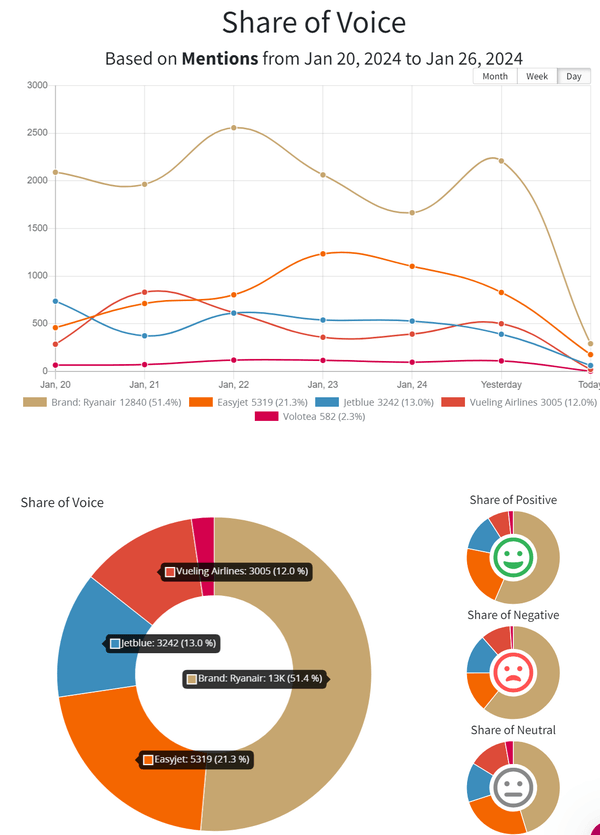
Pro Tip: By monitoring your branded keyphrases and your competitors through a social media tracker, like Mentionlytics, you can calculate your Share of Voice automatically.
In addition, by doing a Google search using your competitors’ branded keywords you can stay up-to-date with what search ads they’re currently running. And see what people want to know about them in the Google “People also ask” box.
To Measure the Performance of Marketing Campaigns
By tracking the search volume of your branded queries before and after an awareness campaign you get to understand how it has helped in increasing the number of people that are familiar with and want to know more about your brand.
Also, if your number of brand mentions on social media has increased as well, that means more brand awareness too. It’s a direct reflection of your campaign’s reach and impact.
To sum up, you see that the reasons for tracking branded keywords are of the essence for the well-being of your brand. Now, let’s cut to the chase and analyze how you can do it.
How to Track Branded Keywords?
All you need to start tracking your branded keyphrases across the web is a social listening tool and an SEO tool. Let’s see how you can use them both.
Branded Keywords on Social Media
You know, you can’t see the whole picture of your brand mentions on social media via your notifications box.
When a user just types a branded keyword — e.g. your brand name — without tagging your brand, this mention flies under your radar. The same happens with your branded hashtags — no notification either.
For example, see below a tweet mentioning Klarna without tagging the brand. That means Klarna’s team got no notification for that.
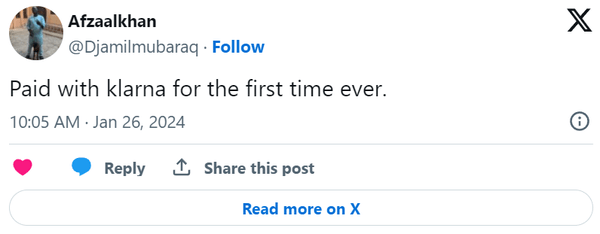
However, with a social listening tool, you can add all your branded keywords and hashtags as terms to monitor, so you see their actual performance on social media.
For instance, with our tool, you can set up as trackers any branded keywords you want to see their mentions. That means you can track your brand and your competitors through the same tool!
Our platform will be showing you the reach and engagement metrics of each of your trackers’ mentions, along with their sentiment analysis, top mentioners, and other keyphrases or hashtags that have been included in these mentions.
That’s the easiest way of tracking your branded keywords across social media and staying in the loop of what’s being said about your brand and competitors there.
Branded Keywords on the Web
To track your branded queries on the web you have to use a paid or free SEO tool. In the next section of this article, we have a couple to recommend to you.
Now, once you’ve chosen your tool, the first step is to identify branded keyphrases. Except for your brand name, brand product names, and variations, you can find your long-tail branded keyphrases through Google’s autocomplete search bar and Google’s “People also ask” box. These tools can help you big time with your keyword research.

Also, some SEO tools can provide you with your branded keyphrases once you add your brand name.
After creating your list, input these keywords into the SEO tool’s tracking feature.
The tool then provides valuable data such as search volume, ranking positions, and changes over time. This data is crucial as it shows how visible your brand is in search results and helps identify trends or shifts in your audience’s interest.
Furthermore, most SEO tools offer competitive analysis features. Use this to compare your branded keyphrases’ performance against your competitors.
This comparison can reveal strengths and opportunities for improvement in your digital strategy.
Now, before you leave, we have some tools that can come in handy for tracking your branded keywords. Keep reading!
Tools for Tracking Branded Keywords
1. Mentionlytics
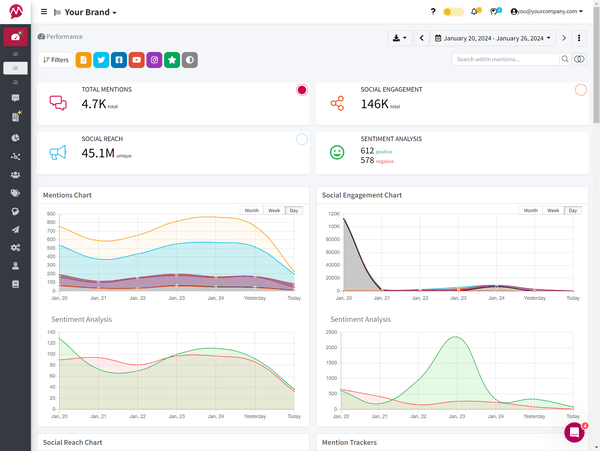
First of all, Mentionlytics is the most effective tool you can use to keep track of your branded keywords on social media.
You can create trackers for all your branded keyphrases, like brand name, product name, competitors’ names, and even long-tail phrases you want to monitor and the platform will do the rest for you.
Our platform will scan all social media and the web for mentions of your branded keywords and bring back data insights.
Through this tool you’ll be able to see the volume of your branded keyword mentions to give you a hint of your brand awareness.
Additionally, you can see their reach and engagement rates, and their sentiment analysis to understand if your brand’s keywords are being mentioned in positive or negative contexts.
You can also have detailed reports ready for all your branded keywords through its powerful reporting feature.
What’s more, if you add your competitors’ branded keywords, our platform can automatically calculate your Share of Voice and help you see where you stand in the market.
Plus, you can compare your past and current Share of Voice to see its evolution and the real impact of your marketing and PR campaigns.
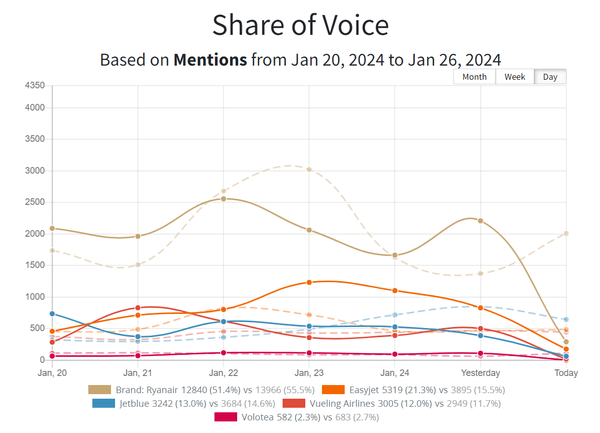
So, this is the all-in-one solution for tracking your brand’s keywords and staying ahead of the competition.
2. Google Search Console
Google Search Console is a great free SEO tool you can leverage to track your branded keyphrases on web results.
First, ensure your website is verified with Google Search Console.
Once set up, navigate to the Performance section. Here, you’ll see data on queries that bring users to your site. Filter these queries to focus on your branded keywords.
Google Search Console shows how often your brand’s keywords are searched and the click-through rate.
By regularly checking these metrics, you get a clear picture of how and how often your audience is finding you through your brand-related searches.
It’s a great way to monitor your brand’s health and understand the impact of your SEO and marketing efforts.
3. Sprout Social
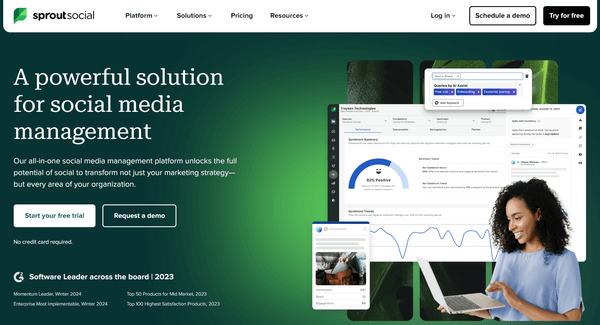
Sprout Social is a popular social media monitoring tool that marketers use to keep track of their brand mentions — and branded keywords — across various social media.
The platform’s detailed analytics provide deep insights into audience sentiment and engagement.
Sprout Social also helps identify key influencers and brand advocates. This is vital for strategic partnerships and marketing.
Additionally, its user-friendly interface makes managing your brand’s social presence easy and efficient. By using Sprout Social, users can stay on top of their brand reputation and gain valuable feedback for growth.
4. Determ
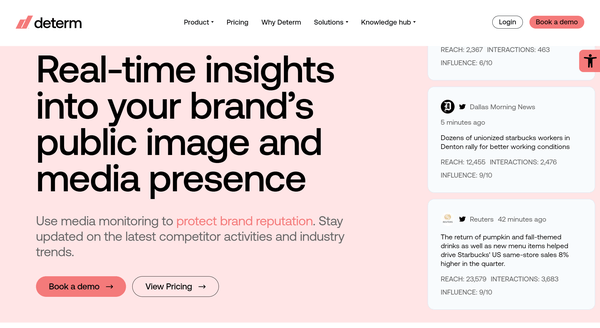
Determ is an alternative social listening tool that helps users keep track of their brand mentions with accuracy.
Determ specializes in real-time monitoring, ensuring immediate awareness of brand discussions.
The platform’s powerful analytics dig deep into the context and sentiment of mentions. This provides a nuanced understanding of public perception.
Determ also offers comprehensive coverage, scanning a wide range of online sources.
Additionally, Determ’s data visualization makes interpreting complex data straightforward. For businesses focused on maintaining a strong brand image, Determ is an invaluable tool.
5. SEMrush
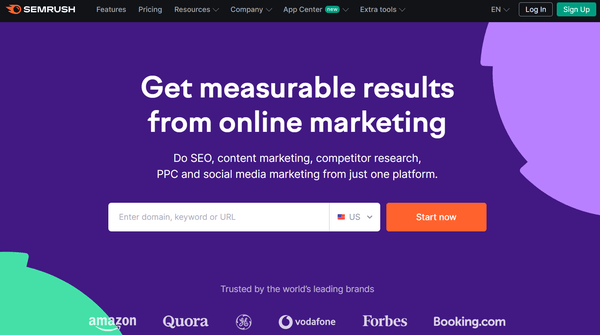
SEMrush is a robust SEO tool users prefer for its powerful tracking capabilities, making it ideal for keeping a close eye on your branded keyphrases’ performance on the web.
It offers detailed insights into not just search volume and rankings, but also competitors’ keyword strategies, allowing you to benchmark and strategize effectively.
The tool’s intuitive interface simplifies the tracking process, even for those new to SEO.
Additionally, SEMrush provides useful features like position tracking that make it an invaluable asset for businesses keen on maintaining a strong and data-driven keyword strategy in the digital space.
Start Tracking Your Branded Keywords Now
The time has come for you to begin tracking branded keywords and optimize your content and ads accordingly.
Mentionlytics can help you gather all your brand mentions and analyze them to get insights out of the noise. Get started today for free.