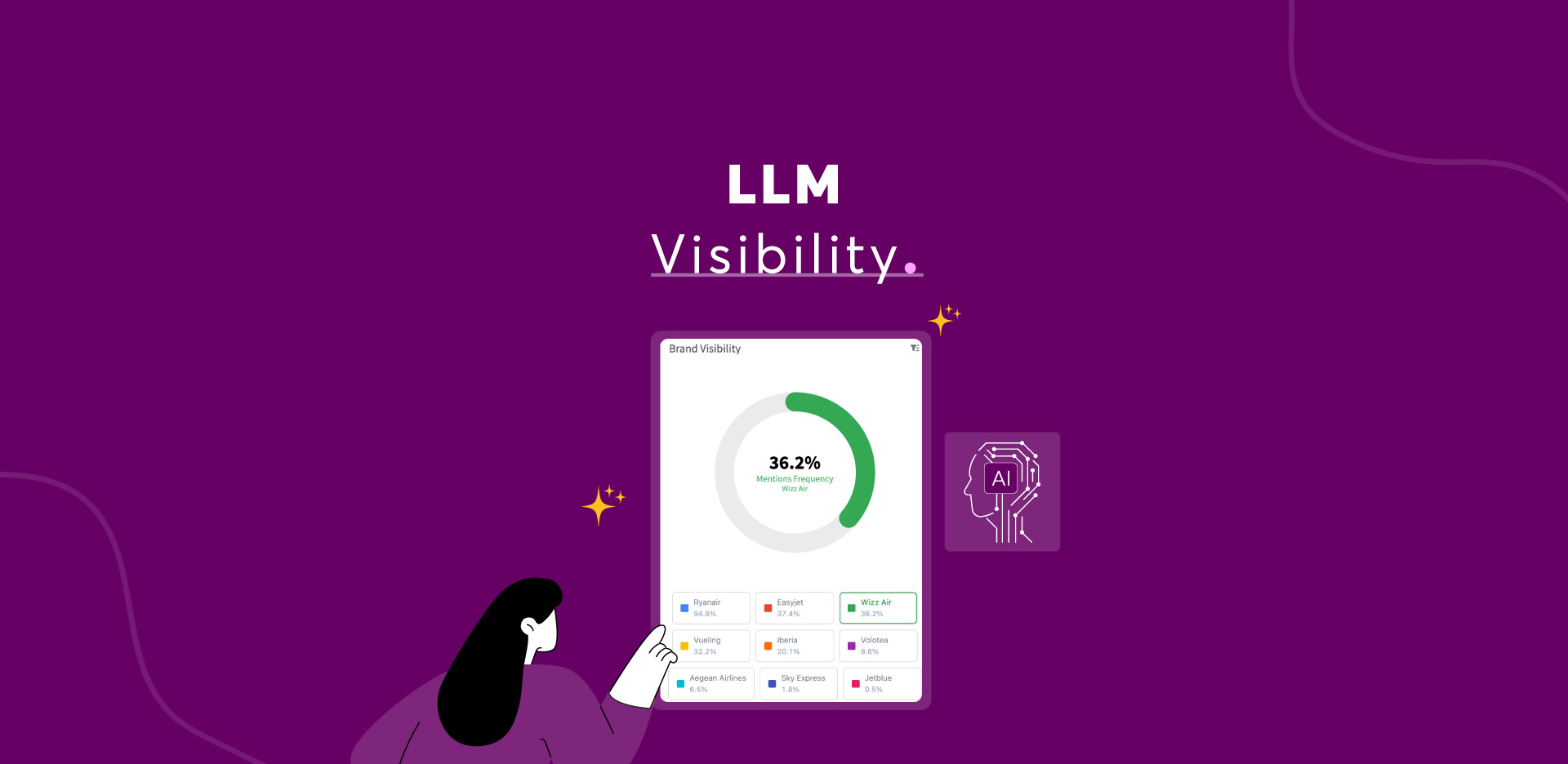
LLM visibility measures how often and accurately your brand appears in AI answers, now essential due to zero-click traffic loss. And no wonder it's become a hot topic on Reddit, LinkedIn, and in industry conversations.
An AI visibility report turns raw monitoring data into a clear picture of how prominently and accurately your brand appears in AI-generated answers. It helps teams measure performance, identify visibility gaps, and decide what to improve next.
When someone asks ChatGPT, Gemini, or Perplexity to recommend a product, compare tools, or explain a topic, some brands pop up in the AI answer. Those appearances are AI brand mentions and refer to the references of your brand in AI-generated recommendations, comparisons, summaries, and conversational responses.
AI Share of Voice (AI SoV) measures how often your brand appears in AI-generated recommendations, answers, and citations compared with competitors.
Answer Engine Optimization (AEO) is the thin line that connects content writing and SEO, and it all started with Google enriching SERPs with featured snippets in 2014, long before AI Mode even existed.
Although Generative Engine Optimization is a relatively new term, we can already see some shifts in GEO trends. For example, at first, Wikipedia was the main source for some LLMs (like ChatGPT), but as they added search options, the range of sources they use expanded.
Everywhere you look, there's a new Generative Engine Optimization (GEO) tip lurking around the corner. And if you're a beginner in all this AI optimization stuff, you'll probably feel overwhelmed.
All brands want to show up in AI search engines, but it's a long way to find generative engine optimization (GEO) best practices that make sense. And with all the insights flooding SEO newsletters and social media, it might be challenging to cut through the noise and find out what truly works and what doesn't.
AI brand visibility is still new, and we're all just testing the water out there, trying different tactics and strategies, hoping some will work. That's why we're going to dig a bit deeper in this article and find out the best functional strategies.
AI sentiment analysis refers to the use of artificial intelligence technologies, especially natural language processing (NLP), to identify, extract, quantify, and study affective states and subjective information from text.