


Are you checking up on your competitors? What are they doing and how are they perceived by the audience and their customers? Competitive monitoring is the first step of your competitor analysis.
It gives you a holistic overview of your competitors, including their social media strategy, customer complaints, overall reputation, and even synergies with other brands and organizations.
You can peek into their world, learn their strengths and weaknesses, and compare your brand to your competitors’. This information can help you grow your business and stay ahead of the competition.
But are you satisfied with the data you get from your analysis tools? If you feel some pieces of information are lacking, it’s time to improve that process.
In this article, we’re going to discover why competitor monitoring is so important, what to check, and the tools to use. We’ll show you five must-know tips that can help you monitor your competitors and get the most valuable information you need.
Table of Contents
What is Competitive Monitoring?
Competitive monitoring is an ongoing process of tracking and analyzing your competitors to understand how your brand stacks up across key areas like brand awareness, marketing strategies, market positioning, user satisfaction with the product or service, pricing, and partnerships.
Based on the data you get from competitor analysis, you can make informed decisions, adjust your strategies, and strengthen your position.
Why Competition Monitoring is Vital for Your Business
No man is an island, and no business can thrive without feeling the pulse of the market. And one of the best ways to do that is through competitive analysis.
Here are the three most important reasons you should do competitor monitoring.
To Identify Opportunities and Threats
When you monitor competitors, you’re not just watching them — you’re scanning the horizon. Maybe they’re missing something their audience is asking for… and that’s your cue to swoop in. Whether it’s an underserved niche, a pricing gap, or a weak campaign — they blink, you strike.
Monitoring competitors can reveal untapped market segments, emerging trends, and red flags before they affect your bottom line.
Whether a competitor neglects a specific customer group (hello, new audience!) or an unexpected newcomer is making waves, competitive intelligence gives you the early edge to act fast and smart.
Meh, if only Blockbuster hadn’t been blind to the shift in consumers’ preferences, where would it be now?
Back in the early 2000s, Netflix was still mailing DVDs, and Blockbuster was the king of video rentals. But while Blockbuster stuck to its store-based model, Netflix closely watched shifting consumer behavior and tech trends.
Netflix noticed the shift in users’ preferences and technological improvements. People started to get tired of late fees, and broadband internet was improving.
They used this insight to lean toward streaming even before it was cool.
Blockbuster ignored the threat, even passing on the chance to buy Netflix for $50M (ouch), and failed to adapt in time. Fast-forward a few years: Blockbuster went bankrupt, and Netflix became a global entertainment powerhouse.
To Better Position Your Brand
You can’t differentiate if you don’t know what you’re different from.
Competitive monitoring helps you understand how other brands in your space are positioning themselves — what they’re promising, how they speak, who they’re targeting, and where they underperform. That way, you can carve out a unique spot that actually resonates.
Maybe everyone’s talking features, and you double down on ease of use, or your competitors target enterprise, and you own the startup-friendly space.
Look at Airbnb, they did an extraordinary job. Instead of trying to compete head-to-head with hotel chains on price or luxury, Airbnb monitored the market and noticed something missing: Hotels all looked and felt the same, and travelers (especially younger ones) were craving more authentic, local experiences.
So, Airbnb didn’t just position itself as cheaper accommodation.
It positioned itself as:
“Belong anywhere.”
By focusing on connection, culture, and community, Airbnb created a category of its own — travel experiences, not just places to sleep.
Their brand messaging, UX, listings, and even their social content all leaned into this emotional positioning. Meanwhile, hotels were still touting thread counts and buffet breakfasts.
Check Airbnb’s description on LinkedIn below. See what we’re talking about?

Result?
Airbnb redefined the game and forced the entire hospitality industry to rethink how it markets itself.
To Benchmark Your Results
Internal KPIs are great, but what if your top-performing campaign is still trailing behind the industry average? Competitive benchmarking helps you assess your results not only based on your own goals but also on what’s happening in the market as a whole.
Competitive monitoring isn’t just about watching others — it’s about putting your own numbers into context. You can collect data to benchmark your brand’s performance against your competitors and evaluate how well you’re really doing.
Take Spotify, for example. They’ve long used competitor monitoring (especially Apple Music and Amazon Music) to benchmark features, pricing strategies, and regional growth.
When Apple launched spatial audio and Amazon followed with high-res audio for free, Spotify saw the shift and responded by teasing Spotify HiFi back in 2021 — not just to match the competition but to show users: “We hear you. And we’re still leading the way.”
What to Check When Monitoring Competitors
No matter which monitoring tool you’re using, the sheer volume of data can feel overwhelming, especially if you’re just starting out. There are countless areas to explore, and without a clear focus, it’s easy to get lost in the noise.
That’s why it’s best to have a predefined checklist and set everything right at the beginning.
Here are the key elements you should regularly monitor.

Online Brand Mentions
Track where and how your competitors are being mentioned online — across news outlets, blogs, social media, Reddit, and review sites. This helps you measure their visibility, reputation, and the buzz they’re generating through Share of Voice.
Tools to Use: You can use a brand monitoring tool like Mentionlytics, which covers a wide range of social networks and coverage.
Customer Reviews
Dive into competitor customer feedback on platforms like Trustpilot, G2, Google Reviews, or app stores. Look for recurring complaints or praise — these insights can highlight product weaknesses or strengths you can leverage.
Tools and Platforms to Use: You can check the reviews manually, by going through platforms one by one, or you can use a monitoring tool that covers reviewing platforms and the internet.
Check Your Competitors’ Reviews
Your next business move might be hiding in their 1-star reviews. Find it with Mentionlytics.
Social Media Performance
Social media competitor analysis gives you information on how often they post, the type of content they share, how audiences engage, and their sentiment. Compare likes, shares, follower growth, sentiment, and campaign trends to benchmark your own efforts.
Tools to Use: It is almost impossible to do that on foot. You need a social media monitoring tool for this purpose. Mentionlytics can also help you with that.
Website Changes
Monitor any updates to their homepage, landing pages, navigation, or messaging. Subtle design or copy shifts often signal deeper changes in strategy or target audience. Ask yourself why they are doing that.
Tools and Platforms to Use: Use tools like Visualping, Hexowatch, or Versionista to get alerts when changes happen. You can also use the Wayback Machine to see how pages looked before.
SEO Performance
Use SEO tools to see which keywords they rank for, what kind of content performs well, and how their backlink profile evolves. This helps you spot content gaps and stay competitive in search results.
Tools to Use: The two most popular tools are Ahrefs and Semrush, but you can choose whichever tool is suitable for your budget and your business needs.
Influencer Collaborations
Track partnerships with influencers, brand ambassadors, or affiliates. These collaborations reveal who the brand is targeting and how it builds trust with niche audiences.
Tools to Use: You can use Mentionlytics’ competitors monitoring feature, filter positive sentiment, and choose the engagement ordering for each social media platform to check your competitors’ top mentioners making an impact.
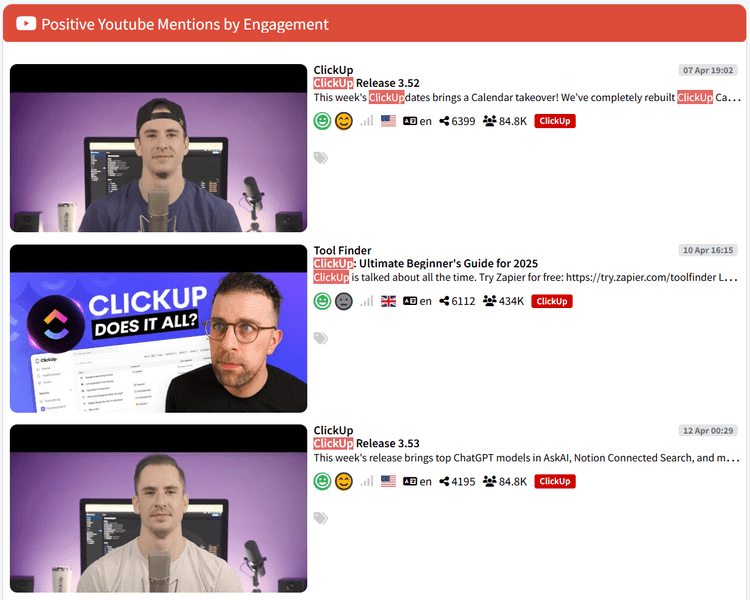
New Features or Product Releases
Keeping tabs on your competitor’s product and service updates and feature launches gives you a front-row seat to their innovation pipeline. These updates can reveal their priorities, target segments, and how fast they’re adapting to market trends.
Tools to Use: You can track new features and product releases by combining social monitoring tools like Mentionlytics to catch early online buzz and Google Alerts for launch-related keywords.
Pricing Strategies
Keep your eyes on price changes, discounts, free trial models, or premium tiers. Pricing tells a story about positioning, value perception, and customer segmentation.
Tools to Use: You can use Prisync or Competera for large enterprise brands, or do it manually through site or email tracking.
Key Personnel Changes
New C-level hires or sudden departures often signal shifts in direction or company culture. These moves can hint at upcoming changes in strategy, leadership focus, or internal turbulence.
Tools or Platforms to Use: LinkedIn is the go-to social media platform for tracking these changes.
Merges and Acquisitions
Whether it’s acquiring talent, tech, or a new market, M&A moves can disrupt your industry overnight. Stay alert — these actions often reshape the competitive landscape faster than you think.
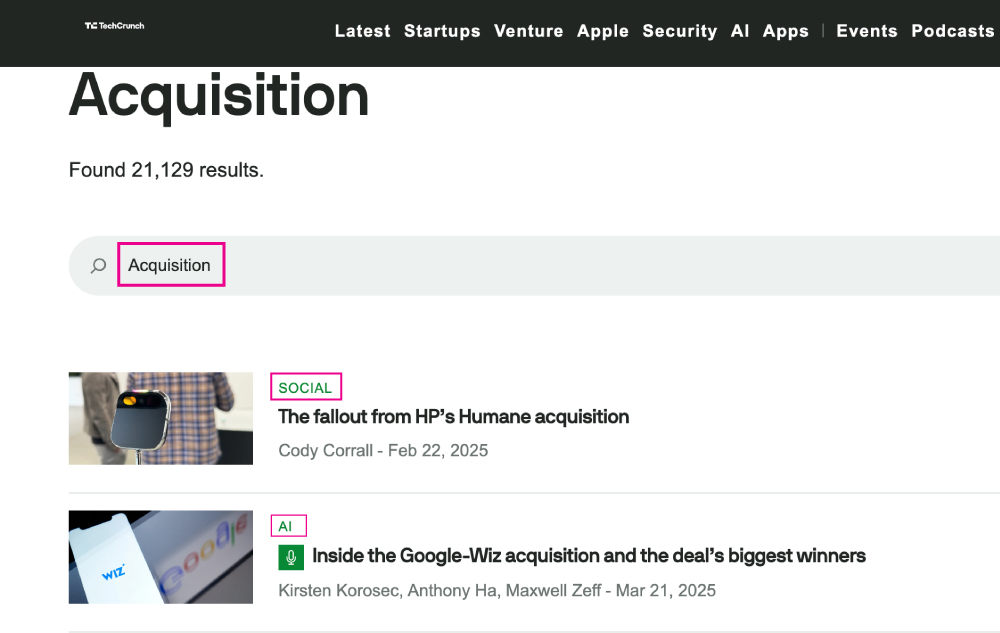
Platforms to Use: TechCrunch is the best platform for information about acquisitions and merges. For example, if you’re in the AI, cloud computing, or data infrastructure industry, the news about Nvidia completing the acquisition of AI infrastructure startup Run:AI will definitely be something to think about.
Pro-Level Additions
If you want to expand your analysis, you can add these three areas to track.
1. Ad Campaigns
Monitoring your competitors’ ad campaigns can reveal where they’re spending their budget, who they’re targeting, and which offers or messages they’re pushing hardest.
Tools and Platforms to Use: To get the information you need, you can use Meta Ad Library or Google Ads Transparency Center.
2. Email Marketing Tactics
Competitor emails can give away everything — from tone and visual style to timing and customer segmentation. Whether it’s a product announcement, a reactivation flow, or a pricing update, studying their email strategy helps you refine your own.
Tactic to Use: The best tactic to use is to subscribe to their newsletter and track the changes.
3. Financial Reports & Funding News (for Startups)
Funding rounds, investor news, and public financials can be full of insights. These updates help you anticipate market moves, assess scalability, and even uncover future acquisition or hiring pushes.
Tools and Platforms to Use: Most international companies publish annual reports, but for those who are not so transparent, websites like TechCrunch, AnnualReports, or CB Insights might help. And don’t forget that you can always use “Series A” or “funding” as a keyword related to your competitors within Mentionlytics, to get the results about funding buzz.
How to Monitor Competitor Activity Online
Let’s see what the competitive monitoring process looks like in practice.
Step 1: Identify Your Top Competitors
It’s impossible to monitor competitors if you don’t know who they really are.
(Spoiler alert: your competitors aren’t always who you think they are!)
Here’s a breakdown of how to find your true competitors:
1. Google Like Your Customers
Search for the exact phrases your ideal customers would use to find your product or service.
Example: If you’re a time-tracking SaaS, search things like “best time tracking software,” “tools for remote team productivity,” or “alternatives to Toggl.”
Check who consistently shows up in:
- Organic results
- Google Ads
- Review articles
- Comparison pages
2. Use Review & Comparison Sites
Sites like G2, TrustRadius, and AlternativeTo are goldmines. Just search your product or a major feature — these platforms will show:
- Direct competitors (same solution)
- Indirect competitors (same audience, different angle)
- Up-and-coming challengers
3. Ask Your Customers
Seriously — just ask: “Before choosing us, what other tools/brands were you considering?”
You’ll often hear names you didn’t even think of — especially niche tools or local alternatives.
4. Check Social Listening Tools
Use Mentionlytics to track conversations and brand mentions in your space. Who else is being talked about by your target audience and your niche? Who’s being praised or dragged?
5. Analyze Shared Keywords (SEO Tools)
SEO tools let you see what websites rank for the same keywords as you and what domains you’re bidding against in paid search.
Your List is Not Fixed
Remember not to overload yourself with a too-long list of competitors. You will get lost in it, and your competitor monitoring tool will not provide the most functional results (too much data!)
Keep your list up to five, and you’re going to do just fine.
The most important thing to note is that your list is not final. From time to time, you need to check if anything has changed within your niche and what newcomers have appeared.
Step 2: Choose a Competitor Analysis Tool
There are so many tools on the market. How to know which one is the best competitor analysis tool for you?
Perhaps the best way is to make it a few-step process.
1. Define What You Want to Track
Before you dive into tools, get clear on what you’re actually looking for.
Are you tracking visibility? Sentiment? Competitor content? Or all of the above?

2. Check Reviews & Real-World Use Cases
Just like with any other product or service, check the reviews. Go beyond the tool’s homepage. Check G2, Reddit, or YouTube walkthroughs. Look for reviews from companies like yours, by industry, size, or budget.
3. Test Before You Commit
Competitive monitoring tools take a significant portion of the budget, and it’s always the best option to take them for a spin before dropping $$$. Check dashboard usability, export options for reports, and how well it actually tracks your industry.
Tick All the Boxes With Mentionlytics
We’re here to help you decide. No commitment, no credit card — just a smooth, no-pressure test drive!
Step 3: Add Their Brand Name, Hashtags, and Keywords
Now that you know who your competitors are, and you’ve chosen the tool, it’s time to insert the keywords.
Start by adding their brand name, product names, campaign hashtags, and any industry-related keywords they’re associated with. This step is crucial for gathering real-time intel on what they’re doing, where they’re being mentioned, and how people are responding.
The good news?
In Mentionlytics, you can have a dedicated section just for competitor monitoring, so you can keep your tracking clean, organized, and separate from your brand’s monitoring. There is no overlap or confusion.
Step 4: Create a Competitive Monitoring Dashboard
Once your keywords are in, it’s time to bring everything to life with a competitor monitoring dashboard.
This is where insights come together — no digging, no spreadsheets. Just one click, and you’ve got a full view of what your selected competitors are up to.
For example, in Mentionlytics, you can create a custom, side-by-side comparison dashboard of your brand and competitors in all the areas that matter most:
Tracker Visualization: Trackers are keyword groups tied to specific brands or topics, visualized as circles. The bigger the circle, the more buzz (mentions) around that brand. Quickly see who’s dominating the conversation.

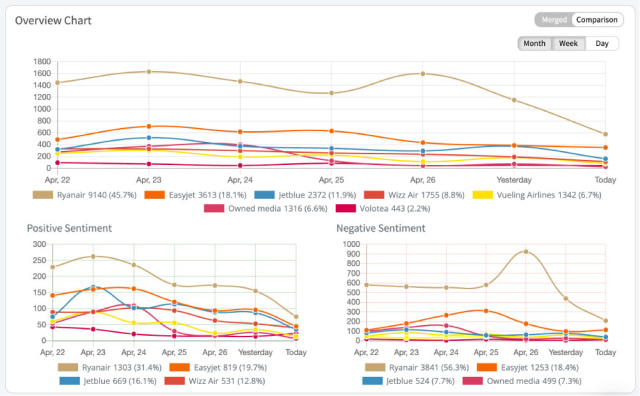
Overview Chart: Instant access to mentions volume, engagement, reach, and sentiment (positive, neutral, negative) across social media and the web. Spot sentiment trends and spikes, and investigate them further — your sales team might be interested in unsatisfied users of your competitors.
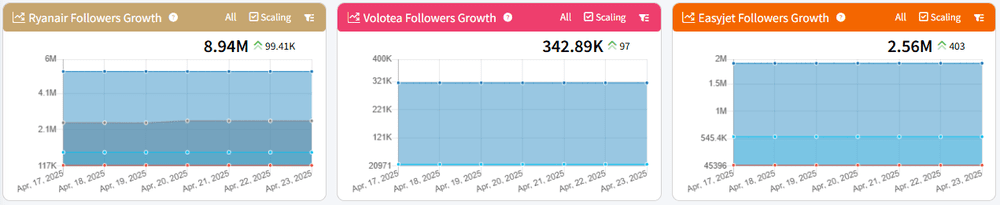
Followers Growth: Monitor and compare follower growth between your brand and competitors over time. If you see a sudden follower increase on your competitors, it may indicate they had a new campaign or a product launch, viral content, influencers’ mention, or something similar. Worth exploring.
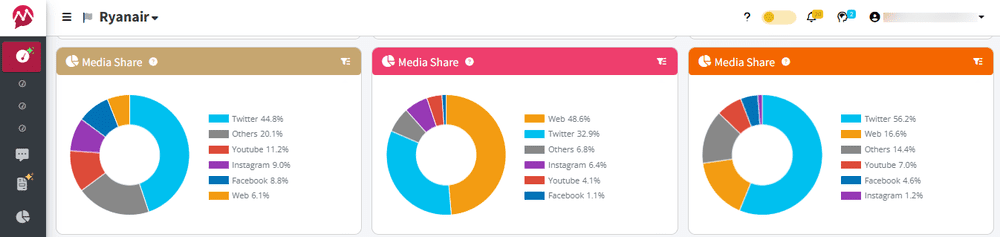
Media Share: See where your competitors are most active — and where their audience is engaging. These competitive insights show you the channels you may be missing.
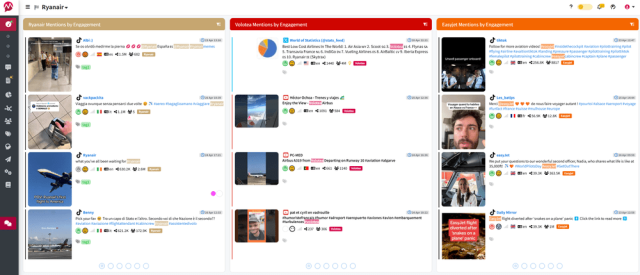
Mentions by Engagement: This segment is all about engagement. You can check the engagement structure of your competitors compared to yours. How many likes, comments, and shares do they have?

Or you can check the posts with the highest engagement for a specific social network. You can select any network you want, and filter results by sentiment, or order them by engagement, reach, or display the latest ones.
Step 5: Check it Regularly and Stay Informed
Tracking competitors is not a one-time job. Though you have your customized competitor dashboard, you still need to check competitor updates daily or weekly. Everything changes so fast that if you skip a day (or, God forbid, a week), you might get surprised.
The advantage of competitive monitoring software is that you don’t have to spend hours on it. With just a few clicks, you are one step closer to understanding your competitors and making more data-driven business decisions.
5 Tips for Advanced Competitive Monitoring
How to make efficient competitive monitoring? The true goal of it is not counting likes, shares, and comments. Let us show you how to stay focused and get the best out of your tool.
Use AI to Make Things Faster
Yes, it’s a thorough and time-consuming job, finding competitors, checking what works, and analyzing data (constantly). But if you accept the AI’s help, you can do it much faster.
For example, you don’t have to sort mentions by topic manually. AI does it for you in Mentionlytics. AI Mention Clustering creates mention “groups”, gathering all the mentions (in any language) related to one topic.
Let’s say your competitor is an airline company, and they have turbulence related to extra fees for handbags. And there’s a fuss around this topic, in 47 languages (because everyone travels). Imagine you have to dig the internet to pull them all out. No way! With Mentionlytics, you can gather and analyze all this data automatically.
Focus on Deeper Qualitative Analysis
Numbers tell you what’s happening — but not always why it matters.
Metrics like Share of Voice, volume of mentions, and even engagement rates help you benchmark performance.
Let’s say your competitor has doubled their Share of Voice — but most of their mentions are complaints. Meanwhile, your mentions are fewer but overwhelmingly positive. Who’s really winning?
Pro Tip: Dig deeper than numbers. Here’s what to look for:
They might be going viral for the wrong reasons.
They’re putting all their energy in one place. You can either meet them there or claim the channels they’re ignoring.
“Meh” sentiment shows a lack of emotional connection — a weak spot you can capitalize on.
You may have less volume, but stronger brand trust. That’s gold.
Develop a Single Center for Competitive Intelligence
Competitive intelligence falls flat when it lives in silos.
True competitive awareness happens when teams work together.
Marketing may lead the charge, but sales, customer support, and even product teams all hear different signals from the market. When they share that intel, it becomes powerful.
That’s why it’s essential to build a centralized hub for competitive intelligence.
Not scattered spreadsheets. Not one-off Slack messages. One shared dashboard where everyone can contribute, observe trends, and act fast.
Track Emerging Trends – Not Only Competitors
Trends don’t start in press releases. They start in conversations.
When you monitor your competitors, alongside learning about them, you’re also tapping into the conversations happening around them.
By tracking where your competitors are being talked about — especially on Reddit, X (Twitter), and TikTok — you’ll often uncover early signs of shifting customer sentiment, unmet needs, or rising trends.
These platforms are where real people vent frustrations, share discoveries, and spread ideas before they become headlines.
Benchmarking Beyond Direct KPIs
Competitive benchmarking is about understanding how your competitors operate, not just what they produce.
Go deeper than surface-level metrics. Look at how your competitors structure their processes, deliver customer experiences, manage innovation cycles, and even shape their internal culture.
These elements often drive the numbers marketers obsess over, but they rarely show up in the dashboards.
Monitor Your Competitors Like a Pro for Free
To win in any market, you need more than intuition — you need insight.
Start by tracking your competitors online to uncover the trends, tactics, and audience reactions that shape your industry.
Whether you’re spotting early opportunities or avoiding the mistakes they make first, monitoring helps you play smarter, not louder.
Ready to get started?
Track, compare, and analyze your competitors with Mentionlytics — for free.
Listen in. Learn fast. Stay ahead.
FAQs
What is Competitive Media Monitoring?
Competitive media monitoring is a process of tracking where and how your competitors are mentioned on social media, blog posts, and other online media.
Why is it Important to Monitor Competitors on Social Media?
Monitoring competitors on social media helps you spot what’s working (and what’s not) for them, identify the gaps (and take them as an opportunity), and see how the audience perceives their brand, and where they fail to fulfill customers’ expectations (one more opportunity for you).
What is the Meaning of Competitive Management?
Competitive management is a strategy of continuously analysing competitors to make smarter and more efficient business, marketing, and product decisions.

