


We know link building outreach can be time-consuming, and finding the strategy that actually works can turn into a holy grail quest.
But your backlinks outreach shouldn’t be like that. We tried everything, and found 7 linkbuilding outreach strategies that work perfectly (depending on your industry and the link-building phase you’re in, of course) and bring results.
In this article, we’re going to explain what effective link-building should look like, why you need it, and which of the 7 strategies would best fit your brand.
Table of Contents
What is Link Building Outreach?
Link-building outreach is the process of finding opportunities to exchange links with other websites and make your content or blog posts more visible to the audience.
But, here’s the catch: not every link is good for your website!
According to research, effective link building relies on SEO (and vice versa!). And before you start with “But I’m not an SEO expert”, let us remind you that anyone can do the essential search engine optimization link check.
The websites you’re exchanging links with need to:
- Have a higher or the same domain authority (DA) as your site, otherwise all the link juice will go from your website to theirs (which is a no-go!)
- Be from your industry — a high-authority blog post about changing tires will do more harm than good to your website about cosmetics.
Why Should You Do Backlink Outreach?
If you still think it’s too complicated and time-consuming, let us show you the reasons why you need to do backlink outreach.
Το Build Authority in Google and AI Search Engines
No, no, no, SEO is not dead, especially the part about building links. The simplest way to put it is that you need authority to rank well on Google or AI search engines. Αnd you can improve your authority through high-quality backlinks.
You know there’s been a shift in SEO, and now all search engines (AI or not) are checking your authority before they surface your content.
If your strategy relies solely on ad campaigns, you might be facing a huge problem: Your content is organically invisible to the audience, you’re breaking your budget, and the moment you stop your campaigns, you disappear from search engine results.
But let us remind you that the traditional link-building (guest posting, link swaps, mass outreach) isn’t as powerful as it once was. AI search engines are getting better at evaluating content quality, user intent, and semantic relationships rather than just counting backlinks.
AI-driven results rely more on entity recognition, topic authority, and source credibility — so if your brand is cited (linked or just mentioned) in respected, topic-related sites, it boosts your “semantic authority” even if the pure backlink isn’t “counted” the old way.
So if you’re wondering how to rank your website on ChatGPT or any other AI search engine, perhaps your door of opportunity is the right backlink outreach strategy.
Το Improve Rankings
Don’t spread yourself too thin — start by choosing one blog post or one page you want to improve ranking and searching for potential linking opportunities to that specific piece of content.
So, everyone wants the first position in SERP for at least one or two important keywords, but not many know how to do that.
Guess what’s on the list of organic SEO best practices? Link building is also included among content, URL, and image optimization.
Το Create Relationships with Key Players in Your Niche
Google is just like showbiz. If you want to appear on the newspaper front page, you need to mingle with celebrities.
Well, the same goes for Google, only this time, we’re talking about key players in your niche.
Check out the most prominent figures of your industry and try to create a partnership with them. A one-time link exchange is okay, but you need to aim for a long-term partnership.
So, your link outreach shouldn’t be one-off requests. Instead, build a relationship with important players in your market through content collaborations, guest posting, etc.
3 Strategies to Get Started with Link Building Outreach
If you’re just starting with your link-building campaign, but have no idea where to start, or you tried one strategy that failed, here are three new, effective ones you should explore.
1. Find Your Unlinked Brand Mentions
The easiest way to start is by tracking your unlinked brand mentions. You’ve probably heard about this strategy, but didn’t have the right tool to monitor your mentions and discover the unlinked ones.
First, you need to track social media and the internet to see which websites or influencers are already talking about your brand. And yes, you need a social media monitoring software for that. It is impossible to track everything manually.
Choose the Easiest Path to Quality Backlinks!
Track your unlinked brand mentions with Mentionlytics and speed up the results from your outreach efforts!
Why it Works
The outreach process is much easier because you don’t start from square one — you already have mentions. For example, if you see a blogger mention your brand in their blog post, it is more likely they’ll give you a link back than if they haven’t mentioned your brand at all.
It’s simple: They know about your brand and probably trust you (otherwise, they wouldn’t recommend you in their content). They might ask for a favor in return, such as a backlink to your other blog post or listing on your marketplace (if your website has one).
2. Spot Popular Blogs in Your Niche
What’s your industry talking about? What are the most popular topics? This is something you should focus on because it increases your outreach chances.
No one wants to link to your content if it’s outdated. Relevant, catchy, and hot topics should be the essence of your SEO outreach strategy.
Now, how can you find new backlinks related to your keywords? Is there an easy way to tap into the most searched topics?
There is. All you need is a web monitoring tool, like Mentionlytics. All you need to do is insert the industry-related keywords you want to track. It can help you surface all important blogs in your niche.
SEOs know how much time it takes to find the perfect blog post for your keyword, and searching for the anchor text that suits your keyword is sometimes exhausting.
However, you can narrow the search using Boolean search.
Practical Example
Let’s say your brand’s most important industry keyword is “project management tool.” You want to find blog posts with that exact keyword to use as anchor text for your link.
Here’s how you can spot potential backlink opportunities with Mentionlytics.
First of all, you have to add your industry keyword as a keyword to monitor in the Marketing Leads section in the platform, to be able to scan the web and social media for that query.
Then, follow these steps:
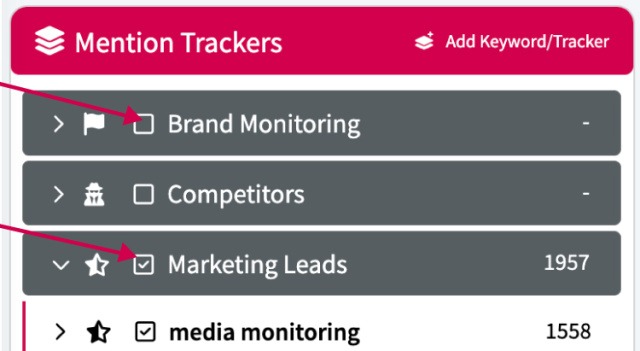
1. Uncheck Brand Monitoring and check Marketing Leads — you don’t want your own blog posts to appear in the results.
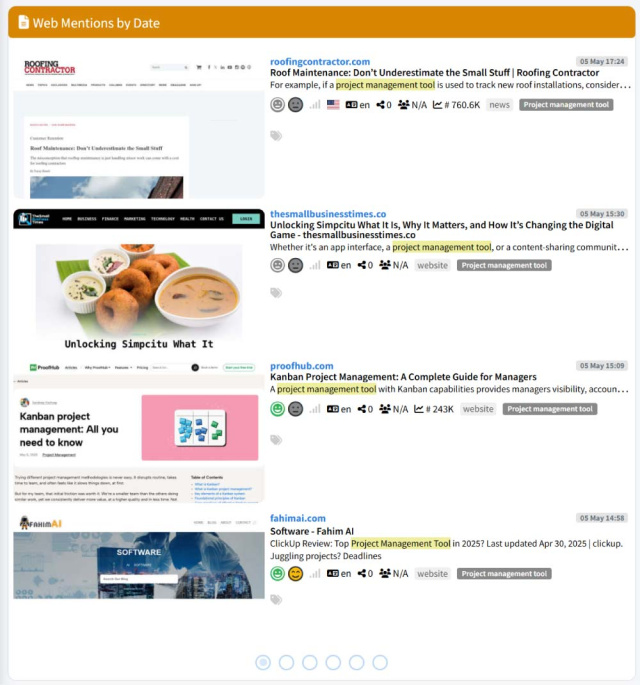
2. Check the results for Web Mentions — You’ll see the list of blog posts containing the keyword “project management tool”.
3. Narrow down the search results with Boolean Search — If you don’t have the time to scroll through hundreds of blog posts to find the perfect fit, the best way is to use Boolean operators.

4. Filter out results — By using various boolean operators, you can shorten the long list and find the article that suits your anchor text the best. For example, you want to exclude Medium articles, and you can do it simply by using the “NOT” and “site:” filters.

5. Keep filtering — If the list is still too long, keep applying other filters, such as language, sentiment, country, etc.
Don’t Wait for Miracles to Happen – Create Your Opportunities!
Check the hot industry topics and find the backlinks you need with Mentionlytics.
Once you spot the right link opportunities, make sure to send them an outreach email.
Why it Works
The process is straightforward and requires minimal effort from the webmaster of the site you’ll reach out to. They already have the anchor you need, so things are as simple as they could be.
On top of that, it will be highly targeted outreach. There’s not much back-and-forth.
3. Identify the Latest News Articles
Backlinks have always been a part of digital PR strategies. Being mentioned in an article in a well-known digital newspaper can bring a lot of publicity.
That’s why you should track the latest news articles, and once you spot the right opportunity, you can reach out and ask for a link placement.
The process is almost identical to that of the blog post search, only this time, you can use Boolean search to find only news sources, such as The Guardian. Use the “site:” operator, and get the list of articles containing your keyword from the chosen source in a second.
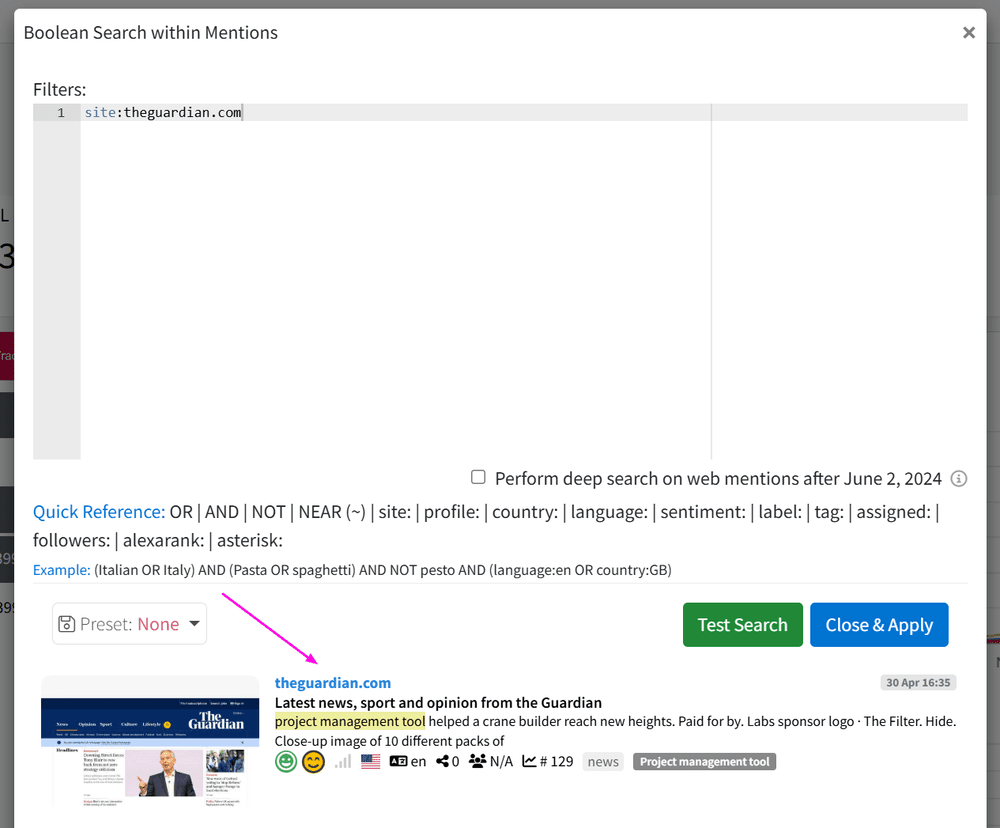
If you implement this link-building tactic, it’s always a good idea to have a budget ready because these links usually cost money.
Why it Works
It works because you’re getting your brand mentioned where credibility already lives.
These aren’t random placements on low-authority blogs; we’re talking about strategic appearances in trusted news outlets that people (and search engines) already respect.
When you land a link in a well-known media outlet, you’re improving SEO and showing up in the conversations your target audience reads.
This kind of outreach isn’t broad — it’s intentional. You’re choosing articles that are already aligned with your niche and stepping in with something relevant, timely, and valuable.
It’s the quiet power move of link building: low volume, high impact, and a subtle nod to your brand’s legitimacy.
4 Advanced Strategies to Do Outreach for Link Building
If you’ve passed the beginners’ phase, it’s time to upgrade your outreach link-building strategy. Here are four proven ways to do so.

1. Do Original Research
How well-researched is your content? Does it offer any unique perspectives, statistics, or conclusions from the research? What new insights does it offer?
These questions should always be on your mind, because high-quality content is the one that is well-researched.
The easy way is to read a few blog posts on the topic and rewrite them basically without offering anything unique, but the right way is to put a bit more effort into your content creation and make it stand out.
Not only will Google be pleased, but you’ll notice an increase in link-building offers. More websites will want a link within your blog post or article. It’s proven that it increases the number of links to your site. And guess what? It makes your outreach for link building much easier.
So, the punch line here is that you can choose what will be harder for you — the research or getting backlinks afterward.
Why it Works
Linking to original research and insightful data gives an existing content piece extra points.
That makes it easier for content managers and webmasters to consider linking to your piece.
2. Create Kicking Infographics
We live in a visual-oriented world, and even though your text needs to be readable and understandable, catchy, and interesting, if you add to that great infographics, you have a jackpot.
Joke aside, your content is not just the text and the research, but also images and infographics along with the text.
Not to mention that Google likes to display images separately in the search, so make sure that you place your website as a source.
Why it Works
Everyone loves attractive infographics, and it’s always a great addition to the content. Now, if a brand has limited resources (and there are a lot of websites that don’t have the time, budget, or a designer) and they can’t create an infographic, the fastest solution to enrich their content would be to get an already published one.
That’s your chance to get to be linked by providing your beautiful infographic in exchange for linking back to your website!
3. Replace an Outdated Source/Broken Link
Have you checked other blog posts to see how up-to-date the links they used are? If you notice that the links in an interesting blog post are outdated (or even worse, broken), it’s your call for email outreach.
Offer your link instead of the broken one. Offer new information instead of the outdated insights on their website.
Broken and outdated links happen more often than you think. Sometimes, linked blogs and websites get deleted or moved without proper redirection, and sometimes, the domain gets shut down or expires.
If you see a 404 when clicking on the link, that’s your invitation to potential link partners.
Why it Works
Many websites don’t track their links, and that’s why this strategy is better than any other cold email outreach. You point out the issue they have (because broken or outdated sources are no good for anyone), and you offer to help with the replacement.
This is one of the fastest and most effective outreach strategies.
4. Propose a Partnership – Not a Link Exchange
You’re here for the long run, not just a short walk. Therefore, you need to search for partnerships, not just a one-time link exchange. Brand collaborations will have a positive effect on your visibility, your backlink profile, and your overall rating.
That kind of attitude lowers the chances of broken links and gives you ongoing backlink support for your website.
Think outside the box. Create joint webinars, white papers, research, or any other content with your partners, and that will naturally bring you backlinks.
No spam, no forced anchors, no checking up — just a smooth connection that happens when you’re building relationships and not just links.
Why it Works
It’s very simple because it’s a win-win situation.
There are no restrictions, and your partnership can grow and develop in many areas.
Take the First Step to Smart Link Building Outreach for Free
Don’t start your link-building quest in an unknown land — start from where people already talk about you, where they mention you.
Listen to social media and monitor the web whenever someone mentions your brand. This is your chance to get a strong backlink with less effort than you would if you reached out to someone who hasn’t even heard about your brand.
Increase your chances of getting backlinks to your website with Mentionlytics — we offer a 14-day free trial to see how much you can gain!
FAQs
Does Link Building Still Work for SEO?
Link building has worked, is working, and will probably be an essential part of SEO for a very long time. Links are proof of your credibility. The more backlinks to your content, the more credible you get in any search engine’s eyes.
What are Link Building Campaigns?
Link-building campaigns are planned actions focused on getting other websites to link to your content. The campaign is always strategic, consistent, and with a purpose. That means no random links, just those that align with the strategy.
When Should I Start Link Building?
The answer to this question is easy. You should start link building from day one. It’s never too late to start, but it’s always much easier to start from the beginning. Of course, you will need a functional site and good content.

