


Welcome to a new era of digital marketing strategies! What has changed? While reputation marketing didn’t used to be a high priority as other marketing strategies, today, online reputation can be a “make it or break it” factor.
To be honest, the term itself did not even exist some 15 years ago. Then came Yelp, Google Review, Trustpilot, and other reviewing platforms, which changed the way customers choose brands.
With the rise of generative search engines and a shift to a more “true brand user experience”, online reputation marketing has jumped on the priority scale close to the top.
So, let’s go through a brief history of reputation marketing, how it is different from reputation management, what good it brings to your brand, and how to do it the right way to get your brand noticed.
Also, we’re going to show you the best examples of brand reputation marketing for your inspiration.
Table of Contents
- What is Reputation Marketing?
- What are the Benefits of Reputation Marketing?
- The Difference Between Reputation Marketing & Reputation Management
- 5 Ways to Implement Reputation Marketing To Get Your Brand Noticed
- Inspiring Examples of Brand Reputation Marketing in Action
- Level Up Your Online Brand Reputation Marketing
What is Reputation Marketing?
Reputation marketing is the practice of actively using a brand’s or individual’s positive reputation to attract more customers and build trust.
It combines reputation management (monitoring and addressing feedback) with marketing strategies (promoting positive reviews, testimonials, and endorsements) to enhance credibility and influence purchasing decisions.
If you do some research, reputation marketing is everywhere. All successful brands use it, or at least parts of it.
Take Etsy, for example. They regularly share their users’ success stories on social media, especially LinkedIn.

Source: Etsy on LinkedIn
This strategic approach helps businesses stand out, build trust, and drive conversions — without relying solely on traditional advertising.
Monitor Your Reputation Closely
Reputation is the ultimate asset of every brand. Monitor every mention of your brand online and keep it safe with Mentionlytics!
What are the Benefits of Reputation Marketing?
You know the impact of online reviews on your business. Negative reviews can destroy an online reputation in the blink of an eye.
But let’s set aside worst-case scenarios for a moment — what tangible benefits can reputation marketing bring to your business?
Powerful Competitive Advantage
Your online reputation is both fragile and powerful — and it can be the edge you’ve been looking for.
Small businesses often struggle to compete with established brands, especially when it comes to marketing budgets. Traditional advertising favors those with deep pockets, but reputation marketing levels the playing field.
- Unlike paid marketing campaigns, reputation marketing isn’t about how much you spend — it’s about how much trust you earn.
- A small business with stellar online reviews can outshine larger competitors and attract new customers organically.
- Big brands often accumulate negative feedback simply due to their scale, making a strong reputation a rare and valuable asset.
This is why a well-managed reputation can be a game-changer — a chance for David to defeat Goliath in the digital marketplace.
Increased Trust Means More Revenue
“Once an Apple user, always an Apple user.” Sound familiar? Have you ever met someone who switched from an iPhone to another brand? Probably not many. But why is that?
It’s all about trust. Apple has built a reputation for quality and innovation, leading to exceptional customer loyalty.
In fact, a 2022 Statista survey found that 64% of iPhone users in the U.S. were very satisfied, while 29% were satisfied with it. Overall, 93% of the users are happy with the product they bought from Apple, which is a stunning score.
Besides that, gaining new potential customers is much easier when you have a positive brand reputation. If they see that the existing users are satisfied, loyal, and likely to recommend the product, it’s the best advertisement a brand can have.
But you have to earn the trust; it’s not going to fall on your lap, even if you’re Apple. Remember how they handled Batterygate, the issue with users of the older versions of the iPhone 8 years ago when they realized the phones were lagging and slowing down, leading to allegations of planned obsolescence?
In 2017 Apple issued a public apology for not clearly communicating the reasons behind the performance management feature, offered discounted battery replacements to affected customers, and released an update allowing users to monitor battery health and disable performance throttling.
By taking these steps, Apple reassured customers, maintained transparency, and protected its corporate reputation — ultimately preserving trust.
The result? Aside from a few short periods (Q4 2018, Q1 2019, all of 2023, and Q1 2024), Apple’s revenue continued to grow, increasing between 1% and 53.63%.
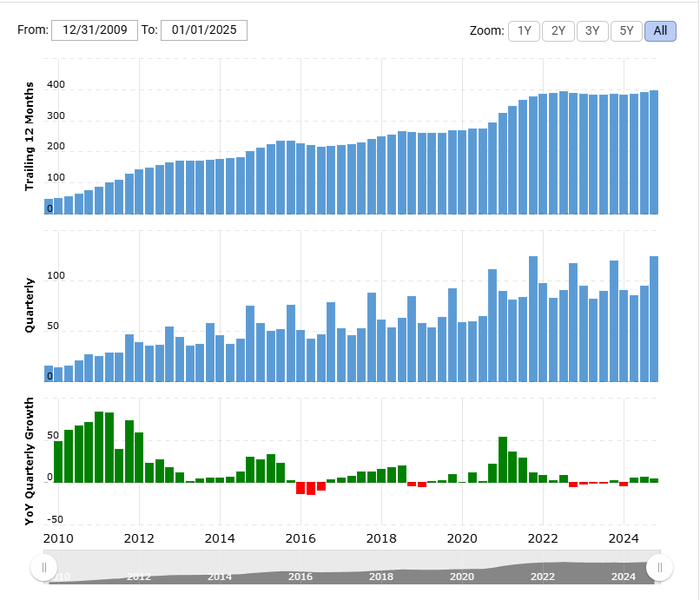
Source: MacroTrends
Unexpected: Better Rankings in Google & Beyond
Now we come to the fun part. We all know that a brand’s reputation always plays a role in marketing, but since generative search engines appeared, everyone has been working hard to build a positive brand image. And what do you think is the reason for that?
Search engines have evolved over time, and it’s not so easy to trick them with backlinks or fake client testimonials anymore. No, no, no, it’s not working anymore.
Now your reputation directly indicates to Google, ChatGPT, Perplexity, or any other search engine, how your brand and your website will be positioned in the search.
That means that brand reputation has become an essential part of SEO, or AI search optimization, in today’s language.
Customer feedback on review sites impacts Google search results, and if you have a low reputation score, you will not be listed on the first page of Google (unless it’s a sponsored listing).
ChatGPT also will not recommend brands with lots of bad customer reviews and ratings. Why?
Google and AI search engines (such as the ChatGPT search) want to provide the best user experience and present the most reliable answer to the query.
That’s why the algorithms act like humans would — they check online presence and reputation, trusting other humans who leave online reviews. If the reviews are positive, they give your website credibility, and if they are negative, they discredit you.
So, whether we like it or not, your brand’s reputation will affect your ranking scores. Though it’s a long-term strategy that requires constant review and adjustment, it must be part of your marketing and SEO efforts to position well in search results.
The Difference Between Reputation Marketing & Reputation Management
Reputation marketing and reputation management go hand in hand. And though the terms might sound the same, they are not.
In short, online reputation management protects and repairs a brand’s image by mitigating negative exposure, while reputation marketing builds and amplifies positive brand perception to attract more customers.
That means businesses should do both simultaneously to keep a healthy and positive brand reputation.
We can say that reputation marketing and reputation management have three main differences.
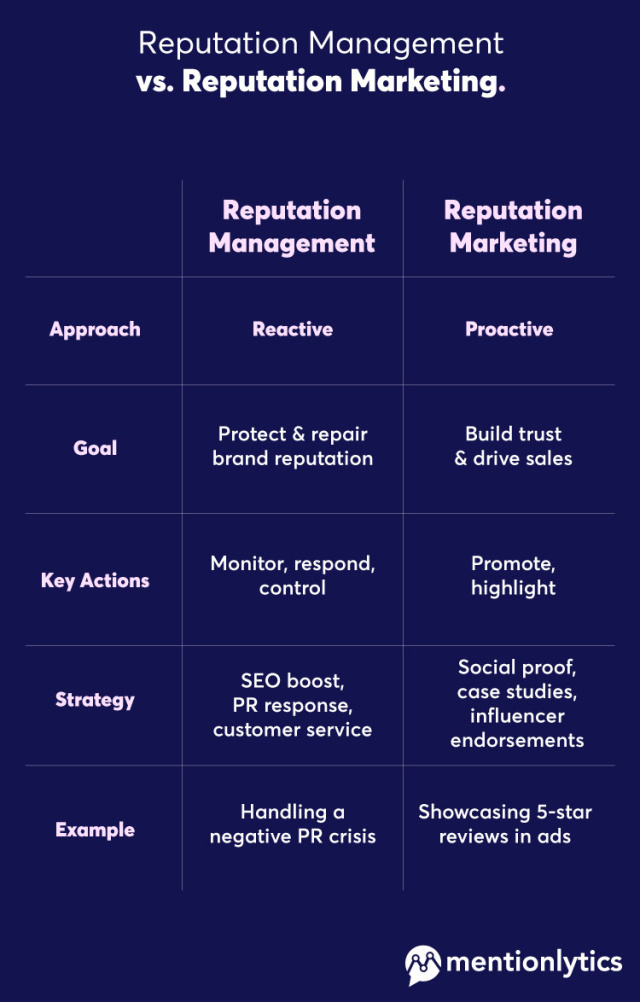
1. Proactive vs. Reactive Approach
- Reputation Marketing is proactive — it focuses on leveraging positive feedback (reviews, testimonials, case studies) to attract customers.
- Reputation Management is reactive — it deals with damage control, addressing negative reviews, managing PR crises, and combating misinformation.
2. Goal & Purpose
- Reputation Marketing aims to boost brand credibility and sales by showcasing trust and social proof.
- Reputation Management focuses on protecting and repairing a brand’s image, ensuring that negative perceptions don’t harm the business.
3. Strategies Used
- Reputation Marketing involves promoting customer success stories, social proof, influencer endorsements, and media coverage.
- Reputation Management includes monitoring reviews, responding to negative feedback, and using crisis management for damage control.
5 Ways to Implement Reputation Marketing To Get Your Brand Noticed
Reputation marketing doesn’t necessarily need to be challenging and time-consuming. Let us show you the easiest ways to do it right.
1. Share Positive UGC on Social & Beyond
Everyone is talking about user-generated content (UGC). And why wouldn’t they? It’s genuine, imperfect, and a first-hand experience — everything a potential user is searching for before deciding which brand to choose.
So, let future customers feel that momentum without doing a lot of searching on the Internet. Show it to them on your website, marketing material, social media — everywhere! It’s the perfect social proof you need to strengthen your reputation.
Don’t Stay in the Dark!
Gather all user-generated content (UGC) in seconds with Mentionlytics and measure its impact using key metrics like reach and engagement!
2. Promote Your PR Partnerships
Trust and reputation are built over time, and you can speed them up by promoting your brand partnerships and influencers with whom you collaborate.
Don’t miss the opportunity to “brag” a bit whenever your CEO participates in a webinar organized by another brand or when an influencer endorses your brand.
Give it a shout-out — don’t be shy. Create a blog post about it, add a link to the event on your sales page, and promote it on social media! That’s all reputation marketing!
3. Highlight Reviews & Testimonials in Ads
Maybe it’s time to rethink your ads — what if your customers did the talking instead?
Statistics show that only 23% of people trust influencer ads, so it’s time to try a different approach.
Incorporate positive reviews and testimonials into your ad creatives to add instant credibility.
Social proof makes your message more persuasive, whether it’s an Instagram carousel ad, a LinkedIn post featuring a client quote, or even OOH (out-of-home) ads showcasing real customer feedback.
But before leveraging customer testimonials, ensure you’re keeping track of what people are saying about your brand online through review monitoring — after all, you can’t highlight what you don’t see.
4. Offer The Best Customer Support
Wondering what customer support and reputation marketing have in common? They have in common angry or happy customers!
The better customer support gets, the happier customers and more positive reviews. As you can see, they are tightly bonded.
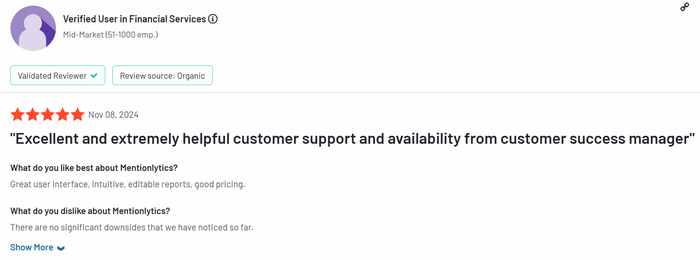
Source: G2
Have you noticed how many reviews on reviewing websites start with “they have great support” or “big thanks to the support team?” So, your best and most important advocates are not influencers but your own support team.
When this is lacking, then all the work you put into reputation marketing will go in vain.
Use this data to refine responses, improve agent training, and turn satisfied customers into long-term advocates.
5. Monitor Your Reputation Continuously
Remember the part where we mentioned that your reputation is fragile? Well, that’s something we can’t change, but we can closely monitor everything around our brand, including mentions on social media, articles, publications, and news.
It’s important to keep an eye on your brand reputation in case some bad reviews become viral (or news, in the worst-case scenario). This can save you a lot of time and make your crisis management efficient.
According to statistics, one of the top 10 challenges PRs face daily is finding mentions and links.
We know it can be a tiring job, watching all the mentions online every morning to maintain a positive brand image, but there is a powerful marketing tool for that.
You don’t have to do it manually. In fact, Mentionlytics has a very useful feature, SIA Daily Summaries, that automatically summarizes mentions online within a time frame you set and shows you real-time results in a second.
You can easily check the hottest topics around your brand, even in other languages (it automatically translates it to your chosen language), so nothing can surprise you.
Inspiring Examples of Brand Reputation Marketing in Action
Let’s talk about brands that do an excellent job in this field to reveal their secrets to successful brand reputation marketing!
1. Asana: Turning Customer Trust Into a Growth Engine
Asana was founded in 2008 by Dustin Moskovitz (Facebook co-founder) and Justin Rosenstein to solve one big problem: work chaos. Instead of endless email chains and scattered tasks, they built a platform to streamline teamwork and boost productivity.
Fast-forward to today and Asana is one of the leading project management tools, trusted by companies like Spotify, Uber, and NASA. But what really makes Asana stand out? Its reputation speaks for itself — just check the reviews on G2, Trustpilot, and Capterra.
Asana doesn’t just rely on word-of-mouth; they actively amplify customer feedback across multiple channels.
- On their website, they showcase detailed case studies from top brands, proving how Asana drives efficiency at scale.
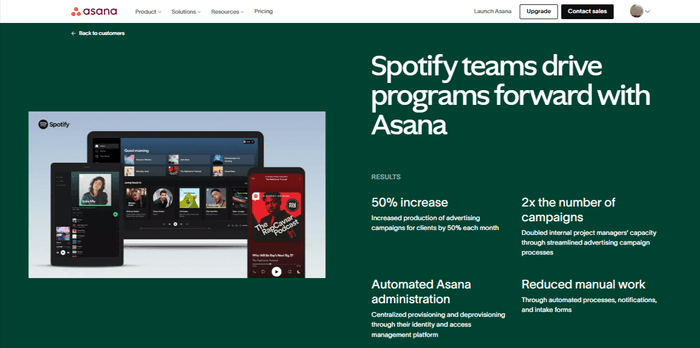
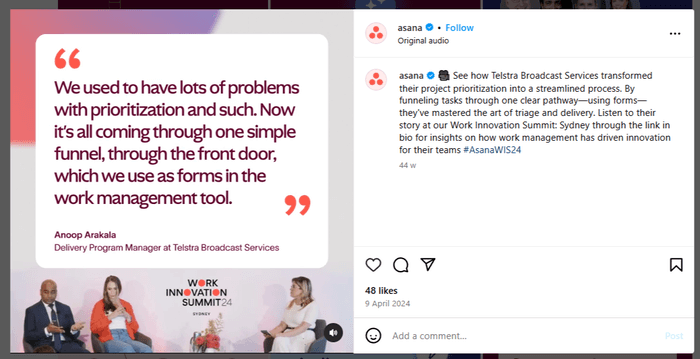
- They organize webinars and panels, invite their customers as guests, and share their testimonials across all marketing channels.
Source: Instagram
- Their YouTube channel features live customer testimonials, allowing users to hear real success stories directly from clients.
Asana understands that reputation marketing isn’t just about collecting reviews — it’s about strategically amplifying them to build trust, enhance credibility, and drive long-term growth.
2. Nevada Corporate Headquarters (NCH): The Power of a 5-Star Reputation
Nevada Corporate Headquarters (NCH) has been helping businesses get started the right way since 1989. Specializing in business formation, compliance, and asset protection, NCH has built a reputation as the go-to partner for startups and entrepreneurs.
But what truly sets them apart? Their customers trust them — big time. With an impressive 98% five-star rating on Trustpilot, NCH proves that exceptional service and transparency are the real drivers of reputation marketing.
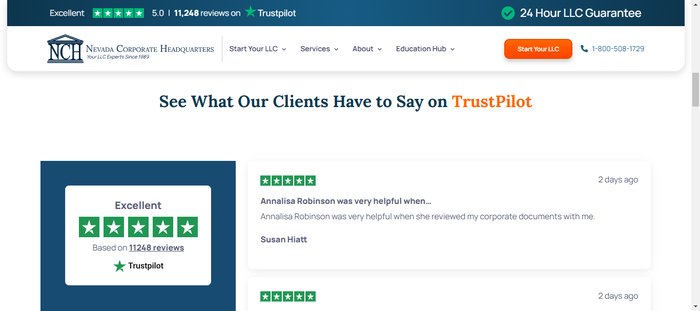
- They actively collect and showcase four and five-star reviews from platforms like Trustpilot, Google, and Reach 150. Their website highlights client testimonials on their home page and a landing page with all reviews, proving how their business formation and compliance expertise translates into real-world success.
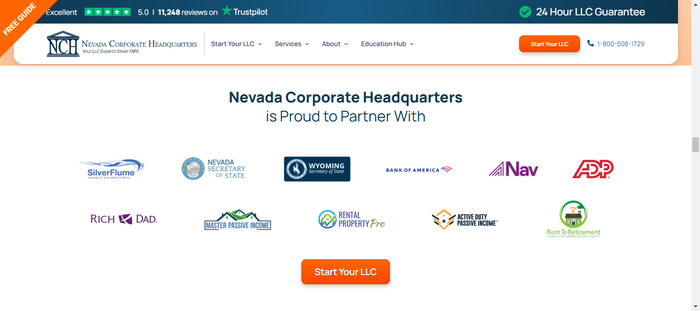
- NCH is showcasing strategic partnerships directly on its homepage. By displaying trusted financial institutions, legal experts, and business service providers, they assure potential clients that industry leaders back them.
- They take a transparent and educational approach, including free webinars and business guides. This positioning as an authority in the industry builds trust with potential clients.
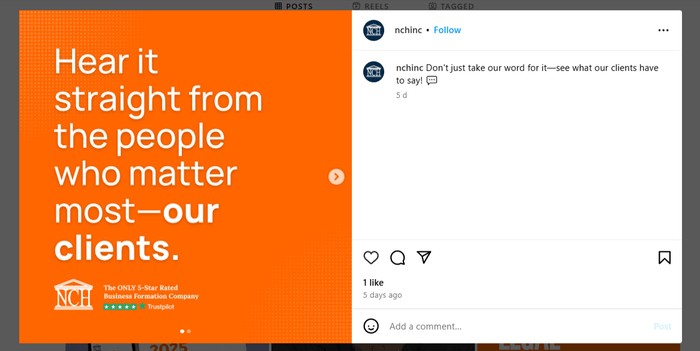
- NCH actively leverages social media to amplify its reputation. It regularly shares customer success stories and five-star reviews within social media posts on LinkedIn, Facebook, and Instagram.
Source: Instagram
By focusing on customer experience, social proof, and transparency, NCH demonstrates that reputation marketing is about more than just good reviews — it’s about amplifying them to drive long-term brand loyalty and growth.
3. Mentionlytics: We Walk the Talk!
Mentionlytics was founded in 2016 with a clear mission: to help businesses track, analyze, and leverage their online reputation. As an AI-driven social listening and monitoring tool, we don’t just provide insights — we use reputation marketing ourselves.
We practice what we preach by turning positive reviews into powerful marketing assets, making social proof a key part of our growth strategy.
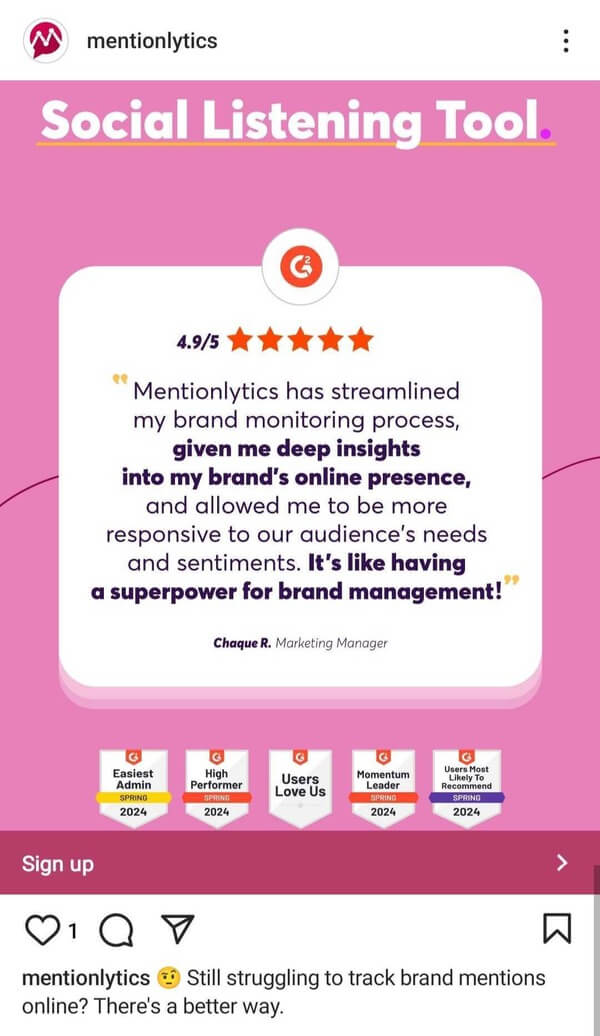
- We actively highlight top-rated customer reviews from platforms like G2 and Trustpilot, ensuring that potential customers see real, authentic feedback. Our G2 badges showcasing leadership and excellence are prominently displayed across our website and social media, reinforcing credibility.
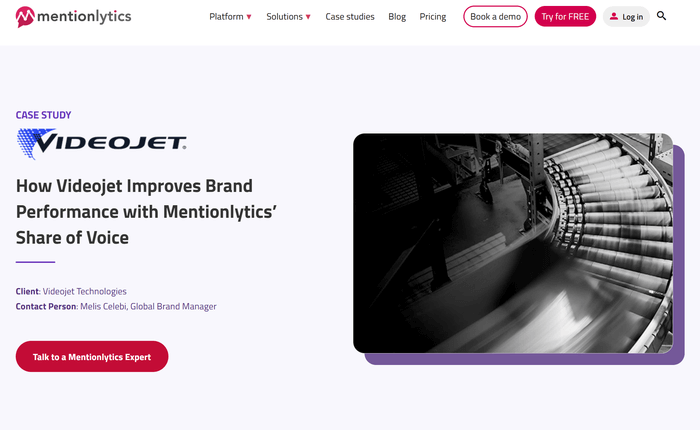
- Beyond reviews, we also feature customer interviews and case studies, sharing real-world success stories to show how businesses thrive using our platform.
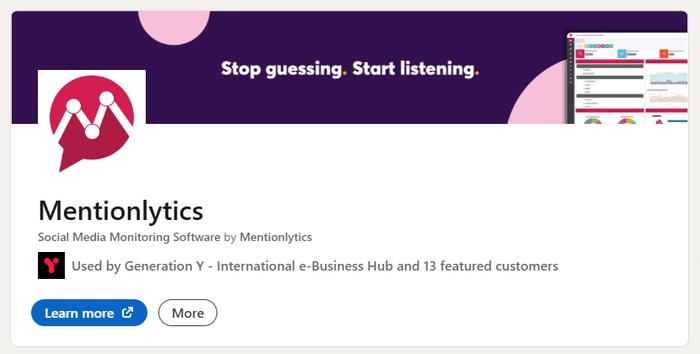
- Hush, don’t tell anyone, but we prominently display featured customers on our LinkedIn page, showcasing businesses that trust and use our platform. This subtle but powerful strategy reinforces credibility, signaling to potential clients that industry leaders and established companies rely on Mentionlytics for social listening and monitoring.
Because nowadays, in marketing, the best proof comes from those who trust you.
Level Up Your Online Brand Reputation Marketing
Your brand’s reputation is being shaped right now — through every mention, review, and customer story. The question is: are you in control of the narrative?
As brands like Asana, NCH, and our own example have shown, the power of reputation marketing lies in turning real customer experiences into brand credibility. But before you can showcase the proof, you need to find it, track it, and amplify it where it matters most.
That’s where Mentionlytics steps in. It doesn’t just listen — it finds every mention of your brand, every review that builds trust, and every moment of social proof that can fuel your growth.
Your reputation is already out there. It’s time to own it, market it, and turn it into your biggest competitive advantage.
Start your free trial with Mentionlytics today — because if you’re not tracking your reputation, someone else is shaping it for you.

