20
May 2026



CASE STUDY

How Mentionlytics Helps UK Agency Uncover the Voices Developers Couldn’t Hear
How famille used Mentionlytics to build a consultancy package that looks beyond the numbers and delivers real actionable outcomes
Client: famille
Contact Person: Debbie Larrad, founder

Launched
Community Listening: a new service that maps public sentiment.
Uncovered
the quiet, neutral but curious community voices that matter most.
Shaped
objective comms strategies based on what communities feel and need.
Summary
- famille, a UK-based sustainable marketing and communications agency, spotted a gap in how house construction and placemaking organisations understood their communities and built a service to close it.
- Instead of relying on free tools like Google Alerts that had left famille wanting more, they used Mentionlytics and launched Community Listening: a data-driven service that maps what communities are already saying before a strategy is built, acting as a reality check on what clients assume and surfacing what communities actually feel.
- famille is establishing Community Listening as the first and most crucial step in new development communications to ensure positive change in communities affected by these projects.
About famille
famille is a UK-based sustainable marketing and communications agency working with purpose-driven organisations — from charities and councils to master developers and placemakers. Unlike traditional PR, famille acts as an objective communications consultancy: listening first, challenging assumptions, and building strategies grounded in what communities actually think, feel and need.
With the huge growth of placemaking and plans for new homes in the UK, one of the key things that can’t be left behind is how the existing community feels about the change that’s happening around them.
To help master developers and local authorities understand the feeling and impact new places, community and housing projects are having on people, famille developed Community Listening: a mix of data gathering, analysis, consultancy and recommendation that uses Mentionlytics to drive the insights and make recommendations more grounded in what’s really being said.
famille knew, through previous projects, that the real conversations about new build projects were happening where few people were listening. The loudest voices can deter the conversations that drive actions, and that’s where Mentionlytics came in.
The Problem
New housing development in the UK generates organized, vocal opposition. For developers and placemakers, that noise creates a genuine strategic problem: loud voices dominate, quieter and more nuanced community views go unheard, and communications strategies can leave people behind, critically, the segments where optimists, dreamers, and early adopters are found.
Debbie Larrad recognized this early. Watching a competitor’s development attract intense negative press, she saw that the real insight wasn’t in the headlines — it was in understanding what the wider community actually felt, before positions hardened.
Free tools couldn’t deliver that. famille needed to go beyond isolated snapshots with no historical retention, no multi-channel view, and no ability to filter signals from noise.
"Before Mentionlytics, we felt we were missing essential insights to better understand the wider audiences. We wanted our work to get to the heart of the issues that face communities, beyond the most obvious debates and for our clients to feel more informed."
 Debbie Larrad
Founder, famille
Why Mentionlytics
famille are long-time users of Mentionlytics, and their unique blend of data and real-world experience means that insights and communications, while important, are only delivered when data is robust and useful. famille knew that free tools would leave them with gaps due to limited historical retention, no multi-channel monitoring, and an inability to segment or filter.
Mentionlytics gave famille what the consultancy work actually required:
- Reliable tracking across X, YouTube, Bluesky, Facebook, Reddit and LinkedIn
- Historical data retention from the point of setup
- The filtering capability to move beyond noise into meaning.
This allowed Lead Consultant, Debbie Larrad, to blend data into the consultancy work easily and without drawbacks.
"We have a far more holistic view of multiple themes, multiple conversations, a wider spread of channels. We didn't have that capability with the free tools."
Debbie LarradFounder, famille
How Mentionlytics Powers Community Listening
famille built Community Listening around a simple but demanding principle: listen first, strategise second. Mentionlytics provides the infrastructure to do that rigorously across X, YouTube, Bluesky, Facebook, Reddit and LinkedIn — with historical retention, real-time alerts, and the filtering capability to move beyond noise into meaning.
Four features sit at the core of the methodology:
- Real-Time Alerts keep famille and clients informed as conversation shifts.
- Emotion Analysis surfaces the texture of public feeling — anger, curiosity, sarcasm — beyond blunt sentiment scoring.
- Share of Voice and Keyword Clouds map the competitive landscape and flag conversations clients are missing.
- Geographic data distinguishes genuine local concern from coordinated noise originating elsewhere — two situations that demand entirely different responses.
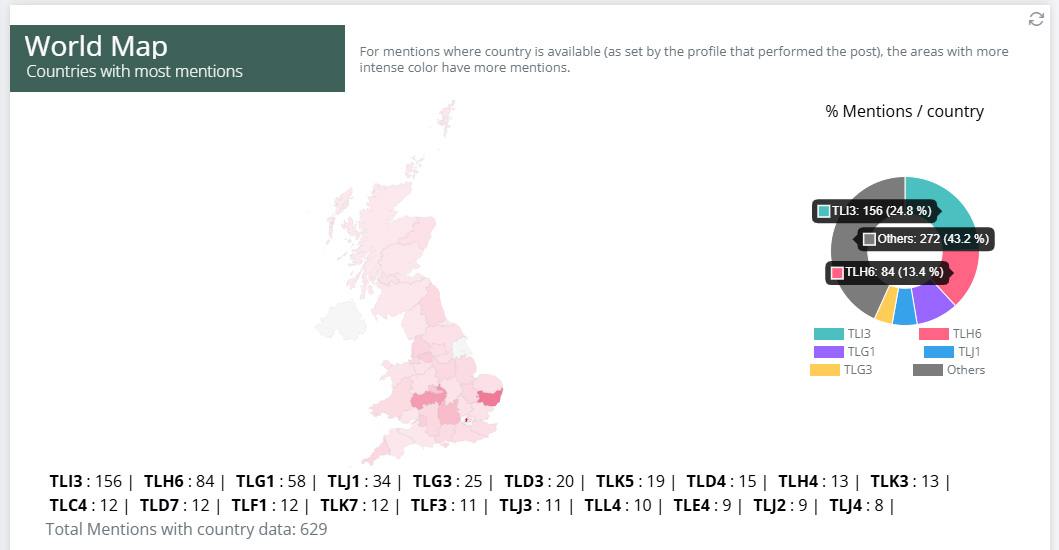
"Mentionlytics can be used in a multitude of different ways. The way we use it is as a genuine window - not as a way to answer a question we already want the answer to. We want to accept the answer that comes out."
Debbie Larradfounder, famille
Community Listening in Practice
famille was engaged as an independent communications advisor on an ambitious housing project in the Cambridge area — a visionary proposal operating in a charged public environment, with loud opposition, mixed sentiment, and a community asking substantive questions that deserved real answers.
famille’s role was not to advocate for or against the project, but to give the team an honest picture of the conversational landscape.
What Community Listening through Mentionlytics surfaced surprised the client:
- Finding #1: The loudest voices were negative and received the most attention from the project team.
- Finding #2: A significant segment of neutral, genuinely curious community members was asking important questions about water management, heat, and nature, but was largely under the radar.

- Finding #3: The project team was responding to queries with technical language that alienated rather than engaged.
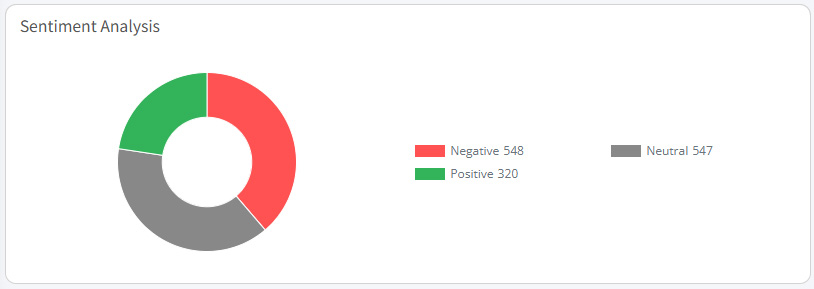
The recommendations followed directly from the evidence: respond to every question consistently and without judgment, replace technical language with accessible communication, and help people imagine what life in the development could actually feel like.
"We're not saying we're for or against it. We're in a neutral space where we're trying to help teams managing complex projects navigate what communities need and how to engage with them without alienating them."
Debbie Larradfounder, famille
The Results
Community Listening has become a core, differentiated service for famille, shifting client communications from assumption to evidence, and giving project teams early warning of emerging concerns before they escalate.
The lesson is simple. The communications strategies that fail almost always share one characteristic: they started with a message instead of a question.
"With Mentionlytics, you don't have to wait for someone to come to you with a complaint. You can already see what's forming, and you can shape your strategy around it before it becomes a crisis."
Debbie Larradfounder, famille

Ready to unlock the true potential of social media for your brand? See what Mentionlytics can do for you.
14-days trial No credit card required Cancel anytime