Corporate reputation management plays a huge role in a business’s success. We bet you too have stopped purchasing brands accused of unethical behavior or customer mistreatment.
It wasn’t because of their poor quality products, but the company’s negative reputation.
Reputation can make or break a brand. That’s why you need to manage it continuously to improve, repair, and maintain it. It’s necessary now more than ever with the abundance of social media platforms ready to cancel your brand, even based on falsehoods.
Managing corporate reputation can be challenging but it’s not impossible. You’ve reached the perfect guide for it.
In this article, we’ll walk you through the benefits of corporate reputation management, how to do it effectively, and 5 tips and best practices you should follow to build a strong reputation.
Table of Contents
What is Corporate Reputation Management?
Corporate reputation management is the process of cultivating a positive image of a business or organization in the minds of the public and protecting it from internal and external threats.
It’s an essential practice because rumors can spread rapidly in the digital world, resulting in a damaged brand image.
The purpose of company reputation management can come down to three key functionalities:
- Build a positive reputation not just for products and services but also for the whole business.
- Take proactive measures to safeguard this positive reputation from potential harm.
- Handle crises effectively to minimize damage.
To achieve this, communications professionals like yourself use a combination of different strategies and online reputation management tools.
Now, before jumping into how to manage your corporate reputation, let’s explain why you can’t afford to take it for granted.
Why you Shouldn’t Neglect Managing your Corporate Reputation
Corporate reputation includes many factors such as product and service quality, ethical behavior, workplace culture, online presence, etc. All these factors contribute to creating a favorable or unfavorable impression in the mind of your audience.
However, even if your company has a good reputation, you shouldn’t take it as a given. It can change rapidly due to a social media backlash or negative publicity.
Then, a tarnished reputation can lead to decreasing sales and impact your business’s overall financial performance.
So, creating a positive reputation and managing all issues to avoid crises should be your top priority. Below, we analyze some reasons why a good reputation is paramount for companies to flourish.
It builds customer trust
Having a positive corporate reputation goes a long way. Foremost, it helps customers trust your brands instead of competitors. In fact, 58% of U.S. adults agree that a company’s reputation is a major factor in purchasing a product or service.
Corporate reputation can be a robust competitive advantage. When your company is known for its quality products, helpful customer support, and being socially conscious, people feel safer purchasing your offerings than an unknown competitor or one with a bad reputation. Even if your prices are a lot higher.
Your reputation creates confidence in their buying decision.
After all, aren’t you more likely to purchase an iPhone despite its premium price rather than a lesser-known brand? Apple’s good reputation puts your mind at ease that you’ll buy a worthy product. Why risk it?

Source: Marketing Charts
It protects during crises
When a company’s reputation is positive, people tend to hear its side of the story as well, should a crisis hit.
According to an Ipsos survey, people give a company with a good reputation the benefit of the doubt in a crisis as they trust it. That means they wouldn’t believe in misinformation or accusations without first listening to the company’s side.
So, a good reputation protects your business during turbulent times by ensuring your voice will be heard in the public and media court. That allows you to make things right publicly in case of a mishap. Or defend your company against falsehoods to protect your brand image.
Do you remember Burger King’s “Women belong in the kitchen” tweet and the social media backlash that followed?
The company intended to make fun of this sexist line to draw attention to their scholarships for culinary education for women. That tweet was part of their 2021 International Women’s Day campaign. But it didn’t come off without any context.
However, Burger King handled the situation promptly and explained their intentions, ensuring no further damage. People responded well to this apology with their follow-up twee,t receiving almost 27K likes. Everything turned out well in the end.

Source: X (former Twitter)
It attracts top talent
A positive corporate reputation can be the deciding factor for a talented professional to join your team. Especially if your company has a reputation for offering a healthy working environment and positive team culture.
Also, companies with positive brands indeed get twice as many applications as companies with negative brands. That means more talent gets interested in your job openings if you have a good reputation.
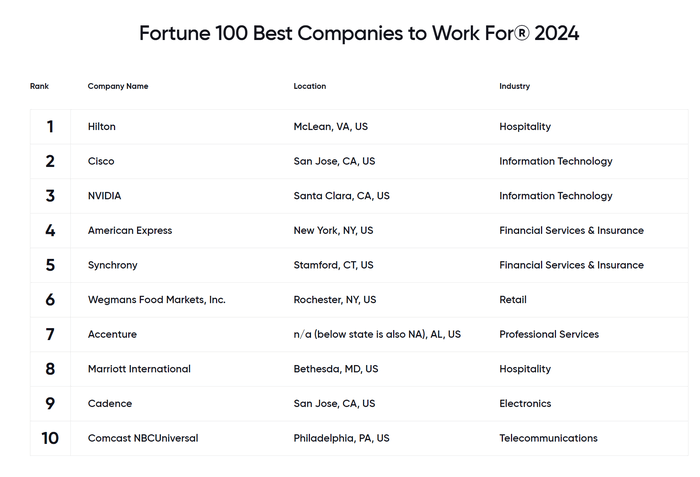
Think about this: Wouldn’t you be more willing to work for a company listed in the Fortune 100 Best Companies to Work For in 2024 rather than for another company?
Source: Great Place to Work
So, are you ready to put your corporate reputation management strategy into practice? Let’s see together how you can do it the right way.
How to Manage Your Corporate Reputation Effectively
Here you’ll find all our effective reputation management strategies you should follow to improve and grow your corporate reputation.
Monitor your brand reputation online
The first step to ensure an efficient reputation management process is media monitoring. Whether it is social, news sites, or even blogs, you should know what’s being said about your business online to understand your reputation status.
Media monitoring is essential in online corporate reputation management from top to bottom. But you shouldn’t go the manual way because it’ll take forever to search for your business across the vast web.
Instead, you can trust Mentionlytics to automate the whole process. It’s the go-to tool for reputation monitoring and brand management. It not only tracks all your mentions on social media and the web but also categorizes them into positive and negative in handy sentiment and emotion analysis charts.
So, you can see at a glance if your reputation is improving or not with time. The more positive mentions, the better your reputation. It’s as simple as that.

Example of sentiment and emotion analysis for Ryanair in Mentionlytics.
Invest in building a strong corporate image
This is a proactive approach to managing your reputation.
When you have a strong corporate image, you attract positive publicity, which improves your reputation. Also, it helps you survive crises by giving you a foundation of goodwill.
There are various ways to create a strong image. Here are some ideas:
- Minimize your company’s environmental impact, such as reducing waste production.
- Avoid misleading digital PR campaigns and clearly state your products or services’ limitations.
- Ensure fair wages, benefits, and a nice workplace for your workforce.
Have a crisis management plan in place
Nonetheless, even if you have built a strong corporate image, a reputation crisis can hit you unexpectedly. That’s when a PR crisis management plan is necessary.
A crisis management plan starts with preventing the situation by resolving all potential problems as soon as possible. For example, responding to all your negative mentions fast and offer your help.
Mentionlytics AI Anomaly Detection feature can help you a lot with this. The platform notifies you when there’s a spike in new brand mentions which can happen if you have gone viral — good news — or a backlash is underway.

Thus, you can spot the early signs of crises and take corrective measures to protect your reputation.
Also, even if you can’t avoid a crisis, you’ll know when to use your crisis communication plan.
Keep an eye on key brand metrics
Certainly, you can’t measure your reputation with numerical metrics. However, that doesn’t mean that keeping track of specific brand metrics can’t help you. Especially in online brand reputation management.
For instance, your social media engagement rate can tell you a lot about your reputation. If your business generates many comments, likes, and shares with its posts, then chances are your reputation is positive. People want to engage with businesses they like.
Another example is the Share of Voice. In Mentionlytics, you can calculate your total Share of Voice against your competitors automatically and then dive deeper into the Share of Positive and Negative Mentions.

If your business generates more positive buzz than your competitors, then there you go! You have a reliable indicator that your reputation is better than theirs.
The bottom line is that brand metrics are really helpful in evaluating your reputation and identifying room for improvement. These are the basics of managing reputation effectively.
To sum up, by monitoring the online conversations around your business, taking steps to build a strong image, being prepared for a crisis, and tracking brand performance you can be sure you’re doing a good job managing your corporate reputation.
5 Best Practices for Improved Corporate Reputation Management
In this section, you’ll learn some useful suggestions to take your business reputation management to the next level.

1. Handle negative comments and publicity promptly
Leaving complaints and negative feedback unanswered online jeopardizes your corporate reputation management. It’s a risky game to play.
One negative post can quickly escalate into a social media backlash if not addressed promptly. Handling negative reviews and comments is the number one way to prevent reputation damage, as we said in the previous section of this article.
Then, check EVERY notification. In case of a negative mention, reply immediately. Offer an apology and a helpful hand to solve the problem.
That’s how you show responsiveness, empathy, and accountability as a business.
2. Run a corporate social responsibility (CSR) program
Supporting a good cause can truly make a difference to your corporate reputation management.
Consider investing in a CSR program to demonstrate your business is socially conscious. For example, you can run initiatives such as:
- Corporate volunteering
- Ethical sourcing of raw materials
- Financial support for local communities
Committing to a noble cause increases the credibility of your company with a direct impact on its reputation.
3. Be honest during crises
Honesty and transparency are key to dealing with a brand crisis. People expect the truth from businesses no matter what.
In case of a crisis, make sure you communicate regularly with your audience. Don’t hide behind vague statements.
Apologize to your audience for any mistakes. Provide them with frequent updates on how you solve the issue. Offer your assistance and address people’s concerns honestly.
Most importantly, show that you understand what has gone wrong and don’t get defensive.
4. Create a positive workplace
You can’t achieve a positive corporate reputation if your employees aren’t happy with the work environment. You should care a lot about how employees feel about working for your business.
By cultivating a positive workplace where everyone is seen, heard, and appreciated, you increase your chances for employee advocacy. That, in turn, cultivates a good reputation for your business, allowing you to attract top talent to your team.
The world is becoming increasingly intolerant of toxic workplaces and bad employers. Make sure your business won’t fall into that trap.
5. Focus on quality customer care
Customer care plays a huge role in corporate reputation management. Focus on delivering the best customer support you can to avoid negative reviews.
Negative reviews on customer care can severely damage your corporate reputation, even beyond repair.
So, prioritize resolving all customer issues reported, even on social media. Train your team on how to respond to inquiries, complaints, and feedback properly.
Make sure your customers know that you’re there to help them with anything, so they’ll feel safe by choosing your products and services. Thus, you’ll create brand loyalty and word-of-mouth, both key ingredients of a good corporate reputation.
Make Company Reputation Management Easy
Effective corporate reputation management starts with having a helicopter view of what’s being said and written about your business online.
From preventing crises to providing top-notch customer support, you need to stay on top of your brand mentions and publicity to manage your reputation successfully.
Mentionlytics can be the guardian angel of your corporate reputation. Start managing your reputation for free now.
FAQ
What is corporate reputation?
Corporate reputation is what people (customers, stakeholders, employees) say about a company in the online and offline world. It isn’t usually tied to products and services but to the overall image of a corporation or organization. It reflects the trustworthiness, credibility, and overall character of the company, based on past actions, values, and performance. Corporate reputation can influence customer loyalty, investor confidence, and talent acquisition.
Is reputation an asset?
Yes, reputation is an intangible but precious asset of companies of all sizes. It adds measurable value to a company by attracting customers, investors, and talent. A strong reputation can lead to higher sales, easier market entry, and resilience during crises, which makes it strategically vital and financially impactful.
Why are stakeholders important for corporate reputation?
Stakeholders (be investors, customers, and even journalists) are very important for improving or damaging corporate reputation because they shape and spread perceptions of a company through their experiences, opinions, and influence. Their trust and support can enhance the reputation of a company, while dissatisfaction can cause severe damage.