


Here’s a fun experiment to try: Open Reddit, X, LinkedIn, or any other social media platform, and search for your industry, product category, or even your competitors. Within minutes, you’ll find people asking for recommendations, comparing tools, complaining about bad experiences, and looking for solutions. That’s social listening in its simplest form: discovering conversations that were already happening, whether your brand was part of them or not.
It’s also why social media listening has become an essential skill for in-house marketers and PR professionals in agencies who need to stay one step ahead of trends, customer expectations, and potential reputation risks.
The surprising part is that most of these conversations never appear in your social media notifications. They happen across forums, review sites, blogs, news outlets, podcasts, YouTube videos, and countless comment sections. Hidden among them are sales opportunities, product feedback, PR risks, and content ideas that many brands simply never see because they’re too busy publishing instead of listening.
So, it’s time to use this data the right way: set your goals, choose your tool, and turn the listening on.
In this article, we explain what social listening really is in 2026, how it differs from social media monitoring, why it has become indispensable for marketing and PR, how to build a social listening strategy, and the right tool that turns everyday online conversations into measurable business results.
The Article in a Nutshell
- Social listening is the process of analyzing online conversations to understand customer opinions, market trends, competitor activity, and business opportunities.
- The biggest difference between social listening and social media monitoring is that monitoring tells you what people are saying, while listening explains why they’re saying it and what actions to take.
- Social listening has become a cross-functional business intelligence tool, helping marketing, PR, sales, customer support, and product teams to make faster decisions.
- AI has fundamentally changed social listening. Brands now need to monitor not only what influences people, but also what influences AI search engines like ChatGPT, Gemini, Perplexity, or AI Mode.
- Modern social listening goes far beyond social media. Valuable conversations happen across review sites, forums, blogs, news outlets, podcasts, YouTube, Reddit, and many other public sources.
- A successful social listening strategy starts with clear goals, relevant keywords, and continuous optimization. It has nothing to do with collecting the highest number of mentions.
- The greatest value of social listening comes from turning conversations into actions, whether that’s improving products, preventing PR crises, identifying sales opportunities, or discovering market trends.
Table of Contents
- What Is Social Listening? A Simple Definition
- Social Listening vs Social Media Monitoring
- Why Is Social Listening Important for Marketing and PR?
- Social Listening in the Age of AI: Our Expert Outlook
- How to Use Social Listening for Your Brand(s)
- Social Media Listening Best Practices (and mistakes to avoid)
- How Do I Build a Social Listening Strategy?
- Get Started with Social Media Listening with Mentionlytics Today
- FAQ
What Is Social Listening? A Simple Definition
Social listening is the practice of discovering, gathering, and analyzing online conversations to understand what people think about your brand, competitors, products, industry, or any topic relevant to your business. Unlike simply collecting social mentions, it reveals the context behind those conversations, what people need, what frustrates them, what excites them, and where opportunities are emerging.
The word “listening” is what makes all the difference. You’re not collecting data just to fill another dashboard. You’re making your own small social listening research and looking for patterns. Why are customers leaving a competitor? Which features keep appearing in conversations? What questions are asked over and over again? Which topics suddenly gained momentum this week?
The biggest misconception is that social media listening belongs only to marketing. It doesn’t. Nearly every company department can benefit from it:
- Marketers craft and refine marketing strategies based on real customer conversations, emerging trends, and competitor activity.
- Product teams use it to prioritize features within product development based on recurring requests and complaints.
- Sales teams identify buying intent and prospects actively looking for alternatives or complaining about competitors.
- PR professionals spot reputation risks before they become headlines.
- Customer support identifies recurring issues that customers experience even before support tickets start piling up.
- Content marketers find topics their target audience is already discussing instead of guessing what might perform well.
Social listening enables you to tap into those personal opinions of your brand, competitors, products, or industry topics in general.
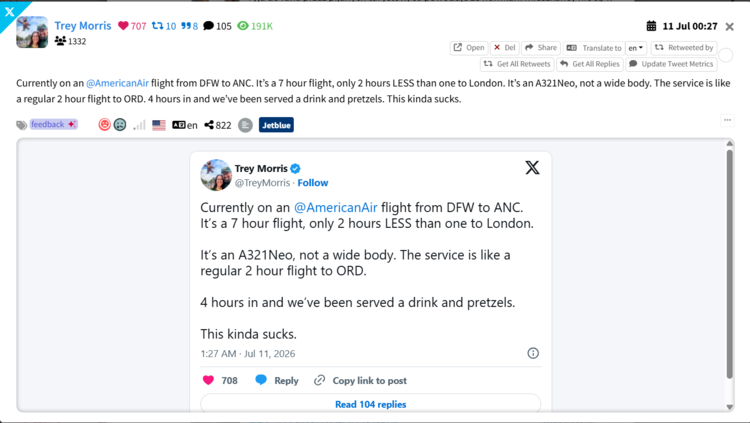
For example, Mentionlytics caught this X post in Ryanair competitors tracking tagged with “feedback” and negative sentiment filter combined. It’s a customer who’s been loyal to American Air, but due to poor management of the 10-hour delay, he’s announcing he’ll be loyal to some other airline company further on. And if you’re their competitor (e.g., Ryanair), you could use this info in several ways:
- You can reach out to the user and turn them into your future customer or a brand ambassador (especially if it’s a person whose posts have a high engagement rate).
- You could use the complaints (no food vouchers due to “frozen system”) for your own campaign “If we’re late, you’ll be taken care of, even when our system freeze”.
The audience is sharing opinions because they genuinely want advice, need help, or simply want to vent. That makes social listening one of the richest sources of authentic customer and market intelligence available today.
How Social Listening Actually Works
Behind every advanced social listening platform is the same continuous process: collect conversations, analyze their meaning, extract actionable insights, and use those findings to improve your marketing, products, customer experience, or PR efforts. Once you’ve taken action, the process starts again as new conversations emerge every minute.
The beauty of social listening is that it’s never a one-time task. Customer opinions change, competitors launch new campaigns, trends come and go, and AI models continuously discover fresh content and sources. That’s why the best brands build social listening strategies and weave them into their everyday decision-making.
Here’s how the process typically works:
| Stage | What happens | Example |
| 1. Monitor | Track keywords, brand names, competitors, products, hashtags, and industry topics across multiple online sources. | Monitor mentions of your brand alongside competitors and relevant industry keywords. |
| 2. Analyze | Organize conversations by sentiment, themes, engagement, reach, emotions, or unusual spikes to understand what’s happening. | Notice that a recent product update triggered a surge in negative sentiment. |
| 3. Generate Insights | Connect the dots and answer the “So what?” question behind the data. | Discover that customers love the new features but are frustrated with the onboarding experience. |
| 4. Take Action | Turn insights into business decisions across marketing, PR, sales, customer support, or product development. | Update onboarding materials, adjust campaign messaging, and address recurring customer concerns. |
Τhough collecting thousands of mentions is valuable, it’s not the most important part of the process, as raw data can be confusing, overwhelming, and noisy. That’s why the most important part is turning those conversations into decisions that help your business grow.
What can social listening reveal?
| You want to know… | Social listening can show you… |
| What customers think | Sentiment, emotions, opinions, praise, complaints |
| What competitors are doing | Campaign reactions, product launches, customer feedback, Share of Voice |
| What people want | Feature requests, unmet needs, buying intent |
| What’s trending | Emerging topics, hashtags, keywords, influencers |
| Whether your campaign worked | Reach, engagement, sentiment changes, mention spikes |
| Whether a PR issue is growing | Negative mentions, influencer posts, viral discussions |
| What AI might learn about your brand | Public conversations that increasingly influence AI-generated answers (e.g., on Reddit) |
Is Social Listening the Same as Monitoring?
No, social media monitoring and social listening are closely related, but they aren’t the same thing. Social media monitoring focuses on tracking mentions, keywords, hashtags, and conversations about your brand. Social listening goes one step further by analyzing those conversations to uncover sentiment, recurring themes, emerging trends, and audience perceptions.
Social Listening vs Social Media Monitoring
When we compare social listening and social monitoring, the terms sound pretty similar and are often used interchangeably, but they describe two different ways of working with online conversations.
Social media monitoring focuses on tracking mentions and collecting data about what’s happening. Social listening takes that data one step further by analyzing conversations to uncover patterns, understand audience sentiment, identify emerging trends, and explain why those conversations are happening in the first place.
Social media monitoring has a more reactive approach and is more focused on individual mentions and conversations, which makes it the perfect process for customer support and community management.
On the other hand, social listening gives you the big picture of what’s going on on social media around your brand, with a more proactive approach that focuses on identifying opportunities and detecting issues before they take off. That’s why it’s the perfect choice for PR, marketing, sales, product development, and strategic planning teams.
| Social Media Monitoring | Social Listening |
| Tracks brand mentions, keywords, hashtags, and direct conversations. | Analyzes conversations to uncover sentiment, trends, themes, and audience perceptions. |
| Answers “What is happening?” | Answers “Why is it happening?” |
| Reactive approach focused on responding to mentions and events. | Proactive approach focused on identifying opportunities and preventing issues. |
| Primarily quantitative (mentions, reach, engagement, volume). | Combines quantitative and qualitative insights to generate actionable intelligence. |
| Focuses on individual mentions or conversations. | Connects thousands of conversations to reveal larger patterns. |
| Supports customer service and community management. | Supports marketing, PR, product development, sales, and strategic planning. |
| Alerts you to a spike in negative mentions. | Explains what caused the spike and how it might affect your brand. |
| Helps you stay informed. | Helps you make informed decisions. |
Think of monitoring as the foundation and social listening as the analysis built on top of it. The two aren’t competitors; they’re complementary parts of the same process.
Level Up From Monitoring to Listening
And see the results of making informed decisions with Mentionlytics!
Why Is Social Listening Important for Marketing and PR?
Social listening has evolved from a “nice to have” marketing tactic into a core business function. A 2025 industry research study conducted in South America, the USA, and Canada shows that 56% of marketers already use social listening to better understand their audiences, measure campaigns, and stay ahead of competitors.
As conversations continue to shape buying decisions, brand reputation, and even AI-generated answers, that number is only expected to grow.
The reason is simple: every day, people publicly share what they love, what frustrates them, what they’re planning to buy, and what they wish brands would improve. Social listening turns those scattered conversations into insights that marketing and PR teams can actually use.
For marketers: audience insight, trends, and campaign impact
Did you know that, according to Paul T. Rankin’s 1928 paper published in the English Journal, successful communication consists of 45% listening and 30% talking? Yes, that’s how it works in real life (in fact, it always did).
That’s probably why marketing has shifted from broadcasting messages to understanding conversations. Instead of just posting and hoping the audience will pick it up, or guessing what your audience wants, it’s always a better solution to pause and listen.
If you look at some real-world social listening examples, you can see brands use social media listening to get direct access to customer opinions, emerging trends, competitor activity, and campaign performance, all in real time.
Marketers are already using social listening as part of their social media strategy to understand their audience and navigate conversations across all social channels. Here’s the list of benefits of social listening marketers see the most:
- Understand your audience better. Discover recurring customer pain points, buying motivations, product feedback, and the language people naturally use when discussing your industry.
- Spot trends before they peak. By monitoring conversations across social media, forums, blogs, podcasts, and news sites, marketers can identify emerging topics before they become saturated, giving them a valuable first-mover advantage.
- Benchmark competitors and measure Share of Voice. Social listening makes it easy to compare your brand with competitors, identify strengths and weaknesses, and measure how much of the online conversation your brand actually owns.
- Measure campaign impact beyond likes. Social listening helps you understand how people reacted, whether sentiment changed, which messages resonated most, and what conversations your campaign generated.
How can social listening help improve customer experience?
Social listening helps brands create better customer experiences long before a support ticket is submitted.
According to a Clutch report, 96% of buyers check online reviews before the first purchase. And that’s the reason why customer experience is one of the most important things today.
Let’s not forget that potential customers are not the only ones searching through social media and scrolling through your reviews. AI is doing that too.
So, what do we do? You can’t prevent unsatisfied users from sharing their experiences online, but you can improve your product or service by catching early signals through social listening. Here’s what social listening can help you with:
- Identifying recurring complaints before they become widespread problems.
- Discovering feature requests customers mention repeatedly.
- Understanding how customers feel after a product launch or campaign.
- Recognizing loyal brand advocates and rewarding them.
- Finding friction points throughout the customer journey.
- Monitoring customer satisfaction across multiple platforms instead of relying solely on surveys.
How to tie social listening insights to sales data
Social listening becomes even more valuable when combined with sales data, and there are also more creative ways to combine these datasets:
- Conversation-to-conversion mapping: Track which keywords, themes, or pain points appear most often in conversations that precede a sale.
- Earned Media Value (EMV) Efficiency: Convert organic buzz, mentions, and creator chatter into an estimated dollar value by comparing it to what that reach would cost in paid ads. Cross-referencing EMV spikes with sales spikes helps prove whether earned awareness is actually driving pipeline growth or just creating noise.
- Regional demand signals: Compare geographic spikes in social chatter with sales performance to uncover emerging markets before they show up in traditional reports. And if you spot that specific regional demand is high but sales are still low, then you know the problem is not the market.
- Sales enablement insights: Analyze the language prospects use online and feed it back to sales teams so they can mirror customer vocabulary in pitches and demos.
- Churn prediction: Monitor negative sentiment or recurring complaints from existing customers and cross-reference them with retention data to identify early warning signs of churn.
- Campaign attribution beyond clicks: Instead of relying only on tracking links, look at how conversation volume and sentiment shifts align with pipeline growth.
By comparing social listening data with CRM records, website analytics, and conversion reports, businesses can identify which campaigns generate qualified leads, which conversations influence purchasing decisions, and which audience segments are most likely to convert.
Ultimately, combining these datasets is key to proving social listening ROI. Instead of looking at marketing and PR efforts in isolation, it allows teams to connect customer conversations directly to measurable business outcomes.
For PR professionals: reputation, crisis detection, and influencer identification
For PR teams, social listening acts as an early-warning system. News rarely breaks out of nowhere, and reputation issues usually begin as individual conversations that gradually gain momentum across social media, news outlets, forums, or blogs. Detecting those discussions early gives PR professionals valuable time to respond before they become tomorrow’s headlines.
An effective social media listening strategy helps PR teams understand how campaigns are received, monitor brand mentions, identify misinformation, and discover journalists or creators already talking about relevant topics.
How social listening helps manage brand reputation
Protecting your reputation starts with knowing what’s being said about your brand. And if you’re trying to figure out how companies use social listening for crisis management, here are some things you need to know. Social media listening helps PR teams to:
- Detect negative conversations before they escalate.
- Monitor media coverage alongside social media discussions.
- Identify misinformation and respond quickly.
- Measure how public sentiment changes over time.
- Evaluate the impact of PR campaigns and announcements.
- Compare brand reputation with competitors through Share of Voice.
- Discover recurring issues that could damage customer trust.
So the approach is more proactive: instead of reacting after a crisis unfolds, PR teams manage conversations while they’re still developing.
How to use social listening for influencer marketing
Finding creators with the largest audience is pretty easy… but finding those who will be a good fit for your brand and have an engaging audience is a different pair of shoes.
Social listening helps you identify people who are already talking positively about your brand, discussing your industry, or influencing conversations within your niche. These creators often have highly engaged audiences and stronger credibility than influencers selected purely by follower count.
For example, Mentionlytics gathers all your Top Mentioners in a neat dashboard, making it easier to discover journalists, creators, industry experts, loyal customers, and brand advocates who consistently generate meaningful conversations around your business.

Social Listening in the Age of AI: Our Expert Outlook
Here’s something many brands haven’t realized yet: AI models are doing social listening too. That has made chatter on social platforms very influential. When someone asks ChatGPT, Gemini, Claude, or Perplexity about your brand, competitors, or products, the answer may be influenced by conversations happening on Reddit, YouTube, forums, review sites, news articles, and many other public sources.
According to a 2025 study, the most cited social media in 2024 were Reddit, followed by Wikipedia, YouTube, and Google. But things have changed since then. Now we can see various case studies and research that point to other emerging sources and declines. LinkedIn and G2 have found their place on the list, especially with Perplexity.
The takeaway isn’t that one platform matters more than another; it’s that AI’s preferences evolve. Brands that practice listening across multiple channels and pay attention to the sentiment are far less likely to be caught off guard when the next shift happens.
How AI changed social listening
It’s no secret that AI impacted both users and social listening tools. And each side changed the approach to listening.
From the user perspective
For years, social listening focused on understanding human conversations. AI has expanded that mission. Each LLM will use different sources in different proportions. For example, a study shows that 17% of Perplexity citations come from discussions.
Now these online conversations shape AI-generated answers, product recommendations, buying decisions, and even how brands appear in AI-powered search experiences. Every review, Reddit thread, LinkedIn discussion, YouTube comment, or industry article contributes another signal that large language models (LLMs) may use when generating responses. And you can’t predict which one it will rely on the most.
That means social listening is no longer just about protecting your reputation online or measuring campaigns. It’s also about understanding the digital footprint your brand leaves behind and how that footprint may influence future AI answers. And yes, we’re talking here about earned media, because owned media doesn’t have that impact on LLMs.
So, instead of asking, “What are people saying about us?”, brands should also start asking:
- What information is AI most likely to find?
- Which platforms generate the most credible conversations in our industry?
- Is the overall sentiment improving or declining?
- Are competitors becoming more visible than us in AI-generated answers?
These questions simply didn’t exist a few years ago.
From the social listening tools perspective
AI has transformed social listening platforms just as much as it has transformed consumer behavior. It has raised the bar for what social listening platforms are expected to do.
Brands expect tools to explain why conversations are happening, uncover patterns automatically, and surface the insights that deserve immediate attention.
That’s why AI is becoming a core part of modern social listening. It helps improve sentiment and emotion analysis, detect subtle emotions such as sarcasm, summarize thousands of mentions in seconds, and automatically group conversations into meaningful topics.
In the Mentionlytics platform, for example, AI powers features like Mention Clustering, Summaries, and SIA to help users move from raw data to actionable insights much faster.
Thanks to AI, social listening users now have the opportunity to plug in their chosen LLM to their listening tool through MCP and gain unique insights within minutes. That’s how significant the impact was.
What is predictive social listening?
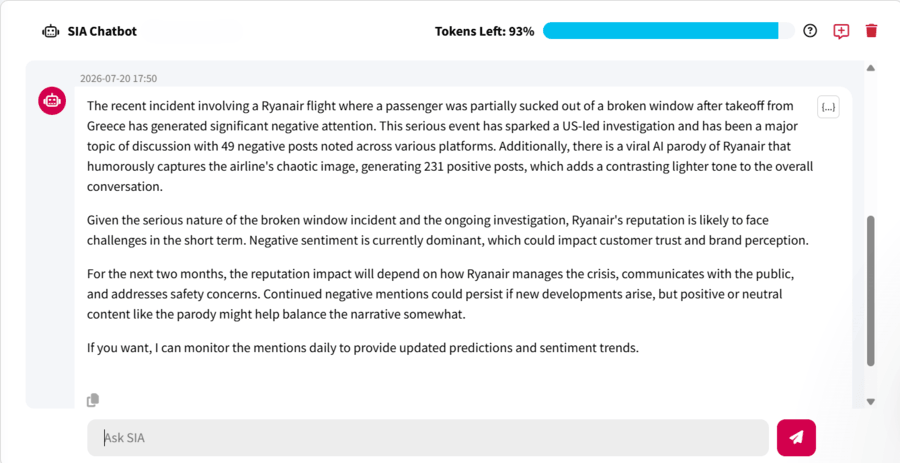
Traditional social listening explains what has already happened. Predictive social listening uses AI to estimate what is likely to happen next. For example, we asked Mentionlytics’ SIA Chatbot what impact Ryanair’s broken window incident that happened in July 2026 will have within the next two months on their reputation.
The chatbot summarized that the incident is pretty serious, mentioning the investigation that’s been started, overall negative sentiment, and implied that it will have a negative impact on trust and brand perception in the short term, but the overall outcome will depend on how Ryanair manages the crisis, communicates with the public, and addresses safety concerns.
AI can detect unusual conversation patterns, identify emerging topics before they trend, recognize early signs of a reputation issue, and forecast how discussions are likely to evolve if nothing changes.
Think of it as moving from a rear-view mirror to a windshield. Instead of only analyzing yesterday’s conversations, predictive social listening helps brands prepare for tomorrow’s. While no AI model can predict the future with complete accuracy, identifying patterns early gives marketing and PR teams valuable time to react before competitors (or crises) gain momentum.
From social signal to AI answer: the new visibility loop
Every public conversation creates a digital signal. A Reddit discussion, a LinkedIn post, a YouTube review, a Quora answer, or a product review may seem like a single piece of content. But together, these conversations shape how your brand is represented across the web.
That’s important because more and more people are asking AI assistants like ChatGPT, Gemini, Claude, and Perplexity for recommendations before they visit a website or run a Google search.
According to McKinsey research, 61% of the respondents used LLMs for comparing products and services. To answer those questions, AI assistants increasingly rely on publicly available information they can retrieve from the web, search engines, and connected data sources. That means the conversations happening around your brand have become more valuable than ever.
That’s the new visibility loop.
Conversation → Online visibility → AI citations → Customer discovery → New conversations
So, if someone asks “What is the best tool for XX”, and your brand has hundreds of authentic discussions on Reddit, positive reviews, YouTube comparisons, LinkedIn conversations, and industry articles, those signals strengthen your online presence. If most of the public conversation revolves around your competitors instead, they’re far more likely to dominate the discussion.
This doesn’t mean AI copies Reddit posts or reads every social media update in real time. It means that your overall online presence, which includes the conversations, reviews, articles, videos, and discussions people create about your brand, is becoming increasingly important in how AI assistants find and present information.
So, instead of focusing only on understanding your audience, you need to broaden your horizons and watch over the digital footprint your brand is creating every single day.
As AI assistants become more connected to live data through search, APIs, and technologies like the Model Context Protocol (MCP), keeping track of those conversations will become even more important. The brands that monitor, understand, and participate in online discussions today will be in a much stronger position as AI-powered discovery continues to evolve.
How do brands use AI social listening to track campaign impact?
Campaign measurement has changed dramatically over the past two years. Instead of focusing only on impressions, clicks, and engagement, AI social listening helps you understand how campaigns influence broader online conversations.
That’s an important distinction because a campaign can generate millions of impressions without changing public perception, while another with a much smaller reach can spark meaningful discussions, improve brand sentiment, and encourage customers to recommend your product organically.
AI helps you separate vanity metrics from genuine impact by analyzing how people talk about your campaign, which emotions dominate the conversation, what themes repeatedly appear, and how those discussions evolve over time.
For example, imagine you launch a sustainability campaign. Traditional analytics might show impressive engagement numbers, but AI social listening could reveal that people are barely discussing sustainability; instead, they’re praising your new packaging design or debating your pricing. Those insights help you understand what actually resonated with your audience, allowing you to adjust future campaigns based on real conversations rather than assumptions.
How to Use Social Listening for Your Brand(s)
One of the biggest misconceptions about social listening is that brands use it for a single purpose. In reality, social listening evolves alongside your business.
A startup launching its first product might focus on understanding customer needs and finding early adopters. An established brand may prioritize social listening to increase customer advocacy, manage reputation, do competitor benchmarking, and measure campaign performance. During a product launch, the focus shifts toward monitoring audience reactions, while a PR team dealing with a crisis will pay close attention to sentiment, media coverage, and emerging conversations.
The point is that these aren’t separate strategies. They’re different applications of the same data. Most brands switch between them throughout the year, or use several at the same time.
Here are some of the most common ways brands use social listening to make better business decisions.
Reputation Monitoring – How the Audience Perceives Your Brand
Brand reputation is shaped by thousands of small conversations, not just major headlines. A frustrated customer on Reddit, a negative TikTok review, a critical news article, or a sarcastic comment under a campaign can all influence how people perceive your brand.
For effective brand reputation tracking, you need a tool that has sentiment and emotion analysis, real-time monitoring, and alerts, and spans across a wide range of sources: social media, news sites, blogs, forums, podcasts, and review platforms.
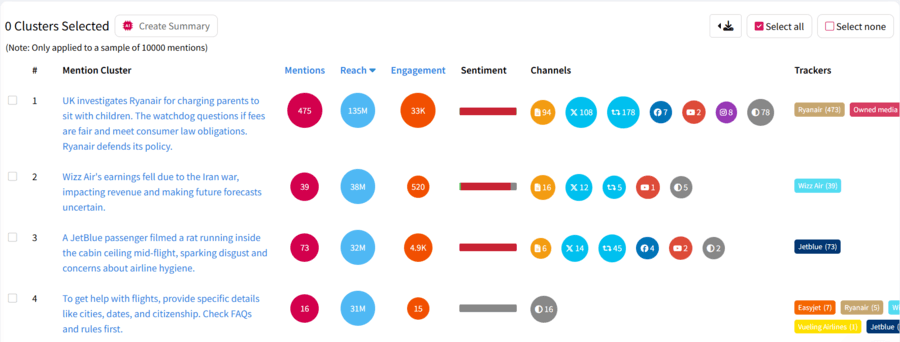
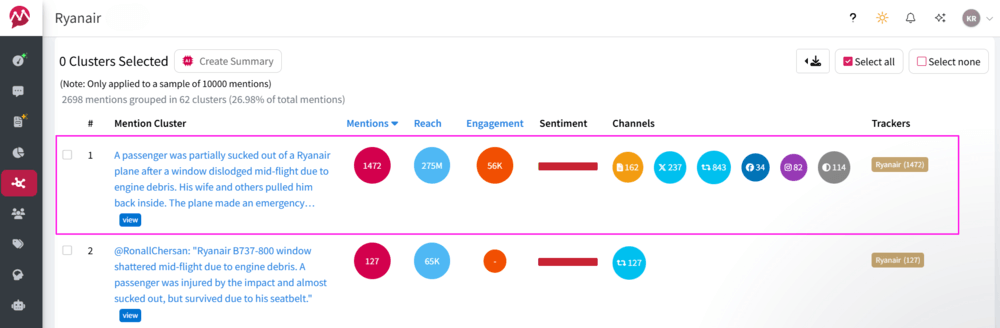
Advanced social listening tools like Mentionlytics automatically cluster social media posts by topics, so you can understand why sentiment changes and respond before isolated complaints become larger reputation issues.
Review Management – Soften Negative Customers’ Feedback on Review Platforms
Reviews are one of the most direct forms of customer feedback, but many brands still treat them as a collection of star ratings.
Social listening allows you to analyze reviews across multiple platforms and identify the themes hidden behind those scores. Customers may repeatedly praise your customer support while criticizing delivery times, packaging, pricing, or a specific product feature. Those patterns are far more useful than an average rating on its own.
On the other hand, when your customer service uses social listening to detect and reply instantly to negative (and positive) reviews, it automatically impacts your reputation, which further reflects on sales. A recent study found that 85% of respondents always read online reviews before making a purchase, and 60% said reviews have a significant impact on their decisions.
Review management through social listening also helps brands respond more consistently. Instead of noticing a complaint weeks later, teams can receive alerts when new reviews appear and quickly decide whether the issue requires a response, escalation, or internal follow-up.
This is especially valuable for brands with multiple locations, properties, products, or service teams. Rather than checking each review platform manually, social listening brings customer feedback into one place and helps you compare performance across the business.
Speed Up Your Follow-Ups
And soften negative reviews with Mentionlytics. Both users and LLMs will be grateful.
Crisis Detection – Catch it Before it Takes Off
A crisis rarely begins with the words, “This is now a crisis.” It usually starts with a few posts, comments, screenshots, or customer complaints that gain traction. By the time the issue appears in mainstream media, the conversation may already be difficult to control.
Social listening acts as an early-warning system by tracking unusual spikes in mentions, sudden changes in sentiment, rapidly spreading posts, and recurring negative topics. Real-time alerts can notify PR and communications teams when something changes, even outside working hours.
You will not panic every time someone complains, but you should recognize when an isolated mention is becoming a pattern.
For example, if a product defect appears in one post, customer support may handle it directly. If dozens of people begin reporting the same defect and influential accounts start sharing the story, the issue requires a coordinated response across PR, product, legal, and customer experience teams.
Campaign Monitoring – How Efficient We Actually Were
Campaign analytics can tell you how many people saw or clicked your social media post that was a part of the campaign. Social listening tells you what they thought about it. So, here’s what brands monitor to track campaign impact:
- campaign names
- hashtags
- slogans
- spokespeople and influencers
- products
- related keywords
That way they can measure how a campaign changes the wider conversation. This includes mention volume, social media sentiment, emotions, reach, engagement, recurring themes, and Share of Voice.
The most useful insights are often unexpected. A campaign designed around sustainability may generate strong engagement, while the actual conversation focuses on pricing or packaging. A humorous ad may perform well in terms of views but trigger criticism among a specific audience.
Social listening helps marketers see which message landed, which audience responded, and whether the campaign changed brand perception. It also allows teams to adjust messaging while the campaign is still active, rather than waiting for the final report.
Competitor Monitoring – Win the Market by Getting to Know Your Competitors Better
Your competitors’ customers often explain their strengths and weaknesses more clearly than their marketing teams ever will.
Social listening helps you track competitor mentions, campaigns, product launches, customer complaints, praise, pricing discussions, and changing sentiment. This makes it easier to understand why customers choose one brand over another and where gaps in the market are emerging.
For example, if customers consistently praise a competitor’s product but complain about poor support, that creates an opportunity to emphasize your own service. Why not launch a campaign that says “We do care – 24/7 support team available”? If a competitor’s launch receives criticism for pricing or missing features, your marketing and product teams can learn from the reaction and use it to your advantage.
Now, Share of Voice benchmarking is also one of the most useful features that goes hand in hand with competitor analysis. It shows how much attention your brand receives compared with others and whether your position is improving or declining over time.
Don’t forget that Share of Voice (SoV) indicates Share of Market (SoM), so pay special attention to it. The more people talk about you, the bigger your market share gets. Look at it as a butterfly effect.
Trend Discovery – Discover Hot Topics With AI-Powered Social Listening
Trends usually begin as small clusters of conversations before they become obvious. If you have a social listening dashboard that shows these clusters, you have powerful social data in your hands.
It can help you spot those early signals by identifying:
- rising keywords and hashtags through Keyword cloud
- questions, topics, and shifts in audience language and sentiment through Mention clustering
That gives marketers more time to create relevant content, adjust campaigns, or explore new product opportunities before the trend becomes crowded. I’m not talking about jumping onto every viral moment here. A trend only matters when it connects to your audience, brand, or industry.
For example, a sudden increase in discussions around refillable packaging may signal a broader shift in customer expectations. A growing number of questions about a specific feature may indicate demand that your product team has not yet considered.
The value lies in identifying which conversations are gaining momentum and deciding whether your brand has something credible to contribute.
Lead Generation – Finding Customers Through Social Conversations
Potential customers often describe what they need long before they complete a contact form. They ask questions such as: “Can anyone recommend a tool under $100 per month?” “Looking for an alternative to Brand X.” “What is everyone using for this problem?”
These conversations appear across Reddit, X, LinkedIn, forums, Facebook groups, Quora, and niche communities. Many will never appear in a traditional keyword search or reach your sales team.
If you’re wondering whether or not social listening can help you find leads, let’s clarify: It can help you identify buying intent by tracking problem-based phrases, competitor alternatives, product categories, and recommendation requests. Sales or marketing teams can then join the conversation naturally, offer useful information, or simply use the insight to improve future outreach.
The important word here is naturally. The right social listening tool should help you understand and assist potential customers, not turn every public question into an aggressive sales pitch. Nobody enjoys being hunted by a CRM with Wi-Fi.
Product Development – Or… What Should We Build Next
Customers constantly share feature requests, usability issues, workarounds, and unmet needs online. The challenge is that this feedback is scattered across support conversations, review sites, Reddit threads, social posts, and comment sections.
Social listening brings those conversations together, and social media analytics helps product teams identify recurring patterns. A single request may be interesting. The same request appearing hundreds of times across different sources is evidence.
Teams can use these insights to prioritize features, improve onboarding, fix recurring problems, and understand how customers actually use the product. Social listening can also reveal needs among people who are not yet customers, giving product teams a broader view of the market.
This does not replace user research or product analytics. It adds another layer of evidence: one based on spontaneous conversations people were already having.
How can organizations best approach social listening?
For the most successful organizations, social listening isn’t a marketing tool. They treat it as a business intelligence tool. From what we’ve seen working with some of Mentionlytics’ larger customers, the biggest difference isn’t the size of their teams or budgets. It’s the way they organize social listening across departments.
Marketing monitors campaign performance and audience sentiment. PR teams watch for reputation risks and media coverage. Customer support identifies recurring complaints, while product teams look for feature requests and emerging customer needs. Everyone works from the same stream of conversations but answers different business questions.
Another common characteristic is that they don’t monitor only their own brand. They also track competitors, industry trends, executive mentions, products, campaign hashtags, and broader market topics. This gives them context. A spike in mentions means very little on its own unless you understand why it happened and how it compares with the rest of the industry.
Some industries have seasonal peaks, like the hotel industry during the holiday season, but a sophisticated social listening tool, like Mentionlytics, knows your mention volume and your brands’ patterns, and if something out of the ordinary happens, an AI Anomaly Detection Alert activates and informs you about a sudden, unusual increase in mentions.

Finally, they make social listening part of an ongoing process rather than a one-off project. Dashboards are reviewed regularly, alerts are configured for key topics, and insights are shared across teams rather than remaining within marketing. That continuous feedback loop allows organizations to react faster, make better decisions, and uncover opportunities long before they appear in traditional reports.
In short, best practices for social listening in organizations all boil down to one thing: you can get the most value from social listening not by simply collecting more data, but by turning conversations into action.
Key Takeaway
There is no single “correct” way to use social listening. Your priorities will change as your brand grows, campaigns launch, products evolve, and customer expectations shift. The strongest approach is usually a combination: monitor reputation, track campaigns, study competitors, listen for customer needs, and stay alert to emerging risks and opportunities at the same time.
Social Media Listening Best Practices (and mistakes to avoid)
By now, you’ve probably noticed that social listening techniques are not that difficult. Collecting mentions is easy. The challenge comes with knowing which ones matter and acting on them consistently, which is where successful organizations stand apart.
Here are the social listening best practices we recommend:
- Act on insights, not just mentions. A dashboard full of data won’t improve your marketing, products, or reputation unless someone actually uses those insights to make decisions.
- Separate signal from noise. Not every mention deserves attention. Use filters, Boolean searches, sentiment analysis, and AI summaries to focus on conversations that are genuinely relevant to your business.
- Listen consistently, not occasionally. Customer expectations, competitor strategies, and online discussions change every day. Social listening delivers the greatest value when it becomes an ongoing process rather than something you check after launching a campaign.
- Connect social listening with other business data. Combine social insights with CRM records, website analytics, campaign performance, customer support tickets, or sales data to understand how online conversations influence real business outcomes.
- Monitor beyond your brand name. Some of the most valuable conversations never mention your company directly. Track competitors, products, industry topics, common customer problems, and buying-intent keywords to discover opportunities you might otherwise miss.
- Respect privacy and platform policies. Social listening is about understanding publicly available conversations, not collecting personal information. Use insights responsibly and follow the privacy requirements of the platforms and regions where you operate.
One mistake we see surprisingly often? Teams spend weeks building the perfect dashboard and almost no time deciding what they’ll do if the dashboard actually reveals something important. True social listening meaning is not in collecting more data; it’s about social intelligence because it helps people make better decisions.
How Do I Build a Social Listening Strategy?
Building a social listening strategy doesn’t require a large team, expensive consultants, or months of planning. The most effective strategies usually start with a simple question: What do you want to learn?
Maybe you want to understand how customers perceive your brand. Maybe you’re launching a new product and want to measure public reaction. Or perhaps you’re looking for new leads, monitoring competitors, or protecting your reputation.
Once you know your goal, everything else becomes much easier.
Step 1: Define Your Goal First
Avoid the temptation to monitor everything from day one. Instead, decide what success looks like. Your objective will influence the keywords you track, the platforms you monitor, the reports you generate, and the insights you focus on.
For example:
- Increase brand awareness.
- Monitor brand reputation.
- Measure campaign performance.
- Discover sales opportunities.
- Track competitors.
- Collect product feedback.
- Identify influencers and brand advocates.
You can always expand your strategy later.
Step 2: Choose the Right Social Media Listening Tool
Because your strategy is only as good as the data behind it.
When comparing social listening platforms, look beyond the number of platforms they support. A good tool should help you monitor conversations across social media, news sites, blogs, forums, review platforms, podcasts, and video platforms, and understand why those conversations matter.
At a minimum, your platform should include:
- Broad source coverage.
- Accurate sentiment analysis.
- Real-time alerts.
- Competitor monitoring.
- AI-powered insights.
- Advanced search and filtering.
- Customizable reports and dashboards.
The goal isn’t to collect more mentions. It’s to collect the right mentions. And you can spot them if you scan broadly. The more channels you have on your radar, the more accurate overall perception you’ll have.
For example, Mentionlytics gives you the option to track all social media, forums, Google and Facebook reviews, blog posts, and any website from the basic plans onwards.
Step 3: Start with the Right Keywords
The quality of your insights depends heavily on the keywords you choose.
Most brands begin with their company name, but that’s only the starting point. Consider monitoring:
- Brand names and common misspellings.
- Product and service names.
- Campaign names and hashtags.
- Executive or spokesperson names.
- Competitor brands.
- Industry keywords.
- Buying-intent phrases (e.g., “looking for an alternative to…” or “can anyone recommend…”).
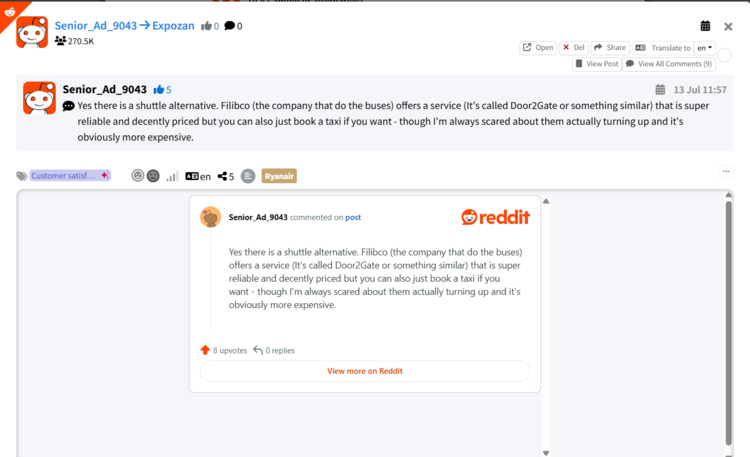
For example, if you’re in a shuttle business and you’re transporting passengers from point A to point B, you might easily find new customers through social listening, just by using buying-intent phrases like “shuttle alternatives from XX airport”, and Mentionlytics will pull social media posts, including Reddit threads with that specific keyword, just like the example in the screenshot below.
Review your keyword list regularly as your business evolves.
Step 4: Choose the Right Social Media Channels for Social Listening
One of the biggest mistakes beginners make is monitoring only the platforms where they actively publish content. That’s a good social media strategy, but not necessarily a good social listening strategy.
Start with the platforms where your audience is most likely to discuss your industry, products, or competitors. For B2B companies, that might mean social listening on LinkedIn, Reddit, news sites, blogs, and industry forums. Consumer brands may see stronger conversations on Instagram, TikTok, YouTube, Facebook, or review platforms. eCommerce businesses should also monitor marketplaces and customer review websites where buying decisions are heavily influenced.
Don’t stop there, though.
As I’ve seen thousands of times, social media conversations constantly shift between platforms. A discussion that begins on Reddit may end up in YouTube reviews, industry publications, or AI-generated recommendations a few months later. Your strategy should evolve alongside those conversations instead of remaining tied to a single network.
Step 5: Set Up Alerts and Dashboards
Once your monitoring is running, configure alerts for the conversations that require immediate attention.
These might include:
- Sudden spikes in brand mentions.
- Sharp changes in sentiment.
- Executive mentions.
- Competitor product launches.
- High-authority media coverage.
- Buying-intent conversations.
- Potential PR issues.
At the same time, create dashboards for your regular reporting. Separate dashboards for marketing, PR, customer support, and leadership make it much easier for each team to focus on the metrics that matter most to them.
Step 6: Review Your Insights Regularly
Social listening isn’t something you “set and forget.” Schedule time each week, or each day for larger organizations, to review your dashboards, identify new trends, refine your keyword lists, and adjust your monitoring based on recent campaigns, product launches, or market changes.
The conversations your customers are having today won’t be exactly the same next month. Your strategy shouldn’t be either.
Step 7: Turn Insights into Action
The final step is also the one many organizations overlook (or miss out completely).
Every insight should lead to a decision.
If customers repeatedly request a feature, pass that information to your product team. If campaign sentiment begins to decline, adjust your messaging before the campaign ends. If a competitor suddenly dominates the conversation, investigate why. If buying-intent discussions increase, make sure your sales team is aware of them.
The strongest social listening strategies don’t produce the biggest dashboards. They produce better decisions. And this is only possible if your social listening tool generates insights from the data it collects.
Mentionlytics has several AI-powered features, like Mention Clustering, Social Intelligence Advisor (SIA), and SIA’s AI Chatbot with valuable insights that speed up decision-making and help spot hot topics.
Bonus: What to Look for in a Social Listening Tool in 2026
Not every social listening platform will be the right fit for you. Some tools simply collect brand mentions from a few social networks, while others help you understand the conversations behind those mentions, uncover trends, and identify opportunities before your competitors do.
When evaluating a social listening tool, these are the capabilities that matter most:
- Wide source coverage. The more sources a platform monitors, including social media, news sites, blogs, forums, review platforms, podcasts, and YouTube, the more complete your picture of the online conversation will be.
- Real-time monitoring and alerts. Social media moves fast. Whether it’s a viral post, a PR issue, or a sudden spike in buying intent, timely alerts help you respond before the conversation moves on. Without this feature, social listening crisis management is almost impossible.
- Accurate sentiment analysis. Counting mentions is useful, but understanding whether people are praising your brand, criticizing it, or expressing mixed emotions is where the real value lies.
- Competitor monitoring. A good social listening tool shouldn’t stop at your brand. Tracking competitors reveals what customers love, what frustrates them, and where opportunities exist to stand out.
- AI-powered insights. Reading thousands of mentions manually isn’t realistic. AI can summarize conversations, identify recurring themes, explain unusual spikes, and highlight trends in seconds.
- Advanced search and filtering. Boolean operators, keyword exclusions, and smart filters reduce noise, ensuring you focus only on the conversations that matter.
- Customizable social listening reports. Whether you’re reporting to your CMO or a client, the ability to generate clear, branded, and customizable reports saves hours of manual work while making your insights easier to understand and share.
The best social listening tools don’t overwhelm you with dashboards and raw data. They help you understand what people are saying, why it matters, and what action your team should take next.
Want to Start Fresh?
Mentionlytics is flexible enough to fit within the budget and scope of businesses of all sizes. Premium listening and insights without a premium price.
How to choose social media channels for social listening?
There’s no universal list of “must-monitor” platforms. The right channels depend on your audience, industry, and business goals.
A simple way to choose is to ask yourself three questions:
- Where do my customers ask for recommendations?
- Where do they complain or leave reviews?
- Where do they discuss my competitors?
Start there, review your results after a few weeks, and gradually expand your monitoring as you discover where the most valuable conversations are happening.
Get Started with Social Media Listening with Mentionlytics Today
Huh, this was a long lecture about the definition, meaning, and strategies of social listening. And we all know that reading about social listening is one thing and seeing your own conversations is something else entirely.
Start monitoring your brand, competitors, or industry in just a few minutes and discover what people have been saying all along. You might find your next customer, your next content idea, or the answer to a problem you didn’t even know existed.
Try Mentionlytics for free (no credit card required), and see where the conversation takes you.
FAQ
What is another name for social listening?
Social listening is also commonly called social media listening. Some people use terms like social monitoring, social intelligence, or online listening, but they don’t all mean the same thing. Social media monitoring focuses on tracking mentions, while social listening analyzes those conversations to uncover trends, sentiment, and customer insights.
How much does social listening cost?
The cost of social listening depends on the platform, the number of keywords you monitor, supported data sources, and advanced features such as AI insights or sentiment analysis. Basic plans typically start at around $50–100 per month, while enterprise solutions can cost several thousand dollars per month. Many platforms, including Mentionlytics, offer free trials so you can evaluate the features before committing.
How does social listening improve customer insights?
Social listening reveals what customers genuinely think about your brand, products, competitors, and industry. Instead of relying solely on surveys, you gain access to spontaneous conversations, helping you identify recurring complaints, feature requests, buying intent, changing expectations, and emerging trends that can improve marketing, customer experience, and product development.
Can ChatGPT do social listening?
No, ChatGPT can not do social listening by itself. It can analyze social listening data once it’s collected, summarize conversations, identify trends, or help interpret results. However, it doesn’t continuously monitor social media or collect brand mentions on its own. For that, you’ll need a dedicated social listening platform that gathers data from multiple online sources, but if it has MCP, you can connect it with ChatGPT, and then it will analyze everything that your social listening tool collects.
How to improve public relations strategy using social listening?
Social listening helps PR teams detect reputation risks early, monitor media coverage, identify misinformation, measure public sentiment, and discover journalists, creators, or industry experts discussing relevant topics. It also allows teams to evaluate the impact of PR campaigns and respond before small issues become larger crises.
Is social listening worth it?
Yes, social listening is worth it, especially today when every brand depends on online reputation and customer feedback in the eyes of LLMs. Social listening also helps you understand customer needs, measure campaign performance, monitor competitors, detect emerging trends, identify sales opportunities, and protect your reputation. For many organizations, those insights lead to faster decisions and better business outcomes than relying on traditional reporting alone.
How do companies use social listening for crisis management?
Companies use social listening as an early-warning system. By monitoring sudden spikes in mentions, negative sentiment, influential authors, and recurring complaints, they can identify potential issues before they become widespread. Real-time alerts allow PR and communications teams to investigate quickly, respond appropriately, and reduce the impact of a developing crisis.
What does social media listening involve?
Social media listening involves monitoring online conversations about your brand, competitors, products, or industry and analyzing those conversations to understand sentiment, recurring themes, customer needs, and emerging trends. The process typically includes monitoring, analysis, insight generation, and taking action based on the findings.
How can I utilize social listening data in media planning?
Social listening helps you understand where your audience spends time, which topics generate engagement, what content resonates, and which influencers or publications drive conversations in your industry. Those insights can help you prioritize media channels, refine campaign messaging, allocate budgets more effectively, and measure how media activities influence public perception.
