Well, turning customers into advocates is no piece of cake. However, there are efficient ways to do so: loyalty programs, incentives, and … social listening! Yes, social media listening can increase customer advocacy for your brand. But you have to learn how to take advantage of it.
You know, you can’t force customer advocacy. It depends on your customers’ willingness to recommend your products or services to their colleagues, friends, and families.
Nonetheless, you can cultivate customer trust and goodwill toward your brand which in turn can boost advocacy.
And social listening can help you understand your customers through and through, gather feedback in real time, and offer exceptional customer care.
In this article, you’ll find four efficient methods to use your social media listening tool to convert your customers into your most loyal defenders!
Table of Contents
What is customer advocacy?
Customer advocacy is the result of having satisfied, loyal customers praising your brand and voluntarily recommending your products and services to others.
It can take many forms, from positive online reviews and favorable social posts to referrals and word of mouth.
Customer advocates are more trustworthy than any ad or influencer endorsement for two reasons.
First, they don’t get paid to promote your brand. They recommend it because they genuinely like it. So, customer advocates have nothing to gain which makes them credible.
Secondly, they are already customers which means they have a satisfying experience with your offerings. Of course, you won’t recommend a product that disappointed you, will you?
That’s why customer advocates can bring better results than any paid marketing activity.
The more customers you nurture into advocates:
- The better your brand reputation will be.
- The more sales you’ll generate.
- The more customer loyalty you’ll create.
Customer Advocacy Examples
To better understand the concept of customer advocacy, let’s look at some real-world examples of famous brands.
Example #1: Semrush
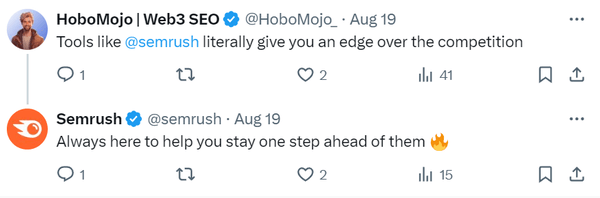
Semrush is rocking on social media. With just a scroll down on their X (Twitter) account you can find lots of customer advocacy tweets.
Here’s our top pick: An SEO expert — the ideal customer of Semrush — praising the platform with a genuine endorsement.
Source: X (Twitter)
Example #2: Mentionlytics
We absolutely love it when our customers are happy and sharing it with the world.
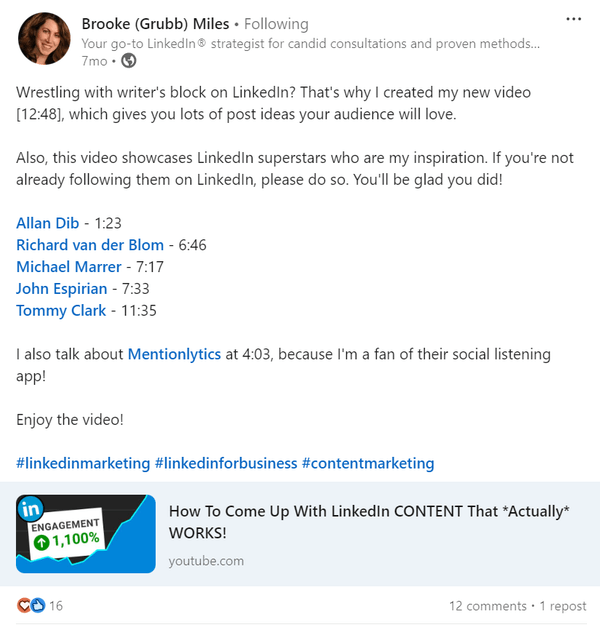
In the example below, Brooke, a successful social media expert talks about how she uses our platform to generate new content ideas for her LinkedIn account. No sponsored content — just a heartfelt recommendation from our customer.
Source: LinkedIn
Example #3: Slack
Slack has a truly loyal customer base.
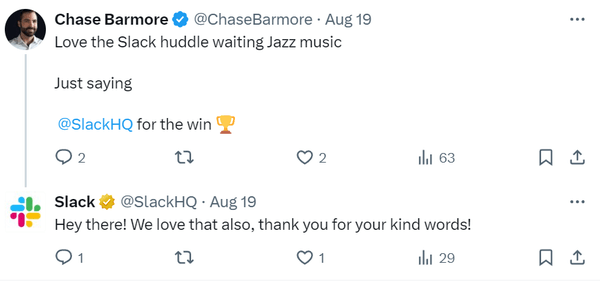
In the example below a user subtly advocates for Slack by complimenting one of the minor features he enjoys about the communication app.
Source: X (Twitter)
Now, are you feeling inspired by these examples? Then, it’s time we dive into social listening for customer advocacy.
How does social listening help in becoming a more customer-centric company?
If you want your brand to survive and succeed today, you should consider your customers’ needs and feedback at every step of your business journey.
From developing new products and enhancing existing ones to creating content and hosting events, you need to focus on what your customers want — not what your team, boss, or that “industry guru” says.
There’s no better way to uncover your customers’ preferences and learn about their interactions with your business than social listening.
Social media platforms provide a great online space for people to exchange their experiences with your products and services, share their concerns, and reach out for assistance.
So, with social listening, you gather and analyze all this buzz around your brand and transform it into insights.
For example, most social listening tools offer sentiment analysis of your brand mentions. You can read the negative ones and discover honest customer feedback to spot where there’s room for improvement.
In a nutshell, you can’t have a customer-centric approach as a company, without access to customer data. And the highway to this data is social listening.
Keep reading as we explain four methods to use social listening to gain more advocates below.
4 proven ways to increase customer advocacy with social listening
Social listening increases customer advocacy if you put into practice the following tactics.
Respond promptly to customer inquiries on social media
Your customer care needs to be fast and efficient online to keep your customers happy.
With 1 in 4 Gen Z, Millennials, and Gen X saying that social media is their preferred channel to get customer service, you should be able to respond promptly to customer inquiries on these platforms.
See below, for instance, how Sephora is addressing customer inquiries in real time to provide exceptional customer care.
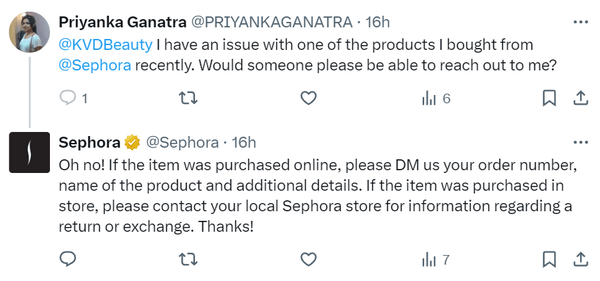
Source: X (Twitter)
Having a social listening tool scanning all major social channels for mentions of your brand, product, or service helps you stay on top of all customer requests. Thus, you can respond to customer inquiries from a single dashboard without switching to different platforms.
What’s more, a listening tool can notify you of new mentions in real time. For example, if you use Mentionlytics for social listening you can choose to receive an email notification for new mentions to glance at and respond timely to offer your assistance when needed.
Also, listening to social media conversations helps you manage complaints as well.
How? With sentiment analysis of your mentions. You can filter only your negative mentions and ta-da! All customer complaints in one place.
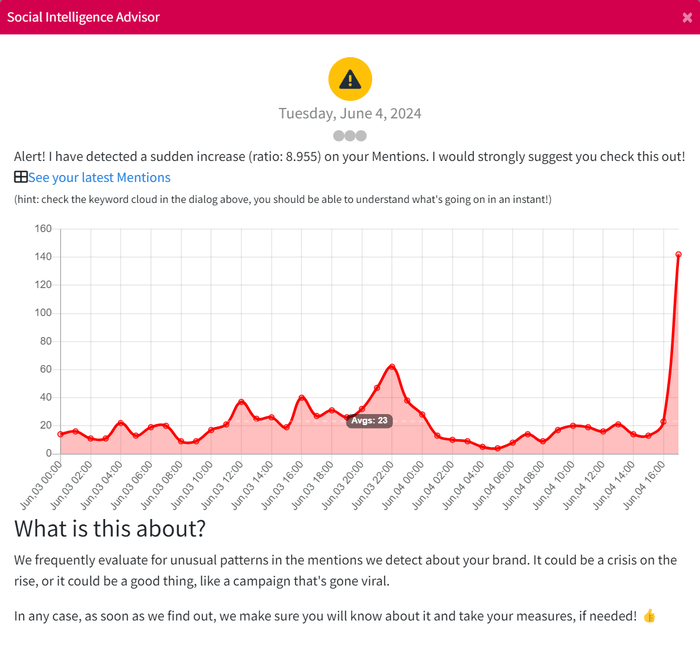
Especially, when it comes to complaints, which you must address quickly to prevent further customer disappointment, setting up alerts whenever negative mentions pop up can be life-saving.
Mentionlytics’ Social Intelligence Advisor (SIA) sends you a notification whenever there’s a spike in your mentions so that you are aware of emerging issues requiring your attention.
By responding promptly to all customer requests and offering your help, you make customers feel appreciated which increases customer satisfaction.
And satisfied customers are more willing to advocate for your brand.
Participate proactively in industry conversations
Jumping into industry conversations on social media expands your reach to new potential customers. But, most importantly, it helps you engage with your existing ones who know and trust you.
Engagement brings interaction. Interaction cultivates a better, more personal relationship with your customers and humanizes your brand.
See below how Spotify seamlessly engages in industry conversations about music.
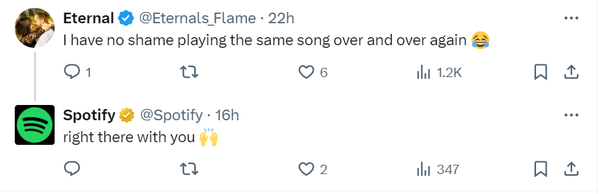
Source: X (Twitter)
That’s how you create a bond with your customers which makes them more loyal. This loyalty is a definitive factor for turning customers into brand ambassadors.
Social listening can help you discover industry conversations by tracking all mentions of important industry keywords and hashtags. You can monitor hot topics in your niche, see which are getting traction, and join in.
Nurture customer relations with engaging content
Nurturing your relationship with your customers has never been easier than in this social media era. You don’t have to bug your customers with emails and messages to build a connection. All you have to do is create interesting content on social media.
Fun and educational content is key to creating a loyal brand community. Your customers expect more of you than a decent product. However, to create interesting posts, you need to know what your customers are interested in.
That’s where social listening comes into play to give you insights into your audience preferences. For example, you can track your posts’ reach and engagement to uncover what types of content and what topics are more engaging for your audience.
Also, you can keep an eye on your competitors’ activities to see which of their posts get more traction to inform your plan with similar ideas. And of course, by monitoring industry conversations you can understand what people talk about to create relevant posts and videos.
However, social listening tools are valuable to nurture your customer relations for another reason too.
With such a tool you can keep track of user-generated content (UGC) pieces all in one place. Thus, you can thank your customers for their endorsement and show you appreciate their advocacy. That’s a great way to motivate others to advocate for your brand as well.
See, for instance, how Starbucks interacts with UGC to show appreciation.
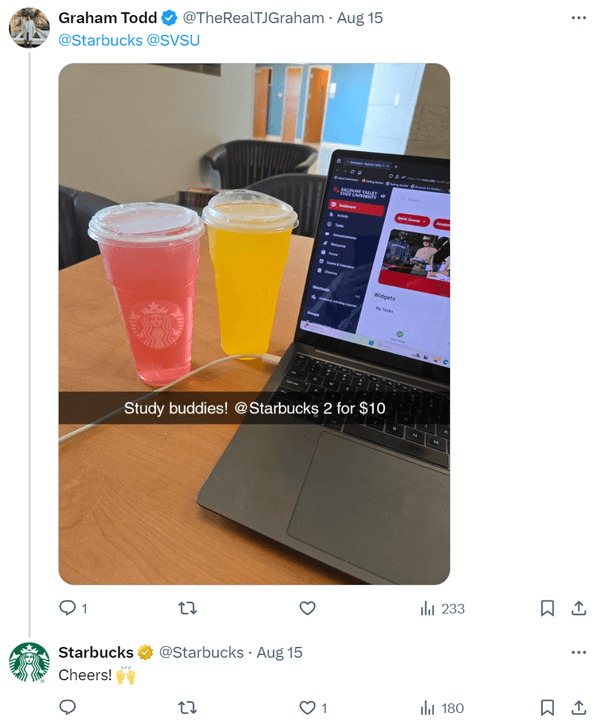
Source: X (Twitter)
In this case, Graham has tagged Starbucks’ official account on X (Twitter). But if he hadn’t, Starbucks would have had no clue about this mention, unless their team had been using a social listening tool that tracks their brand name.
So, apart from gathering all UGC in a single platform, social listening helps ensure no piece slips under your radar.
Improve your products/services based on honest feedback
Social listening doesn’t provide you just with your audience’s content preferences.
Social media is a rich source of honest feedback on your products and services. So, by tracking your product/service name you’ll learn what your customers love and hate about it.
This feedback will help you prioritize specific product enhancements, come up with new feature ideas, or just fix bugs and other malfunctions quickly to avoid losing customers.
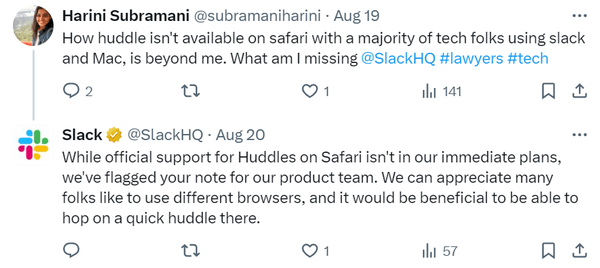
For example, see below the feedback of a user and how Slack’s team handled it wisely.
Source: X (Twitter)
Through social media, customers communicate their needs and recommendations with brands freely. You have to make sure you listen and adjust based on customer feedback to win in the long run.
3 tips for advanced social listening to boost customer advocacy
So, customer advocacy and social listening go hand in hand. Now, let’s see three best practices to take social listening to the next level.
Set up alerts for branded keywords
A common mistake marketers make when using social listening tools is NOT setting up alerts properly. That’s how you end up with hundreds of email notifications in your inbox that you can’t keep up with. Or worse, missing a useful feature of your subscription.
So, take some time to set your alerts for ONLY what’s important to you. We recommend having alerts only for your branded keywords, as those mentions need your immediate attention.
Set Up your Alerts
In Mentionlytics you can have real-time alerts for new mentions to stay on top of new customer inquiries and respond instantly!
Choose a tool with wide channel coverage
Customers don’t use just one social platform to request assistance. Sure, X (Twitter) is a popular channel for customer care. However, some people prefer Reddit, Instagram, and TikTok too to ask questions.
Not to mention that there are social media where you don’t have a brand account but people still talk about your products and services there.
So, how do you make sure you have the whole picture of what people say about your brand everywhere online? We suggest you choose a social listening tool covering all major social media channels.
For example, except for the entire web, Mentionlytics monitors X (Twitter), Instagram, TikTok, Facebook, Reddit, LinkedIn, Pinterest, Telegram, and YouTube to help you track every brand mention anywhere in the social media world.
Don’t forget AI
No doubt, AI simplifies lots of tasks in marketing. In social listening, AI algorithms help extract insights and knowledge from enormous data volumes.
That’s why you should pick a tool offering AI features to make your social listening process easier.
For instance, in Mentionlytics you can find AI Mention Clustering, which automatically groups mentions about the same topic, regardless of the different wording, to help you spot the hottest topics in your niche.
Or you can understand your customer experience better with the AI Emotion Analysis. For this, we use AI to identify joy, anger, fear, and sadness in your mentions which can be valuable for uncovering customer pain points to take into account in product development.
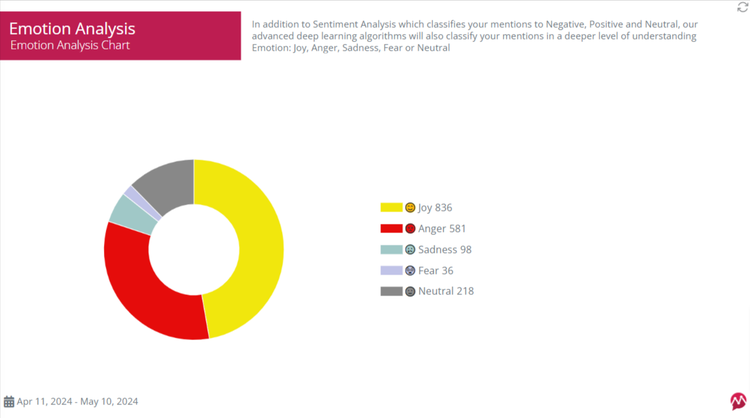
AI can help you interpret customer data from social media to inform your strategies. The more you understand your customers, the more you improve customer care and advocacy.
Increase customer advocacy with Mentionlytics’ social listening features
To sum up, social media listening can increase customer advocacy by helping you:
- Offer better and faster social customer support
- Create a bond with your community through interesting social media content
- Improve your offerings based on customer needs
And more!
So, now it’s time to apply all the methods above and turn customers into advocates with Mentionlytics’ social listening platform. Start your free trial today — 14 days, no credit card required!