LinkedIn monitoring is the process of tracking and analyzing your personal or company’s mentions, reputation, and performance on LinkedIn, usually done by using a social media monitoring tool. It helps you gain insights about your posts’ engagement, track conversations related to your industry, measure your profile’s influence, and keep an eye on your competitors.
This process is not merely about keeping tabs on likes, comments, or shares. It’s about understanding the bigger picture – which topics are trending, what your target audience is talking about, who are your industry’s thought leaders, and what’s the sentiment around your brand.
Monitoring your brand on LinkedIn can lead to more significant interactions, better engagement, strategic business decisions, and increased visibility within your industry.
In this article, we explain how you can do LinkedIn monitoring with Mentionlytics and share some best practices for better results.
Table of Contents
How to Monitor LinkedIn Activity
To start with, you’ll need to sign up in Mentionlytics at no cost (14 days free, no credit card required) and follow the steps below.
To enable LinkedIn monitoring, once you have your Mentionlytics account, do this:
- Navigate the side menu and find Settings.
- Go to the Account Configuration page.
- Click the Add Social Profile or Location button.
- Choose LinkedIn Profile from the dropdown menu in the Type of Media section.
- Click Authorize with LinkedIn. You will be redirected to your LinkedIn account to allow access to Mentionlytics, and then back to choose the LinkedIn Profile(s) you want to monitor. These must be Business Profiles not personal profiles, as this is not allowed by the official LinkedIn API.
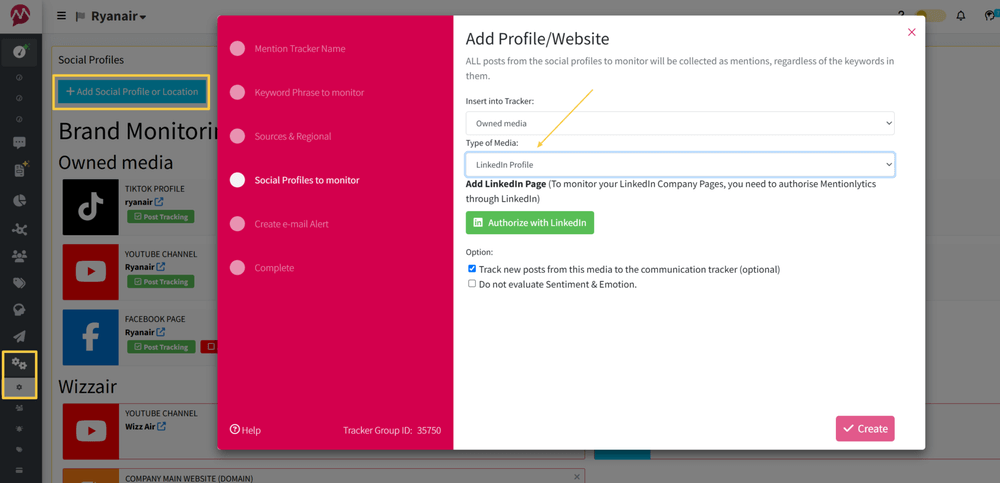
That’s it! From now on, Mentionlytics will be monitoring your posts’ performance and any comments they have.
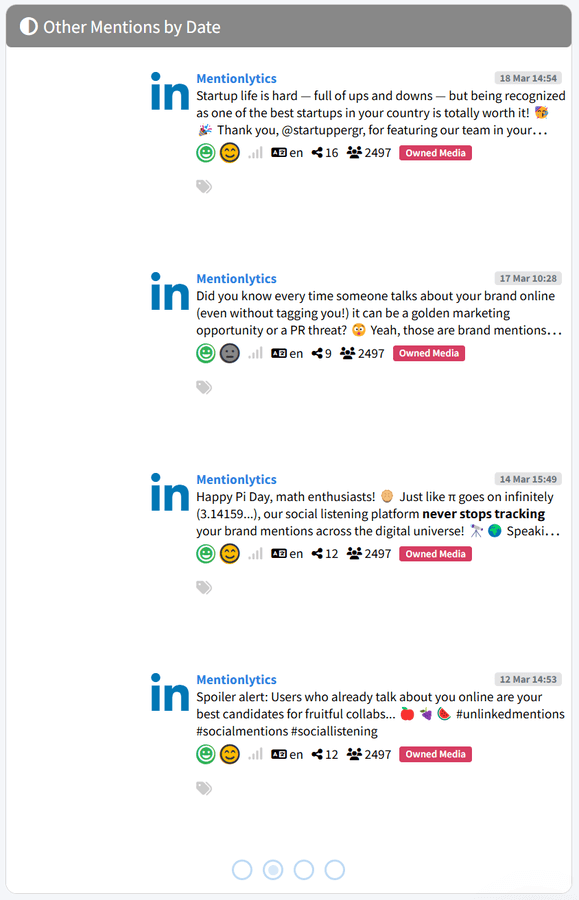
You can view your LinkedIn posts and comments in the Other Mentions box in your Overview Dashboard or in the corresponding feature.
Monitor Public LinkedIn Results
In addition to results from your LinkedIn business pages, you will also be seeing some other LinkedIn results, which are public pages as captured by search engines.
So, to sum up, the following data will be available to you after you authorize your LinkedIn profile in Mentionlytics:
- Posts from one or several LinkedIn Business pages. You can add multiple pages in which you are admin.
- Comments to your posts from other LinkedIn users that will be analyzed for Positive or Negative sentiment and show up in your Brand Monitoring reports.
- Other LinkedIn results that are publicly available in search engines, such as Google.
Now with tracking your LinkedIn activity, you will have an even more complete view of your brand’s social media presence, in addition to Facebook, Instagram, Youtube, X (Twitter), and more.
You will be able to see all your brand’s performance and results in a single dashboard, giving you the bigger picture of your brand on social.
7 Tips for Better LinkedIn Monitoring & Results
Now, in this part, we give you some best practices to follow for scoring better in your LinkedIn monitoring results.
- Set Clear Objectives: Before you begin monitoring, define what you want to achieve. Are you looking to increase brand awareness, generate leads, or engage more effectively with your audience? Clear objectives will guide your monitoring efforts and help identify the right metrics.
- Monitor Your Brand & Reply: Keeping track of mentions of your brand on LinkedIn is crucial. Respond to these mentions promptly and professionally to drive engagement and maintain a positive brand image.
- Track Relevant Metrics: Depending on your objectives, some metrics will be more important than others. For instance, if your goal is to increase brand awareness, track impressions and reach. For lead generation, monitor clicks and conversion rates. Metrics like engagement rate, comments, shares, likes, and follower growth can help you understand how well your content is performing.
- Analyze Your Competitors: LinkedIn monitoring isn’t just about your brand; it’s also about understanding your competitors. Observe their content strategy, engagement, and follower growth. This can provide insights into what’s working for them, and where there might be gaps you can exploit.
- Leverage LinkedIn Analytics: LinkedIn provides its native analytics tool, offering valuable insights into your page performance and audience demographics. Regularly checking your analytics will help you understand your audience better, fine-tune your content strategy, and improve engagement.
- Stay Engaged with Your Network: LinkedIn is a social platform – interaction is key. Respond to comments on your posts, engage in relevant group discussions, and reach out to potential connections. Additionally, consider the best times to post on LinkedIn to optimize engagement and reach a wider audience. This will not only increase your visibility but also provide more material for monitoring.
- Test and Adjust Your Strategy: Regularly review your LinkedIn monitoring results and adjust your strategy accordingly. What type of content gets the most engagement? What times are your followers most active? Use these insights to optimize your LinkedIn strategy.
Do LinkedIn Monitoring with Mentionlytics for Free
What are you waiting for? LinkedIn is essential for your social media marketing strategy, especially if you’re in the B2B market.
FAQ
Can LinkedIn be Monitored?
Yes, LinkedIn can be monitored by social media monitoring tools, but only for public results available also to search engines, such as Google, and for tracking your own profile and business page performance after authorization.
Can Someone Tell if You Check their LinkedIn?
Yes, LinkedIn notifies users when someone has viewed their profile. However, all users can adjust their privacy settings to browse anonymously. So, whether someone knows you viewed their profile depends on both users’ privacy settings.
What is The 4-1-1 Rule on LinkedIn?
The 4-1-1 rule is a social media content strategy — applicable to LinkedIn too — that suggests a balanced approach to different kinds of posts: 4 educational posts sharing relevant content such as industry news or articles, 1 original content piece sharing your insights and soft-selling what you offer, and 1 promotional post to drive sales of your products or services.