

Let us ask you something: Where is B2B social listening on the scale of your priorities? Is it just a buzzword, or do you truly get the best out of it? Are you using it but not satisfied with the results? You’re not alone; we’re here to help you improve that.
Did you know social listening can help you spot the brand’s advantages, collect feedback, and gain first-hand experience? It can also help you realize weak spots and see where there is room for improvement. Finally, you can collect highly conversational leads (the sales team would appreciate that the most).
Whether B2B or B2C, social listening is your chance to improve your marketing strategy and campaigns and build a strong brand.
We’ll show you how your B2B brand can benefit from social listening. From tracking trends, gathering valuable insights from niche conversations, and refining positioning and strategy.
Table of Contents
The Difference Between B2C and B2B Social Listening Strategy
Focus. Focus. And focus! That’s the main difference between the two.
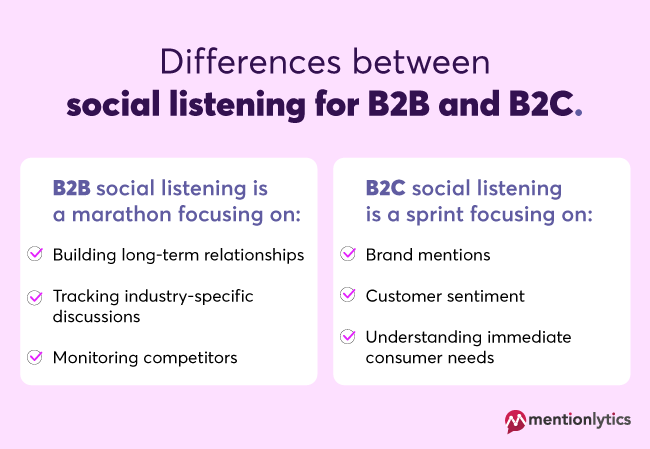
For example, social listening for B2B is like a marathon and should focus on:
- Building long-term relationships
- Tracking industry-specific discussions
- Monitoring competitors
On the other hand, B2C social listening is more of a sprint, focusing more on:
- Brand mentions
- Customer sentiment
- Understanding immediate consumer needs
Every salesperson will agree that the sales cycle with B2C takes only a few minutes compared to a few months with B2B. From the marketing aspect, the decision-makers in B2C brands are individuals, unlike B2B, where we have multiple stakeholders.
You can see the complexity. It’s not uncommon for brands to use the best social listening tools on the market, yet they are not gaining useful insights.
Let’s fix it! Here and now!
Get insights out of data
Don’t just track mentions but get actionable information with Mentionlytics’ SIA!
What Can B2B Brands Gain From Social Listening?
Everyone is talking about social listening and using the tools to get closer to their target audience. Yet it’s tough to determine what to expect.
Well, some follow the book and use it for more standard insights, but some unconventional methods might help you go further.
To go above and beyond, you need to:
- Set good parameters
- Think out of the box when setting up keywords in your tool to gain valuable insights
- Put them all together as a puzzle
That’s how you get the best out of the social listening process. Let’s tick the boxes.
Rich insights into customer preferences
Want to enhance customer experience? Listen carefully to what they say on social media platforms and forums, such as Reddit.
Although 86% of marketers use Facebook in marketing services, this doesn’t diminish the importance of others. Do you track what reviews they leave on blogging platforms and their websites?
It’s not just about how often your brand was mentioned (it’s just basic). Instead, make sure to read between the lines and see what their pain points are.
That’s why focusing solely on mentions or shares misses the true value of B2B social listening. You need something more complex to provide rich insights into customers’ preferences.
Pay attention to specific words and phrases people use when describing their needs, wants, or frustrations. These words can reveal their real motivations, even if they aren’t saying them outright. Track these themes over time to see how preferences shift and evolve.
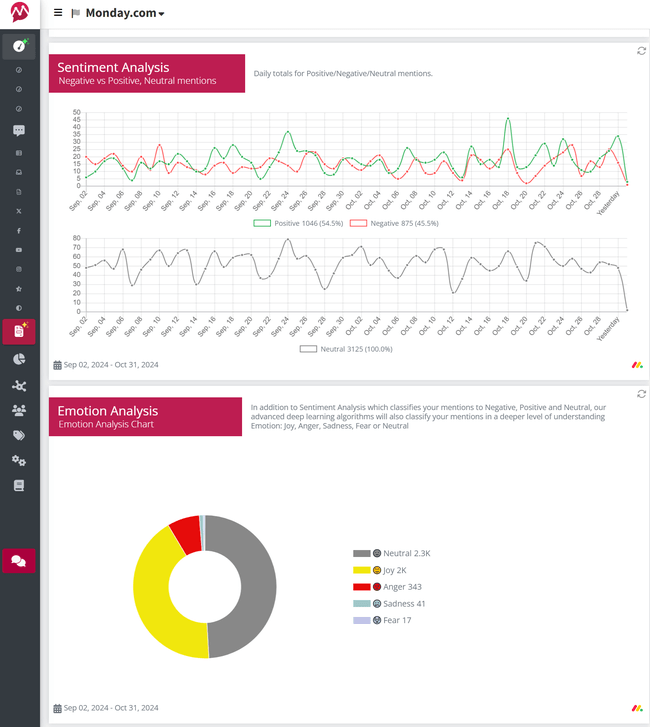
The sentiment counts more than numbers. Detect the tone of your brand mentions. Is it positive, negative, or neutral? That might tell you a lot about how successful your strategy and your products are.
For example, Monday.com seems to do great work, as you can see below.
Also, you know you should engage with customers. Addressing their complaints gives the signal that you care. Sometimes it’s enough to see their comments and get valuable insights into how they truly feel about your business and where they want to see improvements.
These subtle insights can make your offerings more appealing and your marketing message stronger, hitting the target on a deeper level.
Reliable market intelligence
Everything changes by the minute. That’s why it’s always a good idea to keep your eyes (and ears) wide open, feel the pulse of the industry, track industry trends, and keep tabs on your competitors.
Don’t limit yourself to keywords relevant to your brand; use social listening to gain insights into your entire industry. Stay on top of trends, and make sure you’re not falling behind.
Eh, if only Nokia had listened to the shift in customers’ preferences, perhaps they wouldn’t be out of the game in the cell phone market.
Better brand reputation for B2B companies
Your brand reputation may not seem significant if you’re just beginning your journey, but remember that every query on social media that stays unanswered for good is red-flagging all future potential buyers. According to Forbes, 96% of prospects do their own research before they opt for your service or product (Just saying).
Reputation, in general, is fragile. Tracking every mention of your B2B business or question someone asks through social posts is almost impossible manually.
That’s where social listening steps in. It’s equally important for B2B and B2C companies. It’s your ticket to avoid PR and social media crises.
Yes, you’re answering questions and addressing complaints. But social listening is not only about that. It lets you identify potential advocates — influencers, people who love and talk about your brand positively.
Engaging with these advocates can help build a stronger community around your brand, further boosting your reputation.
5 Most Common Use Cases of Social Listening in B2B Marketing & Best Practices
Most marketers use social media listening not just to count brand mentions but also to stay ahead of their competitors. Here are some typical cases in which B2B companies and marketers use social listening tools.
1. Gathering customer feedback to improve your products/services
Don’t just collect comments; understand what your customers love, where they struggle, and how they experience your product or service.
By using social listening tools, such as Mentionlytics, you can dive into their conversations, pinpoint the exact features that need improvement, identify gaps that need filling, and ultimately tailor your offering to fit their needs better.
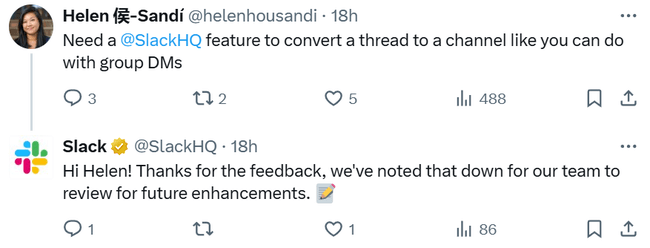
Learn from the best: Take Slack as an example.
They used customer feedback to improve their team communication platform’s functionality and overall user experience. Instead of focusing on financial metrics like leads and opportunities, Slack put effort into analyzing conversations and making customer-facing metrics front and center – things like NPS (Net Promoter Score) and daily active users.
Slack listened closely for seven months before releasing its first version, and the moment its key users pointed out that something wasn’t working, they fixed it immediately. That strategy proved to be the winning one.
And as you see below, they still listen!
Source: X (Twitter)
2. Monitoring your competition to spot gaps in the market
One of the most effective social media marketing strategies is using social listening to identify competitors’ disadvantages and areas of weakness.
Analyzing your competitors and seeing where they failed to fulfill their customers’ expectations leads to opportunities. Those unmet needs are your chance to step in and deliver. It’s a new way of competitor analysis.
Monitor their customers’ complaints and frustrations because you can position your product as the better solution, filling the gaps they overlooked. Turn competitors’ weaknesses into your strengths; it’s the competitive edge you need to stand out.
Look at HubSpot and Marketo. HubSpot used social listening to monitor conversations around Marketo, paying close attention to customer complaints. Users didn’t like its complexity, limited usability, and complicated setup process. HubSpot recognized this as an opportunity to position itself differently.
They created campaigns emphasizing user-friendliness, easy onboarding, and educational content to simplify marketing automation. Voila, HubSpot positioned itself as the “easy-to-use” alternative, effectively targeting marketers who were tired of overcomplex processes.
See how the only sentence they describe their tool is “The easy-to-use CRM to scale your business.”

Source: LinkedIn
This helped HubSpot to gain a competitive edge and attract users who valued simplicity and a more intuitive experience.
3. Identifying new trends to generate content ideas
Staying ahead of the curve means keeping your content relevant and updated; social listening is just the right method. By identifying new trends in your industry, you can create content that resonates with your audience and positions your brand as a thought leader.
Never miss a new trend!
Monitor industry keywords and hashtags with Mentionlytics to stay in the loop of what’s trending without doom scrolling!
Take Zapier as an example. They used social listening to monitor emerging AI, integration, and automation conversations. You can notice that, whenever some interesting topic takes over social media, they publish a blog post about it.
They generate educational content, from blog posts to webinars, focused on various topics directly or indirectly related to automation to enhance customer interactions.
That’s how Zapier positioned itself as the authority and synonym for integration and automation. This approach enabled them to connect with their audience in real time, and their content directly addressed what people were eager to learn.
4. Spotting warm leads ready to buy
Close the gap between your marketing and sales department for good! Social listening can help you identify leads that are ready to convert.
By closely monitoring conversations, you can spot when someone is sending buying signals or showing interest in solutions like yours. These leads are low-hanging fruit, and engaging with them at just the right time can make all the difference.
Take IBM, for example. IBM specializes in social listening and tracking discussions in tech forums and social media channels where IT decision-makers discuss data storage and cloud computing challenges. This way, IBM can identify prospects actively exploring solutions or asking for recommendations. Not to mention, they have their own source, IBM TechXchange Community.
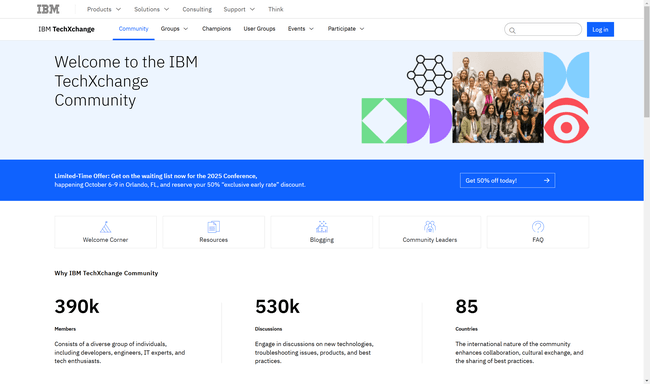
Whenever someone asked about the best cloud storage or expressed frustration with current data solutions, IBM would quickly engage, offering helpful advice and content tailored to their needs. This approach allowed IBM to identify warm leads, shorten the sales cycle, and increase conversions.
5. Preventing reputation issues before it’s too late
When it comes to your brand’s reputation, speed is everything. Social listening tools like Mentionlytics allow you to catch potential issues early – before they blow up into full-blown crises.
Whether it’s a negative review, a dissatisfied customer spilling bitterness over social media channels, or even misinformation spreading, the faster you can address it, the better.
Do you know the story of how Dell has used social listening to protect its brand reputation? Back in 2010, Dell created the “Social Media Listening Command Center” to monitor online mentions and potential red flags across multiple channels.
When they noticed negative feedback starting to grow on one of their laptop models, they acted instantly. What did they do? They:
- identified and addressed common issues,
- contacted affected customers,
- troubleshooting,
- offered replacements when necessary.
That’s how you calm the situation and turn potentially damaging feedback into an opportunity to improve customer relationships. This type of responsiveness differentiates between brands that lose trust and those who gain respect in challenging situations.
Tips to Master B2B Social Listening
Now, let’s review the actionable tips for your social media strategy. Make sure to follow them when you monitor and listen to social media.
Identify relevant keywords and hashtags
That’s probably the most important step in monitoring social media and developing a listening strategy. Pay attention to keywords and hashtags related to your brand, industry, and competitors across social media platforms.
Don’t forget to track the industry’s important keywords to see the storm before it arrives.
This broad approach enables you to turn into a detective. It captures every mention, even those that aren’t directly tagged, giving you a fuller picture of how your brand and industry are perceived.
Combine data
Don’t just rely on what you hear from social media; bring in data from your CRM, customer support, website analytics, and sales reports. This combination helps you paint a complete picture of your customers, their journey, and their evolving needs.
By merging social insights with customer data, you can understand what people are saying and how their behavior aligns with their words.
For example, are the customers discussing product issues on social channels the same ones reaching out for support several times in a row? Then, it’s time to solve them!
Select a feature-rich tool
When selecting a social listening tool, make sure it offers more than the basics. Look for a solution that tracks mentions and provides deeper, actionable insights, such as sentiment analysis, trend detection, and automated alerts.
A tool that offers AI-powered recommendations, customizable reports, and the ability to manage customer service directly within the platform can be a game-changer. Make sure it supports various sources — from social networks to forums, blogs, and review sites — so you don’t miss a thing.
B2B Social Listening for Free? Yes, please!
We know there are many options out there. Before choosing, you need to consider all the tool’s features and how these features help your business strategy.
Selecting the right tool to track social conversations, analyze them, and provide reports is bingo. But you have to check whether the tool fits your business needs.
That’s why, when it comes to B2B social listening, it’s always the best idea to try the tool first. Tune in and listen closely with Mentionlytics today — 14 days free, no card required!

