


Review management is one of the most sensitive parts of gatekeeping your business reputation. And reviews existed long before 2010, when the internet made every dissatisfaction public and available. Only then was it called word of mouth.
But from the 2010s onwards, online reviews started to really break (or make) deals. First, it affected hotels and restaurants, then retail, beauty, and healthcare, and finally SaaS… and before we knew it, every business with a Wi-Fi signal was under public scrutiny.
I still remember hunting for a charming little hotel on the coast, fingers hovering over the “Book Now” button, until I scrolled down to the 4-star reviews on TripAdvisor.
Not the glowing 5 stars (I couldn’t find anything juicy from them), but the ones with just enough tea to reveal the truth. “Amazing view, but paper-thin walls,” “Staff was sweet, but breakfast? Meh.” The hotel kept silent. Guess who didn’t book that night?
Yes, managing reviews is about damage control, but it’s also about building trust at scale, review by review, response by response. And it seems review management in 2025 became even more complex, since not only your future customers read it, but AI search engines as well.
In this article, I’ll walk you through the dos, the major don’ts, and the top tools that can help you stay on top of your reviews, whether you’re running a spa, a small SaaS startup, or an eCommerce empire.
Here we go!
Table of Contents
What is the Meaning of Review Management?
Review management is a continuous process of tracking, responding to, and analyzing online reviews. As an addition to that, a part of managing reviews is also nudging satisfied customers to leave (positive) reviews.
So, as you can see, there are several areas you have to cover:
- Tracking: The review platforms are all over the place. Google My Business, G2, TripAdvisor for hotel review management, Yelp, Booking, Facebook shop page, TikTok UGC, and so many others. It is impossible to track it all down, and potential customers have the superpower to discover the reviews and platforms you may have forgotten about.
- Replying: The customer perceptions are always subjective. Keep that in mind when replying to your business reviews. Try to reply to all reviews, especially negative ones. By doing that, you’re decreasing the negative impact of that review and improving customer relationships. A well-worded reply can flip the script from “Yikes” to “Hmm, maybe that guy was just having a bad day. This place looks fine.”
- Analyze feedback: Yes, you need to analyze the customer experience and improve your service or product based on the feedback (especially if you have multiple complaints on the same problem). Remember that these are the most valuable insights for your marketing strategy.
- Encouraging satisfied customers to leave a review: Some customers will leave a glowing review without being asked (bless them). But most? You’ll have to ask. Gently. Regularly. And if you can consistently tip the scale in favor of positive reviews, well, you’re on the right track.
What are the Different Types of Online Reviews?
Not all reviews are created equal, and definitely not all of them have the same intention, impact, or platform personality. Here are four categories to help you understand what you’re dealing with in the vast world of online feedback.
1. Platform-Based Types
The where of the review matters just as much as the what. Some platforms are SEO goldmines, others are all about aesthetics and social proof.
- Google Reviews: These reviews directly influence your local SEO, map visibility, and overall credibility. Google Business Profile reviews are often the first thing a customer sees about your business. First impressions matter.
- Facebook Reviews: The social butterfly of review land. Reviews here aren’t just for you; they show up in newsfeeds, comments, and Messenger conversations. Think of them as the gossip circle of the internet.
- TripAdvisor / Booking.com / Yelp: Niche, but powerful. If you’re in the travel, hospitality, food, or services industry, these reviews can make or break your business. People read them religiously (especially the 3-star ones).
- G2, TrustRadius, AppSumo: For SaaS and B2B, these are the holy trinity. Decision-makers binge-read reviews here before even scheduling a demo or buying the software.
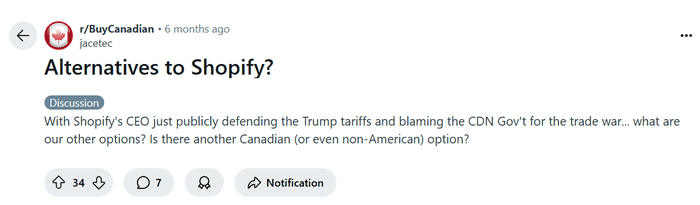
- Reddit Reviews: Reddit isn’t a traditional review platform, but it’s where people go for real talk and unfiltered opinions. Whether it’s r/SkincareAddiction, r/SaaS, r/BuyItForLife, or r/PersonalFinance, you’ll find gold (and shade). “Has anyone tried XX product?”; “Alternatives for XX software” and similar threads can bring up your brand’s name and spontaneous reviews. And don’t forget that Reddit threads often rank high in Google search results.

- Yelp Reviews: Extremely important if running a local business with multiple locations. Review sites like Yelp contain business listings based on business location. And if you provide services for locals, for example, this one is crucial.
2. Sentiment-Based Types
Ever wondered what the sentiment is behind the review? The emotional tone of the customers’ reviews? These are categorized by vibe, not platform.
- Positive: Glowing, heart-eyes, praise-singing reviews from customers that make your day (and fuel your sales). Positive customer feedback is always welcome!
- Negative: Oof. These sting, but negative feedback is also a goldmine for improvement, if you know how to respond well.
- Neutral: The “meh” of reviews. Not angry, not thrilled, but just… there. These typically contain useful and honest feedback that you can act on.
- Fake: Ah, yes, the impostors or the review spam. Often emotionally extreme, vague, or suspiciously similar to each other. Keep an eye out, because your future customers definitely will.
3. Format-Based Types
Some reviews are short and sweet. Others come with a 7-minute unboxing video, 14 photos, and here’s what you can find on online review platforms and beyond:
- Text-Based: The classic format across multiple review websites. Found on platforms like Glassdoor, Google, Amazon, and Yelp.
- Photo Reviews: Great for visual industries (hospitality, fashion, food). A picture of a “burnt toast breakfast” hits harder than a 1-star review ever could.
- Video Reviews: Found on YouTube, TikTok, or Instagram. These can go viral, good or bad, in a split second.
Star Ratings Only: The silent judgment. No words, just 1–5 stars. Mysterious and frustrating, but still influential.
4. Intent-Based Types
Why did someone leave that review in the first place? What’s their motive?
- Informational: The helpful human. They want others to benefit from their experience. Bless them.
- Emotional: The rant or the rave. Driven by love, fury, or deep disappointment. These reviews are usually loud and memorable.
- Incentivized: “Get 10% off your next purchase by leaving a review!” Sounds tempting, but be careful! Many platforms have rules against this (especially Google and Amazon).
5. Focus-Based Types
Not all reviews are judging the same thing. Some zoom in on the product. Others judge your service, team, or your CEO’s haircut (okay, that one is irrelevant).
- Product or Service Reviews: These are the bread and butter of eCommerce, hospitality, and SaaS. Customers focus on what they got — a dress, a facial, a CRM platform, and how it performed. “The battery life is amazing, lasts 3 days without charging”, “Massage was great, but the receptionist was a bit cold”, “Setup was easy. Integration with Shopify worked like a charm.”Interestingly, a 2025 study shows that product reviews often use a neutral, pragmatic tone focusing on facts, while service reviews include more intense emotions (joy, frustration, etc.) due to their experiential nature.
These reviews influence buying decisions directly. They’re typically feature- or experience-specific, and often what people read right before clicking “Add to cart” or “Book now.”
- Company Review: Think bigger picture. These reviews evaluate your business as a whole, including its values, customer service, ethics, and how you handled a refund. “Ordered three times, never had an issue. Legit company.”
These build or break long-term trust. Even if someone isn’t reviewing the specific product, they’re judging if your brand is worth sticking with. These often live on Google, Trustpilot, or Reddit.
How to Manage Reviews of Your Product or Service in 5 Easy Steps
Online reputation is something that can help (or slow down) your sales. The direction it takes largely depends on your reputation management and how quickly and effectively you respond to reviews.
Managing online reviews can improve your reputation, build trust, fuel conversations, and most importantly, give you the insights into what makes your customers tick.
Yes, but all of that is possible if you do it the right way. If not, you might end up in a loop with 12 tabs of review sites and a growing pile of notifications.
To avoid this, simply follow these steps.
Step 1: Start Review Monitoring
Before you can manage reviews, you need to actually find them.
And no, checking Google every Tuesday and stalking Yelp on Fridays doesn’t count as a strategy. Your positive and negative reviews are scattered across platforms: Google, G2, TikTok comments, TripAdvisor, Reddit (yes, Reddit), and possibly a Facebook page or other social media you forgot you had an account on.
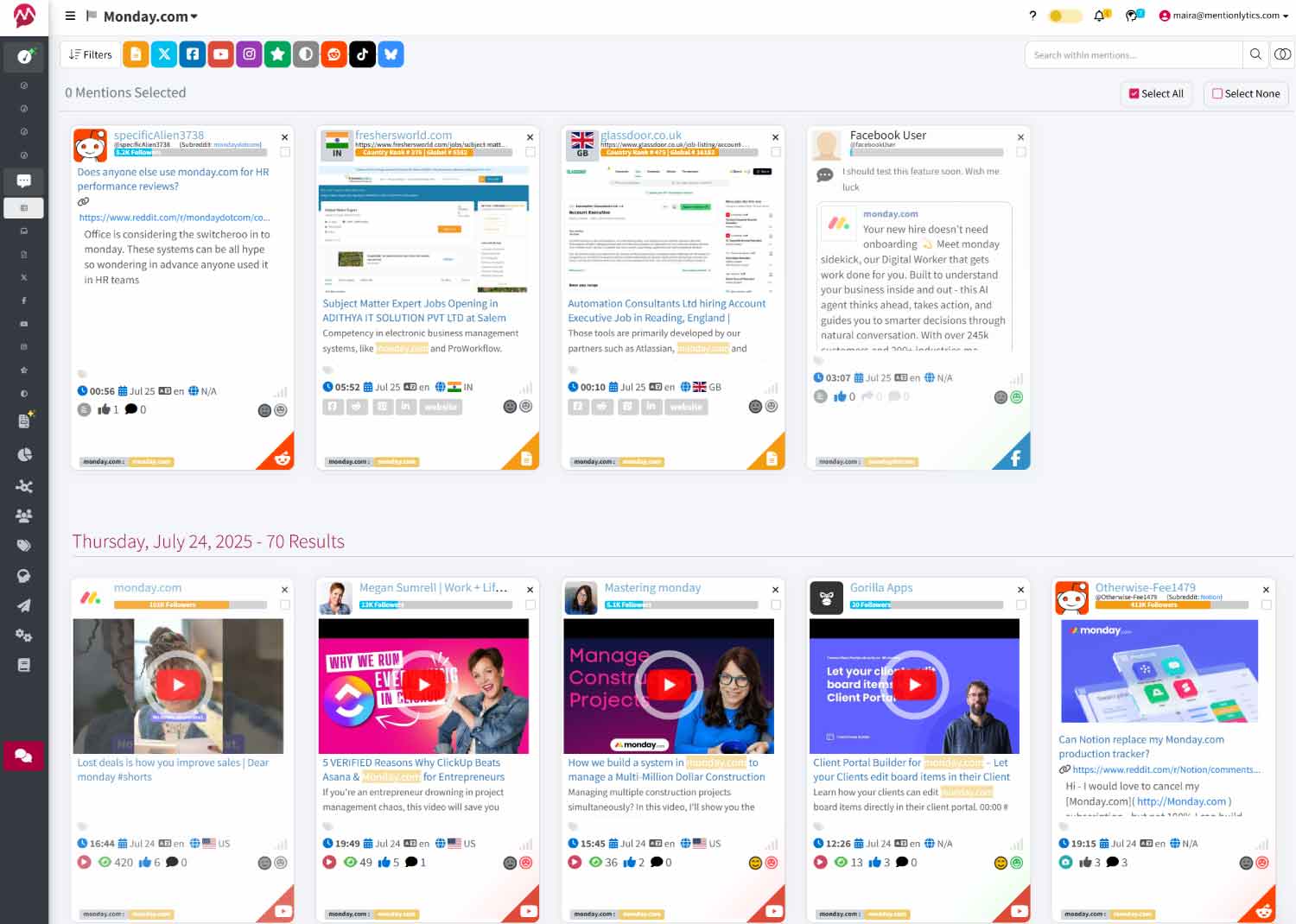
That’s why you need a review monitoring tool that pulls everything into one neat dashboard, like Mentionlytics. It helps you track, tag, and never miss a single “meh” or “marvelous” comment again.
Step 2: Prioritize Reviews that Need Immediate Attention
Not all reviews require the same level of urgency.
Use AI sentiment analysis (yep, Mentionlytics does that too) to surface the negative reviews first. That way, you can jump in and respond before a small complaint becomes a viral X thread.
You can use filters to focus on the platforms that matter most to you. For example, if you’re running a local business, you need to pay special attention to customer feedback on Yelp and Facebook.
Oh, and trolls? I understand. Too many notification pings can make your day a living hell. That’s why you need some of the best review management software solutions. Mentionlytics, for example, has SIA, the AI Social Intelligence Advisor. It can spot and flag trolls, spam, and fake reviews so you don’t waste your time arguing with a bot named “Jeff99.”

Step 3: Analyze Positive & Negative Reviews to Extract Feedback
Once you’ve handled the urgent stuff, it’s time to dig deeper and find out what people really think of your product or service. Are they overall satisfied, and where is there room for improvement (what makes them roll their eyes)?
This step helps you turn feedback into strategy. Improve weak spots, double down on customer favorites, and align your marketing message with what your happy customers are already shouting about.
You know who is my favorite brand when it comes to getting the best out of reviews and mentions and handling negative reviews? Clickup. This brand takes it seriously.
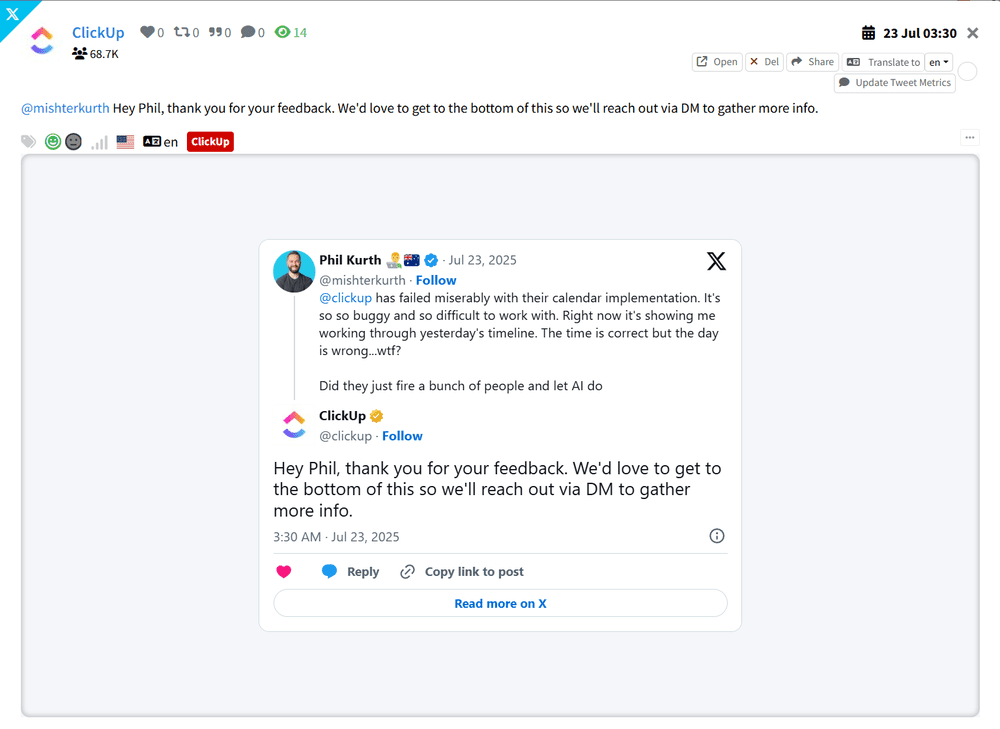
Regardless of the number of followers, impact, complaints, or shout-outs, they are there, just minutes after you call them out. And they don’t let it pass.
Step 4: Automate Review Requests
If you want more reviews (and trust me, you do), you need a repeatable request reviews system. Manually asking one by one? That doesn’t scale.
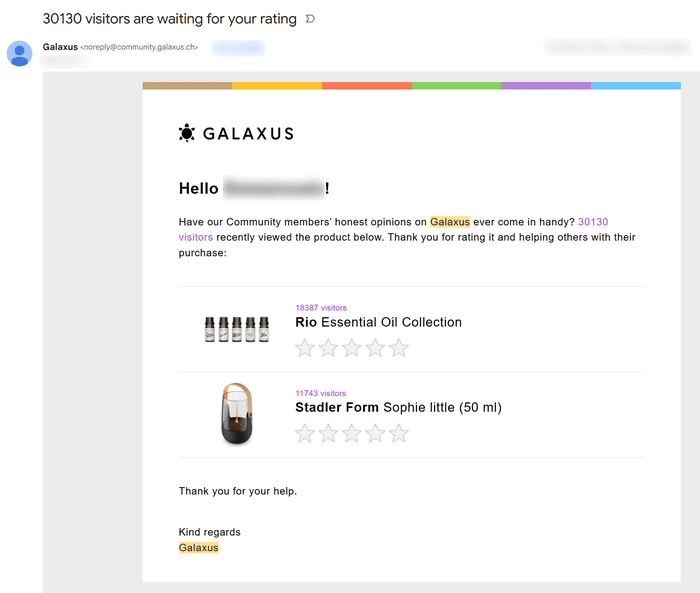
Instead, automate your review requests. Set up post-purchase emails, in-app prompts, or follow-up messages to politely nudge your happiest customers to leave their thoughts.
See, for example, how Galaxus, the biggest online retailer in Switzerland, nudges customers to leave reviews on their own e-commerce platform through emails.
Step 5: Turn Positive Reviews into Testimonials and Success Stories
Now for the fun part: recycling the love.
Take your best reviews and turn them into brand assets:
- Showcase them on landing pages (you’ve seen Mentionlytics do it 👀)
- Repost them on social (with a little design magic)
- Turn a great review into a full-blown case study or success story
- Add them to your newsletter, email signature, or even packaging
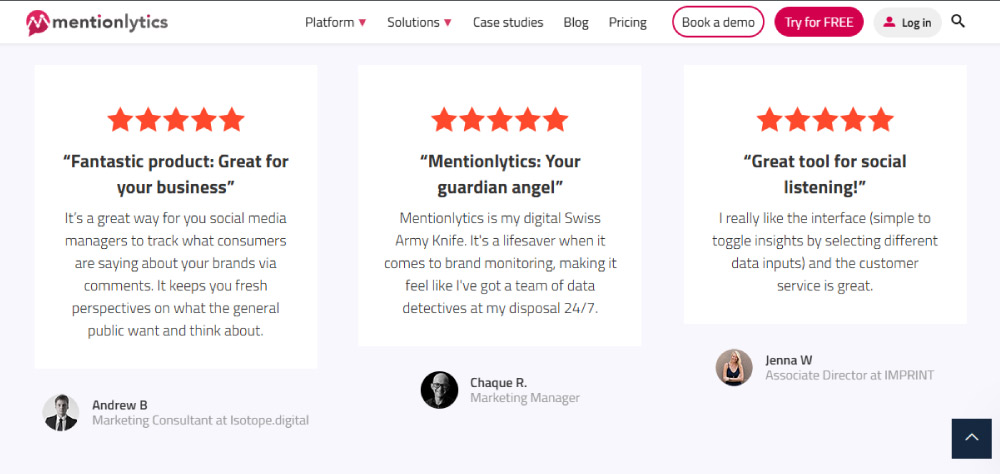
When a customer says, “This saved my life” (or, you know, “Best app ever”), use it. Don’t let those gems sit in the dark. Make it a part of your online review management strategy!
4 Don’ts When Managing Reviews & What to Do Instead
Based on my experience, 95% of brands repeatedly do at least one of the things NOT to do. (Which one is your crime? 😈 Be honest.)
Let’s spill the tea and show you how to clean it up.
1. Don’t Ignore Negative Reviews
A 1-star review sitting there, lonely and unanswered? Yeah, that’s not a good look. It tells future customers, “We don’t really care what you think.”
I know it’s easy to respond to online reviews when they praise you, but trust me, those stinging little lines are even more important. They can damage your brand reputation and repel future customers.
Here’s an example: Monday, a well-known SaaS company, receives a negative review on G2. 1-star rating and a lot of anger.
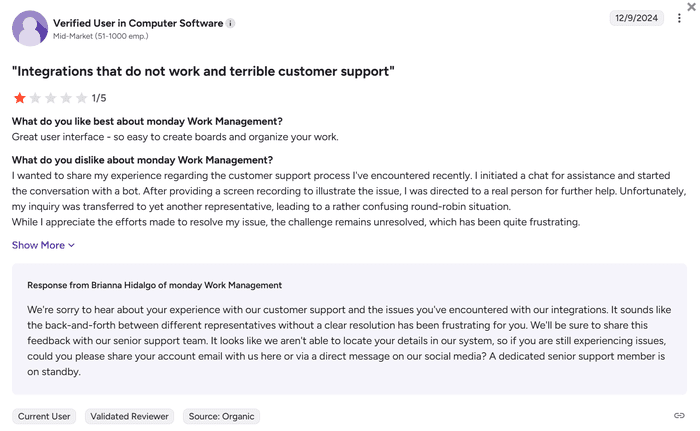
Source: G2
They don’t ignore the fire alarm; instead, they respond to the negative review with empathy and facts. They crafted the answer so well that everyone reading the review will probably disregard these negative points.
What to do instead:
Always respond: professionally, calmly, and fast. Even if you can’t solve the issue right away, showing up makes a difference. A thoughtful reply can build trust and sometimes even convert a critic into your next brand advocate.
2. Don’t Let Fake Reviews Live
Fake reviews are sneaky. Whether it’s a suspiciously glowing 5-star from “User123” or a one-star rant from a bitter ex-employee… they all chip away at your credibility.
What to do instead:
Monitor reviews regularly. Use tools like Mentionlytics to detect suspicious patterns and report fake ones before they spiral. Platforms like Google and Yelp do take action, but only if you flag it.
Stop the Trolls From Damaging Your Reputation
Discover the fake reviews without endless scrolling through review platforms. Mentionlytics will do that for you without manual hustle.
3. Don’t Respond Robotically
“Thank you for your feedback. We’re sorry to hear about your experience.”
Cool. Now say something that doesn’t sound like it came from a fridge manual.
Here’s a key takeaway: You can automate your review requests, but you can’t automate your responses, unless you use AI-powered tools.
What to do instead:
Personalize your replies. Use the reviewer’s name, refer to specific details (“Sorry about the wait time on Thursday!”), and write like a human. It shows that you’re not just checking boxes, you actually care.
4. Don’t Push Customers Too Hard to Leave Reviews
I know, you want more stars. But there’s a fine line between prompting and annoying. Overdoing it with pop-ups, emails, retargeting ads, and that awkward post-purchase guilt trip? That’s how you lose a happy customer.
What to do instead:
Ask gently and strategically. A thank-you email after a successful delivery? Perfect. A subtle nudge inside your app? Great. But respect the “no” if it comes. No review is better than a forced and frustrated one.
Top 3 Online Review Management Software for 2025
Now, if I had to choose a customer review management software, I would go for one of these three.
Mentionlytics: Your AI-Powered Mention and Review Guardian
An all-in-one online reputation monitoring and review management tool with a near-perfect G2 score (4.9/5).
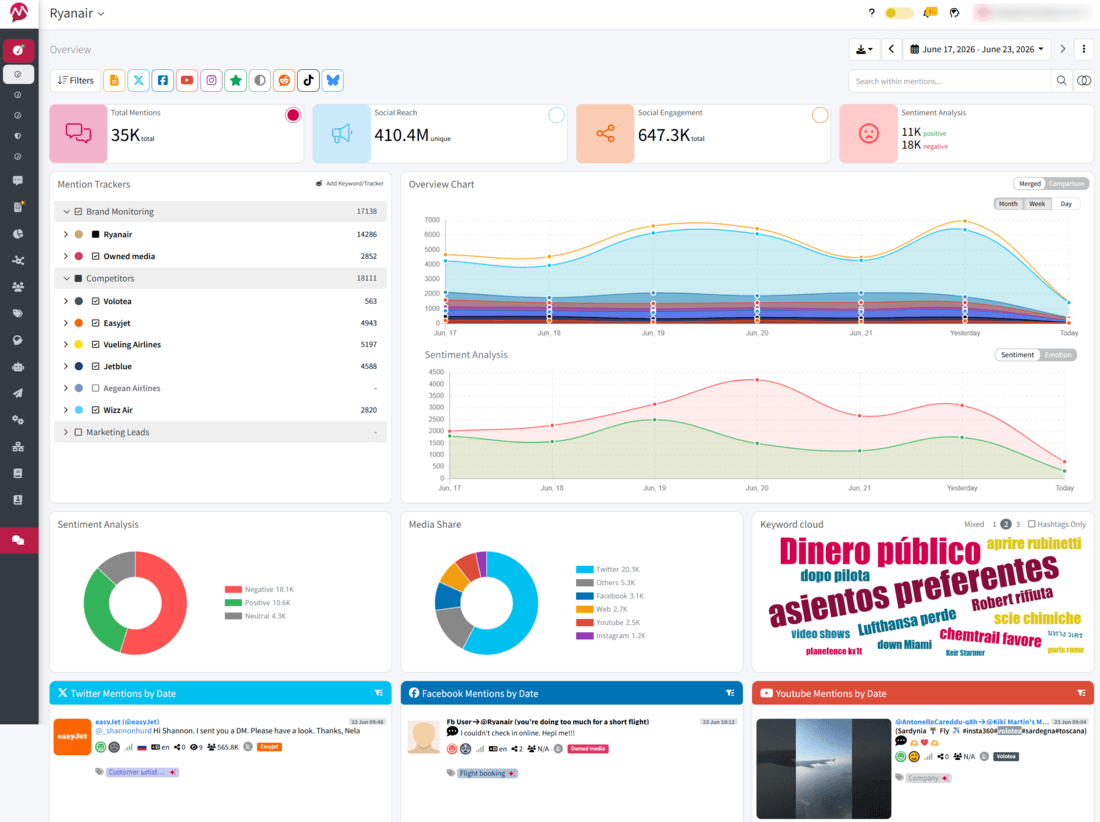
Whether your reviews appear on Google, TikTok, YouTube, Instagram, X, Reddit, G2, TripAdvisor, or that obscure forum someone dug up from 2022, Mentionlytics captures them, makes sense of them, and lets you know which ones are urgent to reply to.
And yes, it works in multiple languages. With 96%+ sentiment accuracy. Across platforms. With smart alerts. And shareable dashboards.
How It Can Help You:
- Tracks brand mentions and reviews across platforms: Google, TripAdvisor, Reddit, blogs, news sites, and social media. In one word: the whole internet.
- Runs multilingual sentiment analysis that actually understands sarcasm (finally!) with human-like sentiment accuracy.
- Sends real-time AI-powered alerts when something weird is going on (AI Anomaly Detection = no more surprises) or when it spots a false review or detects a troll.
2. ReviewTrackers: Focused on Customer Feedback
ReviewTrackers specializes in review collection and analysis, helping brands gather feedback across multiple review platforms (Google, Facebook, TripAdvisor, G2 — you name it) and turn it into actionable insights. Its score on G2 is 4.6.

It’s less flashy, more focused, and ideal for brands that prioritize listening to customers and responding at scale.
How It Can Help You:
- Centralizes customer reviews from 100+ sites into one platform for easy monitoring
- Helps you identify reputation trends with review volume and rating heatmaps
- Automates review request campaigns to boost volume across key platforms
3. ReviewFlowz: Review Monitoring for B2B & SaaS
If your reviews live on G2, Capterra, Trustpilot, or niche B2B directories, you have probably heard about ReviewFlowz. It’s built for SaaS and software-first companies that want to track, react to, and showcase their product reviews in real-time.

It’s lightweight, email-driven, and easy to integrate into Slack or your product team’s daily workflow. Oh, and it’s scoring 5/5 on G2.
How It Can Help You:
- Monitors B2B review platforms like G2, TrustRadius, and Capterra
- Sends review alerts straight to Slack, so your team sees them as they happen
- Offers embeddable widgets to show off your top reviews on your website
Manage Your Online Reviews with Mentionlytics
So, as you can see, there’s really no excuse.
You can track, respond to, and analyze reviews anytime, anywhere. And you definitely don’t have to keep repeating the same review management mistakes. (I see you, brands stuck in 2018.)
With AI-driven recommendations and search engines increasingly tuned into customer sentiment, it’s past time to take control of your online reputation.
Grab a tool. Build your own review management system.
Start managing reviews like you mean it with Mentionlytics’ free trial. Within these 14 days, you can get intelligent alerts, deep-dive tracking, and real-time insights.
Who knows, perhaps you will discover that troll that’s been messing with your reputation for a while.
FAQ
What is a review management system?
It’s an online review management tool or process used to track, respond to, and analyze online customer reviews across multiple platforms.
Who regulates online reviews?
Online reviews are regulated by consumer protection authorities (like the FTC in the U.S.) and the platforms hosting them (e.g., Google, Yelp, Amazon).
What makes an online review credible?
Specific details, verified purchase tags, balanced tone, and consistency across multiple sources all boost a review’s credibility.

