There are a hundred great market research tools for startups to use for gathering business intelligence. But the thing is, most of them require a lot of your marketing budget.
As a startupper, you can’t invest in expensive tools. Otherwise, you’ll wipe out your budget even before putting your strategy into action.
We know the struggle. And we have the solution.
In this article, we will introduce 10 affordable tools for market research to gather customer and competitor insights.
Table of Contents
- What Are Market Research Tools?
- Why Are Market Research Tools Important for Startups?
- 10 Market Research Tools for Startups
- 1. Mentionlytics: For Social Media Buzz Tracking
- 2. Statista: For Data Visualization
- 3. Make My Persona: For Building Buyer Personas
- 4. Semrush: For SEO Keyword Research
- 5. Glimpse: For AI-Powered Market Research
- 6. Loop11: For UX Testing
- 7. Userlytics: For User Testing Sessions
- 8. Google Ads: For Product Demand Discovery
- 9. Think With Google: For Understanding Customer Behavior
- 10. Reddit: For Gathering Real Customer Voices
- Market Research Tips for Startups
What Are Market Research Tools?
Market research tools help businesses gather information about their target market, ideal customers, and competitors.
From data-rich platforms to online survey forms, these tools help in gathering customer intelligence and competitor insights. Businesses use this information to plan their strategies, develop new products, and more.
Why Are Market Research Tools Important for Startups?
As early-stage businesses, startups need to use market research tools for a variety of reasons. Below we analyze the 3 main ones.
1. To Find the Right Audience
Identifying the ideal customers to reach out to with your marketing communications is hard. Especially for startups with innovative products appealing to a handful of early adopters.
So, market research software can provide the necessary data to understand your target audience.
We mean, what they like and dislike, what social media they prefer, how they buy, and many more valuable insights to fuel your growth.
2. To Find Gaps in the Market
As a startupper, you probably founded your company to fill a gap in the market with your innovations.
But what about other market gaps and untapped needs of your customers?
Those gaps can guide you in creating new products or services. Also, you can develop new features for your existing products to address emerging needs.
3. To Reduce Risk
Having a startup means juggling multiple sales and marketing activities to increase your revenue. However, knowing where to invest more is key to reducing the risk of wasting your budget on the wrong initiatives.
Market research can help you with that in two ways.
First, to see what your competitors are doing and how it turned out for them.
Secondly, to figure out your audience’s preferences. Those preferences can point you in the right direction to maximize ROI.
10 Market Research Tools for Startups
1. Mentionlytics: For Social Media Buzz Tracking
Mentionlytics tracks what people say about your products, services, competitors, and the industry across social media and the web.
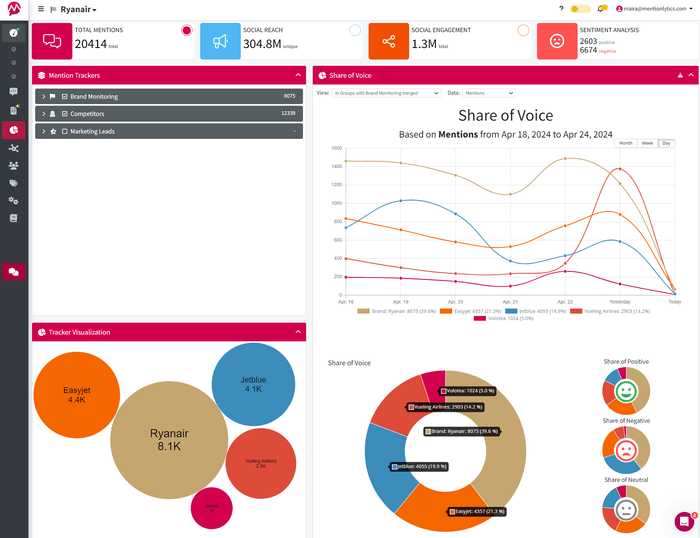
With our social listening tool, you can:
- Keep yourself informed about the latest trends and hot topics in your niche to enhance your marketing strategies.
- Spot the true preferences and needs of your target audience to create new offerings.
- Monitor customer feedback on your products and services to make adjustments.
- Learn what people like and dislike about your competitors’ offerings to draw lessons from their successes and misses.
- Discover where you stand in the market with automatically calculated Share of Voice.
Overall, Mentionlytics combines customer, market, and competitor insights, all in one data analytics tool.
Pricing: Starts at $69 per month but offers a 14-day free trial.
2. Statista: For Data Visualization
Statista is a well-known data visualization platform offering comprehensive information on various topics. It creates clear business insights by visualizing accurate research results and studies.

Source: Statista
You can get reliable data for market research from over 170 industries and 150 countries on this platform. With Statista, you discover trends, customer preferences, and even predictions for your niche.
Pricing: It offers access to free statistics with a basic account. For more data, you need to choose a plan. Starts at €149 per month.
3. Make My Persona: For Building Buyer Personas
Make My Persona is a free marketing tool for startups to define the key characteristics of their ideal buyers. It mainly serves B2B marketing because the template relies on the professional profile of your targeted prospects.
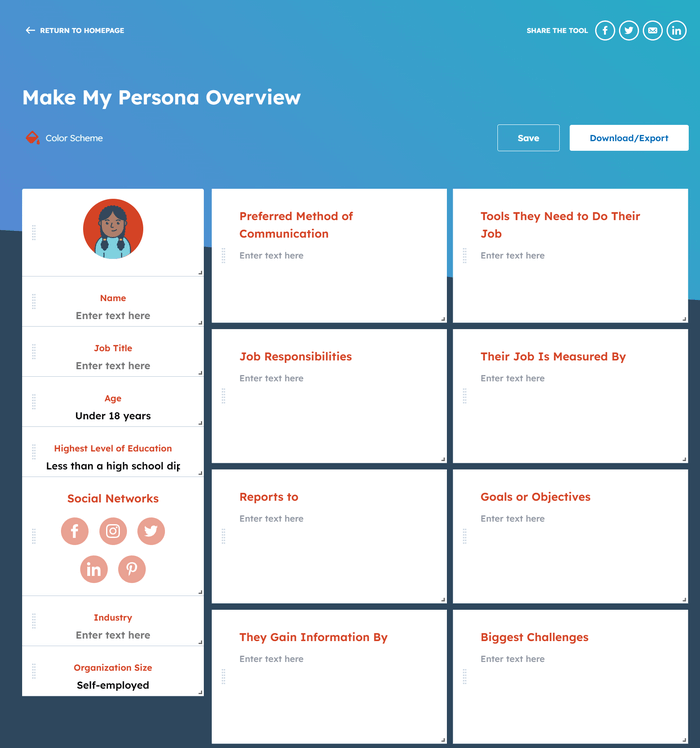
Source: Hubspot
This tool helps you create customized buyer personas for your products and services. Begin by picking a name for your ideal customer. Then, you set an age range, their job title, industry, preferred social media, biggest challenges, and more.
It isn’t for market research per se. But it’ll help you define your target customer for whom you should gather insights.
Pricing: Free tool
4. Semrush: For SEO Keyword Research
Semrush helps you with all things SEO. But it can also be handy for market research.
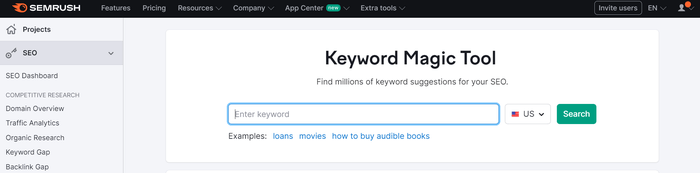
You can use it to identify the most searched industry keywords. That way you spot new trends in the market. Also, it helps you detect new competitors entering your league.
In fact, Semrush is amazing for competitor analysis. It offers insights into your competitors’ audience and where they get website visitors from.
Pricing: Starts at $129.95 per month but it offers a free trial.
5. Glimpse: For AI-Powered Market Research
Glimpse is a powerful market research platform for creating surveys. It helps you collect data on anything you need and target the right audience.

Source: Software Advice
Looking for customer preferences or market trends? You can design any survey with Glimpse.
Also, this platform leverages AI every step of the way. From writing your survey questions to analyzing your data, Glimpse employs AI to make your life easier.
Pricing: You can start with a free plan with limited credits.
6. Loop11: For UX Testing
Loop11 puts the user experience of your website to the test. It’s perfect for market research. Especially in the area of how useful your website or platform is for your target audience.
After all, without a user-friendly website, you can’t win in the digital world.
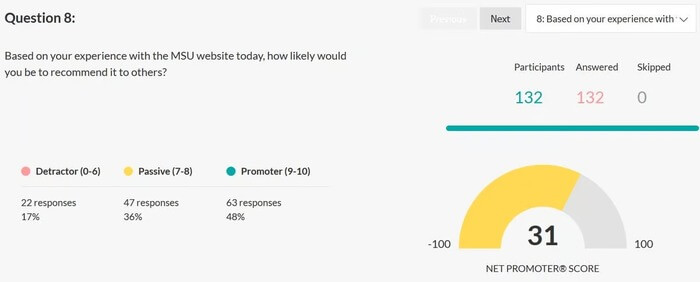
Source: G2
This tool simply asks users to perform specific tasks on your website. And they have to describe if it was easy or difficult to perform.
Also, you can use this tool to test your competitors’ websites to see what they’re doing better.
Pricing: Starts at $199 per month but it offers a 14-day free trial.
7. Userlytics: For User Testing Sessions
Userlytics is a practical alternative tool to UX testing. It helps you gather data on the usability of your website or mobile app.

Source: GetApp
The platform asks test participants to complete specific tasks. Then, they answer a question about the difficulty of the tasks. You can leave the question open-ended, make it multiple-choice, or ask them for a rating.
As for the participants, you can choose users with specific demographic information. Or even bring your own users.
Pricing: You have to contact the company.
8. Google Ads: For Product Demand Discovery
Surprisingly, you can use Google Ads to conduct market research.
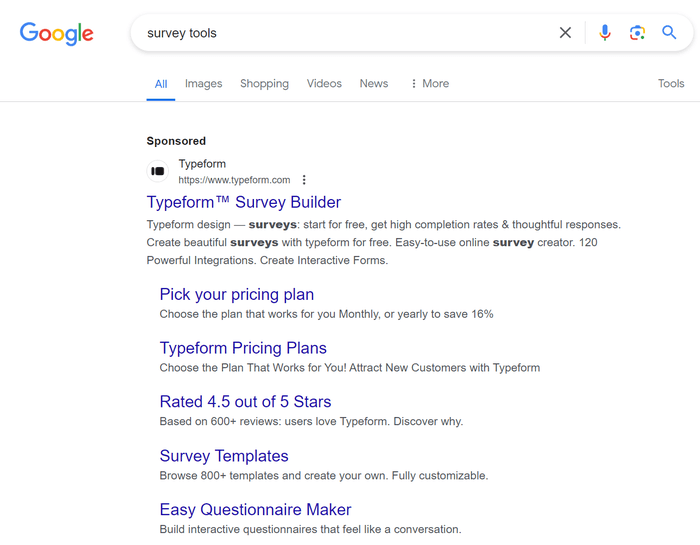
You know for every keyword there’s a cost per click (CPC). That CPC indicates the importance of the keyword for the search engine. Now, if you check the CPC of your product category — as a keyword — then the higher the CPC, the higher the demand for it.
Also, you can use Google Ads to do A/B testing for your product campaigns. You can run ads with different copies or visuals to test which one appeals more to your audience.
Knowing what works best for your target customers is part of effective market research too.
Pricing: Depends on the CPC of the keywords you run ads for.
9. Think With Google: For Understanding Customer Behavior
Think with Google is a powerful set of free market research tools for startups.
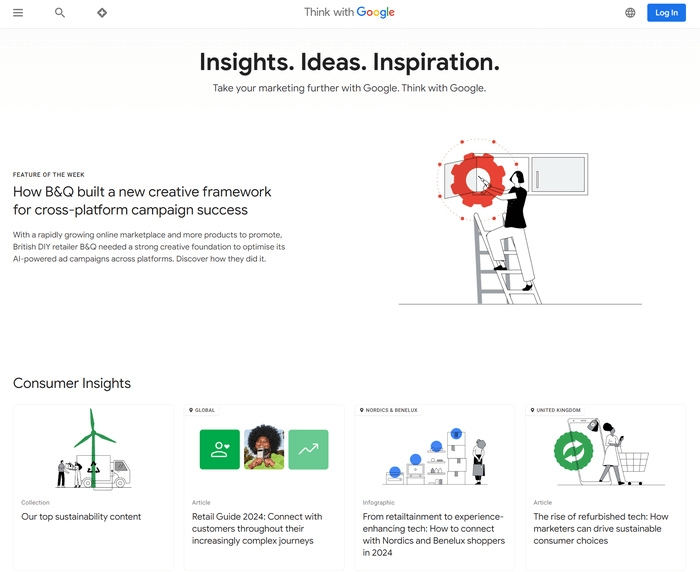
Specifically with Google Trends, you can keep up with what’s trending in your industry. And you can see whether people are interested in your offerings.
Furthermore, with Insights Finder you can deeply understand your target audience. Also, use the Market Finder to make informed decisions on the markets you’ll expand to.
Pricing: Free tools
10. Reddit: For Gathering Real Customer Voices
Reddit is the ultimate social media channel to hear what your customers have to say.

Source: Reddit
First, you can start by finding a subreddit that your target audience uses. Subreddits are online communities dedicated to specific topics.
Then, all you have to do is dive into the conversations. From Reddit, you can spot new trends in your niche, find your customers’ untapped needs, and more.
Pricing: Free tool
Market Research Tips for Startups
We saved the best for last. Here are 5 tips to conduct market research like a boss.
1. Focus on Your Needs First
Getting an overwhelming amount of consumer insights and market intelligence can be distracting. You end up losing your focus on what you want to achieve with this information.
So, you should have a clear objective of how you’ll use your market research results. Will you develop a new feature on your product? Or will you expand your targeting to different audiences?
Always have your business question top of your mind when choosing a new market research tool.
2. Use a Mix of Tools
As you see, most of the above-mentioned tools serve different purposes. That means, there’s no ultimate solution to gather the market intelligence you need.
For example, let’s say your goal is to improve your content performance. So, you have to create more engaging content. Which of the tools can you use to find what’s interesting for your audience?
That would be through Mentionlytics, Statista, and Reddit:
- With Mentionlytics you can discover the most engaging topics in your industry.
- Statista can give you accurate data on your audience’s preferences.
- And with a quick search on Reddit, you get to understand your customers’ thoughts.
Take all this into consideration when creating content and boom! You’ve got a resonating content strategy.
3. Keep your Surveys Short & Sweet
Now, market research takes a lot of surveys to gather customer data. But people get bored easily. Especially with lengthy questionnaires or endless interviews.
That means you should keep it brief and simple. This shows respect for your customers’ time and makes the data analysis much simpler.
So, here are some tips from us:
- Ask only the necessary questions to get the information you need.
- Don’t ask the same thing with other words.
- Use multiple choice questions and a highly responsive online platform to collect the data.
4. Don’t Rely Just on Numbers
Qualitative data is as important as quantitative. Getting to know your market deeply goes beyond just statistics.
For instance, by analyzing your competitors’ negative mentions you get to uncover weaknesses in their products. Also, by sifting through your customers’ feedback you discover new untapped needs and ideas.
So, don’t stick to numbers and figures.
5. Don’t Skip User Testing
This is for product development. Never — ever — neglect user testing.
This process gives you concrete data from real users that you’re heading your product in the right direction. Thus, you’re closer to addressing your customers’ true needs.
User testing takes the guesswork out of your team’s new feature planning. This results in improving your product with a customer-centric approach.
Start Your Market Research with Mentionlytics
To wrap it up, startups need to do thorough market research as new players in their leagues. As you see, there are numerous tools with fair prices to help you.
Start your market research today with Mentionlytics. Find industry trends, competitor insights, and customer preferences easily. Sign up for a free trial now.