


“Is brand reputation management something I need to think about right now? “ You might assume that reputation is something you should consider later, when your brand gets stronger, but the thing is that you must start with building your brand reputation right from the start. Otherwise, you won’t be able to grow at all.
According to research, brand reputation has an immense impact on brand trust and loyalty, which both lead to an increasing number of customers.
It’s the 21st century, and things are shifting so fast that we hardly cope with everything. Yet one thing is constant — trust.
Consumers do not take things for granted; they need trust to make the purchase, and if other users trust your brand, you have a high chance of gaining more new buyers and advocates.
In this article, we’ll define brand reputation management, break down its core pillars, and share the most effective strategies and tools to help you manage it with confidence.
Table of Contents
What is Brand Reputation Management?
Brand reputation management refers to the strategies and actions you take to shape, maintain, and improve how your brand is perceived by your current and potential customers.
It involves building trust, encouraging positive sentiment, addressing negative feedback, and ensuring consistent brand communication across all channels.
Now, things get even more complicated if we talk about corporate reputation management.
While brand reputation management is focused on customers (end-users), corporate brand reputation management has a slightly wider area to cover. Its goal is to ensure the satisfaction of all stakeholders (customers, investors, employees, media, partners, etc.).
The second thing that makes these two diverse is that brand reputation is focused on online reviews, brand mentions, social media comments, word-of-mouth, influencers, etc., while corporate brand reputation encompasses finance, performance, ethics, leadership credibility, social responsibility, etc.
And lastly, corporations have to consider the reputation of all their companies, not just their segments (for example, Meta, not just Facebook’s reputation).

Brand reputation is about whether people like and trust your product. Corporate reputation is about whether people respect and trust your company.
What are the 3 Pillars of Brand Reputation Management?
A strong brand reputation is the result of how your audience perceives you over time. In academic and corporate circles, reputation has been studied, measured, and managed for decades.
Frameworks like the Reputation Quotient (2013) developed by Fombrun & Van Riel laid the foundation for understanding how organizations earn public trust.
But when we zoom in from the corporate world to the brand level, some pillars remain just as vital, like trust, while others, such as sentiment and responsiveness, are increasingly shaped by consumer behavior in online spaces.
Together, they form a framework you can use to build and maintain a reputation that customers believe in, talk about, and trust.
1. Trust
Trust is the foundation of your brand reputation. Everything else builds up on it.
According to Fombrun and Van Riel, trust and credibility are core dimensions of corporate reputation. But they’re no less critical at the brand level. For customers, trust is built when a brand is consistent, honest, and open, from how it communicates its values to how it handles mistakes.
Trust is not a campaign — it’s a track record.
It’s built slowly, moment by moment, through every experience your audience has with your brand, and broken in seconds when expectations aren’t met.
You have to know that trust doesn’t just come from performance — it comes from perception, and perception is shaped by what people are saying online about your brand. That’s why monitoring brand mentions — across social media, forums, review sites, and news — is essential.
Tracking what’s being said about your brand helps you:
- Catch early signs of dissatisfaction
- Spot recurring issues
- Identify what’s resonating with your audience
- And ultimately, build trust through responsiveness
A brand that listens is a brand that cares. And when customers feel heard, trust deepens — not because you told them to trust you, but because your actions proved they can.
2. Customer Sentiment & Advocacy
Reputation lives and breathes in the words of your customers.
While positive feedback is invaluable, addressing negative sentiment is equally, if not more, crucial. Edelman’s 2023 Trust Barometer highlights that 67% of consumers are more likely to stay loyal to a brand and advocate for it, even sticking with it during a public misstep, when there’s trust.
This indicates that proactive engagement with dissatisfied customers can turn potential detractors into loyal advocates.
But here’s the nuance: it’s not just about positive reviews and collecting praise — it’s about how you handle criticism and negative reviews.
Negative sentiment worsens when ignored. But when acknowledged and addressed with empathy, it can actually become a brand-strengthening moment:
- Replying to unhappy customers shows the rest of your audience that you care.
- It gives you the chance to turn dissatisfaction into a second impression, which can be more powerful than the first.
- And sometimes, your most vocal critics become your most loyal advocates… if you listen effectively.
Meanwhile, don’t underestimate the value of your happy customers. People who love your brand will talk about it, but only if you give them something to talk about.
Encourage reviews. Re-share positive posts and user-generated content (UGC). Make your community feel seen.
3. Responsiveness & Issue Resolution
In the age of instant feedback, silence is not neutral — it’s negative.
Responsiveness isn’t just good customer service. It’s reputation insurance. Whether it’s a late delivery, a social media complaint, or a negative review gone viral, how you respond (and how fast you do it) tells the world who your brand really is.
According to statistics, 78% of customers who complain on X (Twitter) expect a brand to respond within 60 minutes.
What does that mean for your online reputation management?
- A quick, empathetic response can prevent a small issue from escalating.
- Acknowledging the problem — even before you have a solution — builds trust.
- And the way you handle a crisis in public can actually boost your reputation, not damage it.
This idea is echoed in Coombs’ Situational Crisis Communication Theory (SCCT), which emphasizes the importance of taking responsibility and communicating clearly during reputational threats.
5 Brand Reputation Management Strategies You Need to Know
Let us walk through five reputation management strategies that will help you maintain a positive brand image.
1. Invest in a Brand Monitoring Tool
Yes, trust is everything, but to get there, you need to monitor how your brand perception is developing. Do you have a positive brand reputation, or is it time for crisis management to take over?
With dozens of social media channels and 24/7 online conversations, it is impossible to track and manage your reputation without a brand monitoring tool. This is the first step in any serious reputation management strategy.
A good tool helps you:
- Track mentions across social media, forums, blogs, and news outlets
- Catch early signs of dissatisfaction before they go viral
- Identify emerging trends, conversations, or even competitor threats
- Report in real time on both positive wins and potential PR issues
Your PR team needs a clear picture to react fast, not just when a crisis hits but to shape the narrative proactively.
Beyond crises, monitoring tools give you insights into how your audience feels about your brand and what’s influencing their perception.
In short: You can’t manage what you can’t see. So start by listening.
Set Up Alerts for Negative Sentiment Mentions
Get notified the moment something goes off track — Mentionlytics has your back.
2. Create a Crisis Communication Plan
When a crisis happens, whether it’s an online comment that went viral or a full-blown documentary exposing your brand’s flaws, the most important thing is to respond quickly and correctly.
Often, that’s not the case, and even big brands make beginner’s mistakes. If your company (brand) has a motto of “never apologize”, you’re on the fast track to crush your reputation score.
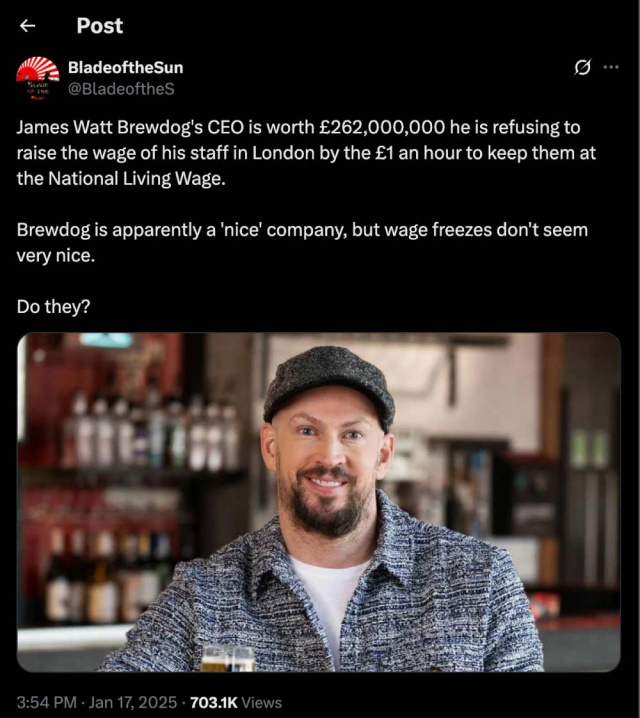
Here’s a good example of how brand reputation management went south. Remember the Brewdog crisis case from 2022, when an employee wrote an open letter about a toxic culture based on fear? Then the BBC made a documentary about that.
Two years later, in 2024, they rejected the real Living Wage — the UK wage rate based on the cost of living.
The crisis is still ongoing, and it’s not calming down. Their CEO, James Watt, is not helping with the interviews he gives.
In their PR responses, there was no apology, no empathy, and no remorse. The audience noticed. They didn’t like it. This is exactly how crisis communication should not look.
Now let’s learn from those who mastered crisis communication: KFC.
In 2018, when KFC ran out of chicken in the UK (yes, a chicken restaurant ran out of chicken), it could have been a brand disaster. But instead of going silent or defensive, KFC responded with humor and humility.
They ran a full-page ad with their bucket logo rearranged to read: “FCK”
Then they explained the issue, apologized sincerely, and worked on resolving it fast.
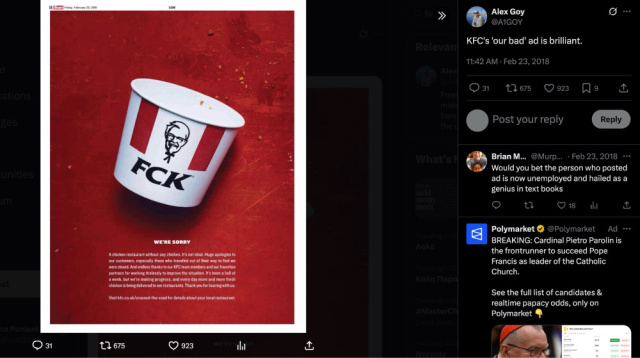
The result? Public backlash turned into applause. Their clever, transparent response humanized the brand, diffused tension, and actually boosted brand loyalty.
The best PR crisis management plans aren’t just reactive — they’re human. They’re built around three simple but powerful actions: acknowledge, empathize, and act.
Your crisis communication plan should include:
- Risk and Scenario Planning: Identify the types of crises that could realistically impact your brand (product failures, social media backlash, employee misconduct, supply chain issues, PR scandals, data privacy breaches, etc.)
- Assemble a Crisis Response Team: Define who does what when a crisis hits. Your team should include a crisis lead (usually from PR or senior leadership), a spokesperson, a legal advisor, and a social media manager.
- Pre-Drafted Messaging Templates: You won’t have time to write from scratch. Create drafts of apology statements, social media posts, customer support, media release, etc.
- Internal Communication Protocol: Your employees are your first line of defense — and sometimes your biggest risk. Include how internal teams are notified and what employees can and cannot say publicly.
- External Communication Strategy: Plan how you’ll communicate with your customers, media, and social followers.
- Monitoring and Escalation: Use your social media monitoring tool to track mentions, hashtags, sentiment shifts, and spot eventual new threats or misinformation quickly.
- Post-Crisis Review: Once the dust settles, review what went well and what didn’t and adjust your plan accordingly.
A well-prepared, emotionally intelligent response doesn’t just protect your reputation — it can strengthen it.
3. Build Brand Advocacy
Any strong online brand reputation management strategy will eventually lead to one thing: brand advocacy. But how do you create it? Should you partner with influencers and turn them into brand ambassadors, or take a more grassroots approach?
Truth is, you can (and should) do both. But the most powerful advocacy doesn’t come from contracts — it comes from genuine customer loyalty.
Start by creating a brand experience people want to talk about. When your customers feel seen, valued, and delighted, they’ll become your most authentic and influential advocates.
This is where brand reputation marketing steps in — a strategic approach that not only manages how your brand is perceived but also fuels positive storytelling. By amplifying real customer experiences and rewarding advocacy, you turn satisfied users into loud, loyal fans.
4. Engage with The Community (Online & Offline)
Ever since TikTok shook everything we knew about social media, one thing has become clear: community is the new currency of influence. Yes, your online presence matters — but true brand reputation goes deeper than follower counts or viral moments.
Your communities are not just online, and that particularly counts for small local businesses (though it is not limited to them). If you want a positive perception of your brand, try creating campaigns that have a higher purpose to reinforce brand sentiment.
Lead with purpose!
Create campaigns that serve a greater purpose — whether it’s social justice, sustainability, or supporting local causes. These CSR (Corporate Social Responsibility) campaigns do more than generate good PR — they build lasting emotional connections.
For example, in 2020, LEGO launched a major sustainability initiative to phase out single-use plastic bags in its packaging and invested over $400 million in sustainability and social responsibility over three years. Their messaging focused on building a better future for kids — not just through play, but through values.
Children asked, and we listened 👍🏻 Recyclable, sustainably-sourced paper bags will be tested in LEGO boxes from 2021♻️ pic.twitter.com/K6uLNpwy26
— LEGO (@LEGO_Group) September 15, 2020
The result? Brand love soared — not just from parents but also from environmentally conscious consumers across all age groups.
5. Do Regular Brand Reputation Audits
Your online reputation isn’t fixed; it’s fluid. It’s an ongoing process that requires regular checkups. We live in a dynamic world where everything (especially such a fragile thing as your reputation) can change in an hour.
Of course, you can not constantly monitor your online mentions, but it’s always useful to check them in case an issue arises. For that, you can use tools like Mentionlytics that utilize AI to detect anomalies in your mentions’ volume, giving you an early warning system before a full-blown crisis erupts.

Check If It Works for You!
Mentionlytics AI-powered algorithms understand the normal “behavior” of your mentions volume and notify you immediately when negative mentions rise above the usual to keep everything under control.
Audits also show you what’s working — which campaigns, content, or interactions are boosting your brand love. When you recognize and amplify those moments, you’re not just defending your reputation — you’re actively growing it.
Essential Brand Reputation Management Tools for 2025
So, the question is, what brand reputation management software solution should you choose to ensure that nothing surprises you?
These are three software solutions that can help you track your brand’s online reputation: Mentionlytics for brand monitoring, Prowly as your PR CRM, and Buffer for social media management.
Mentionlytics: For Next-Level Brand Monitoring
You can’t manage your reputation if you don’t know what people are saying — or where they’re saying it. With Mentionlytics, you never miss a thing.
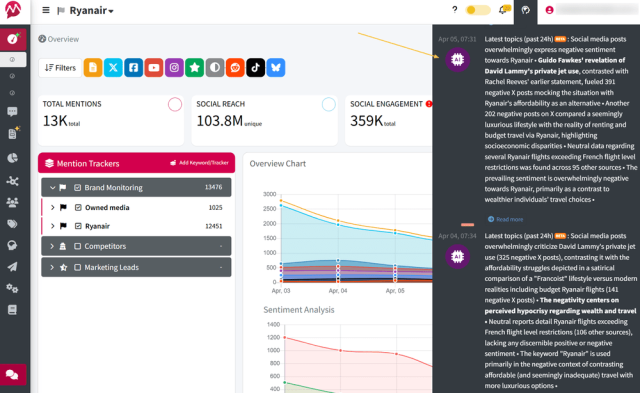
This platform monitors social media, blogs, news sites, forums, and the entire web, collecting all mentions of your brand (and even your competitors). But it doesn’t stop at raw data — it analyzes sentiment with human-level accuracy, detects abnormal spikes in your mentions volume, and serves you insights in a way that’s clear, actionable, and visually comprehensive.
How It Can Help You:
- Get real-time alerts of negative mentions to identify rising PR issues.
- Customizable reports to keep track of your brand reputation and how it evolves.
- Next-level media monitoring, covering the entire web and all major social media (even Bluesky).
- AI summaries of the most important topics driving the conversation around your brand every morning to keep you informed at a glance.
Prowly: For a Convenient PR CRM Platform
Your PR team needs more than a list of emails and a spreadsheet of contacts. They need a place to manage relationships, monitor media coverage, and pitch stories that matter — all in one.
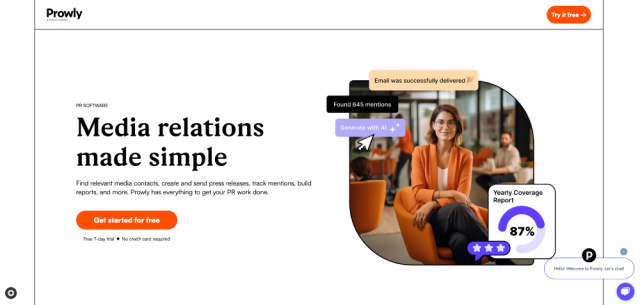
That’s where Prowly comes in. It’s a user-friendly PR CRM that helps you streamline your outreach and stay on top of who’s saying what, where, and when. From building press lists to tracking media coverage, Prowly keeps your PR operations tidy, targeted, and stress-free.
How It Can Help You
- Create and manage journalist lists tailored to your niche.
- Pitch stories directly and track open rates (like email, but smarter).
- Monitor media coverage and analyze sentiment over time.
- Keep your PR efforts aligned with your brand reputation goals.
Buffer: For Managing Social Media Conversations Effectively
You can’t protect your reputation if you’re not present where the conversation happens — and that means social media.
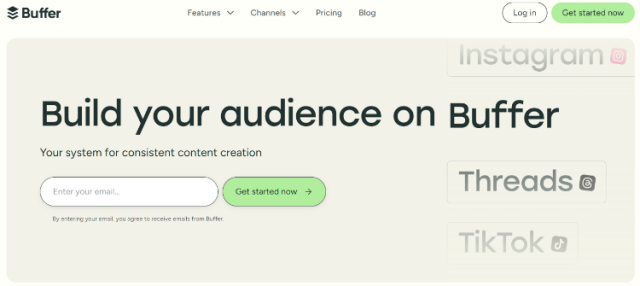
Buffer helps you schedule, monitor, and engage with your audience across all your channels — without the overwhelm. It’s not just a scheduler; it’s a conversation hub. Use it to reply faster, keep tone consistent, and stay visible where your audience hangs out.
Because trust is built in the comments section, too.
How It Can Help You:
- Monitor comments, mentions, and DMs from one dashboard.
- Collaborate with your team to manage replies.
- Schedule posts to maintain consistency and messaging control.
- Identify top-performing content and capitalize on the buzz.
Manage Your Brand Reputation with Ease
Reputation isn’t something you control — it’s something you earn, watch, and shape in real time. But with the right tools and the right mindset, managing your brand reputation can be much easier.
Start with smart monitoring with Mentionlytics. Respond like a human. And turn every mention — good or bad — into an opportunity to build trust.
The truth is out there. Let’s bring it to your dashboard!
FAQ
What Does a Brand Reputation Manager Do?
A brand reputation manager tracks, shapes, and protects how a brand is perceived by monitoring mentions, responding to feedback, and managing crises across all channels.
What is the Difference Between Brand Reputation Management and PR?
PR focuses on media and messaging, while brand reputation management covers the full picture — including customer reviews, online sentiment, and day-to-day perception.
How Can I Monitor My Brand’s Reputation?
Use a brand monitoring tool like Mentionlytics to track mentions, analyze sentiment, and get alerts when your brand is trending, for better or worse.

