


Have you ever wondered how successful businesses always seem to know what their customers are thinking? No, they’re not using a crystal ball. They’re using tools to stay in tune with what their potential (and current) customers think, want, say, and need. It’s called social media intelligence — and if you haven’t tapped into it yet, now’s the perfect time to start.
Why does this topic draw so much attention, and how does it benefit your business? How can we use social media data correctly to gain valuable insights?
Let’s find out how to do that and what the role of social listening tools is in all of this.
Table of Contents
What is Social Media Intelligence?
We all know what social intelligence looks like in our personal lives. Some people are masters of reading between the lines. But what about businesses? How does social media intelligence (SMI or SOCMINT) fit into all that?
Social media intelligence involves collecting, analyzing, and understanding data from what people say, share, and react to on social platforms like Facebook, X, Instagram, and LinkedIn, or forums like Reddit.
You can gain insights into customer opinions, trends, what’s popular, and your competitors’ performance.
That way, you’re using social media as a giant focus group where people naturally express what they like or don’t like. And based on that, you can improve products, services, marketing strategies, and customer engagement.
Social media intelligence helps businesses stay ahead of the game.
Adjust Your Strategies Based on Trends
Monitor what’s happening on social media and adjust your business strategies based on new trends with Mentionlytics!
Spot the Difference: Social Monitoring vs Social Media Intelligence vs Social Listening
You’ve probably heard the terms monitoring and listening alongside social media intelligence. And they sound pretty much the same. But are they? What’s the difference between these three, and can we run a business or create marketing strategies excluding one of them?
1. Social Media Monitoring — Keep Track & Respond
Monitoring is the most basic level of tracking social media activities. You monitor social media and collect mentions, comments, and interactions related to your brand, product, or keyword across social platforms.
Purpose: The main focus is on keeping track of online activity and making it easier for social media management to respond to it as needed.
Key Benefits:
- Tracking brand mentions, hashtags, and direct interactions.
- Identifing customer service issues or opportunities to respond.
- Providing a snapshot of social media engagement.
It helps businesses stay aware of what people say about them online but doesn’t go deeper.
2. Social Listening — Feel the Pulse of Your Audience
Social listening builds on monitoring by collecting and analyzing conversations to understand the mood, sentiment, and key topics that audiences are discussing. It’s more comprehensive and involves active engagement.
Purpose: The aim is to understand people’s thoughts and feelings about a brand, industry, or key topics.
Key Benefits:
- Analyzing brand sentiment (positive, neutral, negative).
- Monitoring broader topics related to the brand or industry.
- Building strategies based on insights.
It allows companies to identify trends and improve their reputation, and gives them context to make better marketing decisions.
3. Social Media Intelligence (SOCMINT) — Make Data-Driven Decisions
Social media intelligence is the most advanced level. It uses the data collected from listening, monitoring, and analytics. That way, the company gains deeper insights and makes strategic business decisions. It’s about connecting social data to business intelligence.
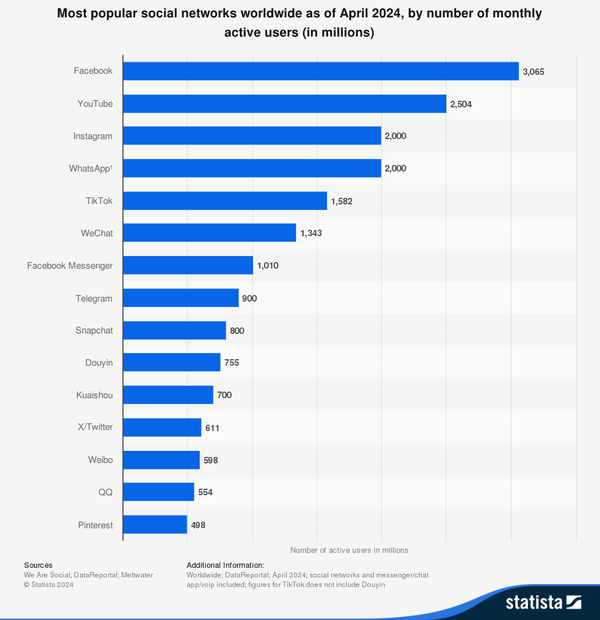
Did you know that as of April 2024, social media platforms like Facebook, YouTube, and Instagram each have at least two billion active users? That’s why social media is a treasure trove for intelligence!
Source: Statista
Purpose: The focus is on strategic analysis and long-term decision-making. It allows you to see the bigger picture and use data to understand trends, predict future behavior, and inform business strategy.
Key Benefits:
- Using data from social listening and monitoring to perform in-depth analysis.
- Involving competitor analysis, trend forecasting, and market research.
- Connecting social media insights with broader business intelligence data.
Social media intelligence helps companies understand customer behavior and market trends. It also analyzes competitive landscapes to enable making informed strategic choices.
3 Advantages of Social Media Intelligence for Your Business
Social media monitoring and listening are great starting points. But you need social media intelligence to make impactful, strategic decisions. Let’s see what you can do with it.
Understand Your Customers Deeply
We’re returning to the story about social intelligence. How well do you actually know the people around you and understand their actions? The same goes for customers.
Knowing your customers starts with their social media accounts. There, you can gather data about their true preferences. What can data from social media tell you about it? Well, let’s say a lot.
By doing social listening on various platforms, you can tap into a valuable data pool. When you analyze these data, some results might surprise you.
You might find people who use your products or services and have many followers. You can easily turn them into your best marketing weapon — a very satisfied and loud customer. This is customer advocacy, and it’s one of the most effective ways to reach a wider audience.
Or, you might find out that a large portion of your target audience is not on X (though you’re posting there 20 times a day). They hang out mostly on TikTok (especially if we’re talking about Gen Z — okay, you probably knew that already).
The punch line here is: You can truly get to know your audience or customers only if you track their pulls by monitoring social media platforms.
We must not forget the trends. Through social media channels, you can see the shift in customers’ preferences and feel what they truly need.
Imagine how much information you can get now from social media users if you turn on listening and start analyzing data.
Enrich Your Market Research
What about market research? The most successful businesses use social media intelligence.
They use it to dive deeper into market trends before launching new products or services. They analyze direct and indirect competitors, track industry conversations, and identify customer preferences.
Why? Because social media offers a goldmine of real-time insights. You can make data-driven decisions when you understand three things:
- What’s trending
- What customers love (or dislike)
- How competitors are performing
This approach isn’t limited to one platform or industry. No matter where you’re selling — whether in a marketplace, online, or offline — use SOCMINT to collect and analyze data. It gives you the edge to anticipate challenges and maximize your chances of success.
Don’t just launch; launch smart.
Gather Valuable Market Insights
Use Mentionlytics to monitor your competitors’ activities AND industry conversations to gain a deeper knowledge of your market.
Keep Your Brand Reputation in Check
We live in a time when the whole world is just a click away. You should use that as an advantage and listen carefully to what people say about your brand.
The goal is to extinguish a crisis before it escalates and damages your brand reputation.
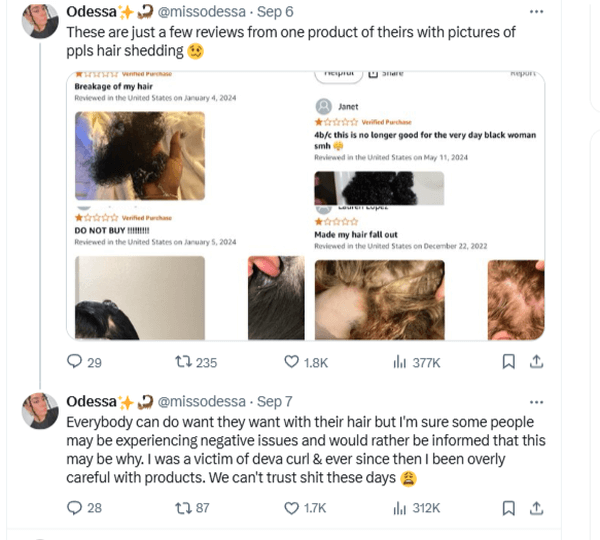
Remember the story about Mielle Organics, a cosmetic company founded in 2014 and acquired by P&G Beauty in January 2023?
Well, they had a crisis just a year after. Many customers complained about dryness, breakage, and hair loss after using Mielle’s products. Though the company reacted, it was late and not convincing enough, and it’s probably still buzzing on TikTok, X, and Instagram.
Source: X
This is a good example of how ignoring reviews and public complaints on social networks can damage your brand. You need to see it coming or foresee the escalation, and it’s possible with effective corporate reputation management.
But hey, it’s not just about protecting your brand but also about improving it. You can use social media intelligence to adjust your strategy to emerging trends or to upgrade your products if you hear people nag about something.
How to Extract Insights From Social Media Data
There is so much data. How do you distinguish what’s relevant from what’s not? Here’s a step-by-step guide.
Step 1: Track Social Media Conversations
Yes, yes, you need to be all ears when it comes to business in the 21st century, and as it turns out, it’s going to be even wilder in the years ahead. So, the first step is tracking conversations on multiple social platforms that are relevant to your business.
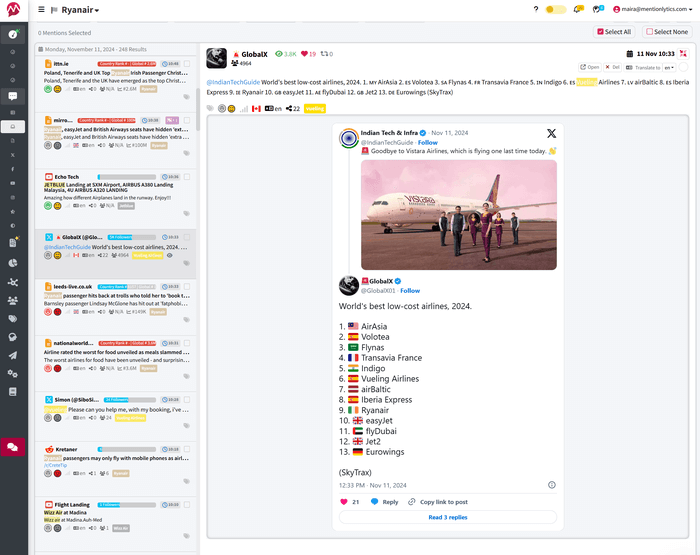
Due to your business’s numerous social media profiles on various platforms and the fact that people use almost all of them (always with one preferred), it’s impossible to track all conversations manually. You need a social media listening tool, such as Mentionlytics.
These tools allow you to monitor branded keywords, niche topics, and even specific hashtags.
Want to know what people are saying about your latest product? Or perhaps you’re curious about how your competitors are performing? With social listening, you can track these conversations in real time across multiple platforms.
Step 2: Gather All Data Points Into a Powerful Tool
Have you ever tried counting engagement on your social media accounts? Or even worst case scenario — putting all data manually in spreadsheets. It’s a mission impossible, and you’ll always be late responding; you’ll have errors and always miss something important.
Let the tools help you gather mentions, monitor your competitors’ social media, and spot the gap.
Step 3: Run Different Analyses
The best thing is that you can conduct various analyses, collect a lot of information, and turn it into actionable insights. That’s the true power of social media data.

Here’s what you can do:
Sentiment Analysis
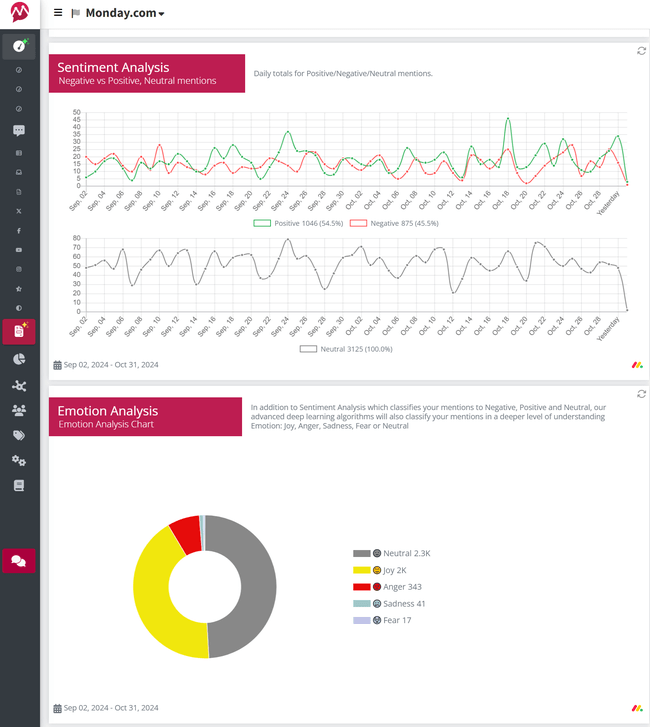
Understand how people feel about your brand, product, or campaign. Are the mentions mostly positive, negative, or neutral? For instance, a sudden spike in negative sentiment could signal an emerging issue that needs immediate attention. Or you can use sentiment analysis from multiple social media to tweak messaging if a product launch receives mixed reactions.
Share of Voice
Measure how much of the conversation your brand owns compared to competitors. This can highlight areas where your competitors are outshining you, giving you a roadmap to improve.

Trending Topics Discovery
Identify what’s currently capturing your audience’s attention. This can help you align your content and campaigns with hot topics to maximize engagement. The goal is for your next social media campaign to resonate with what your audience cares about.
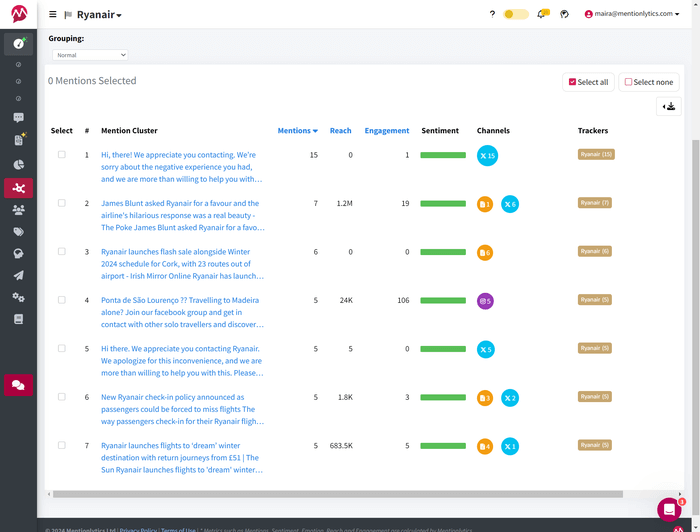
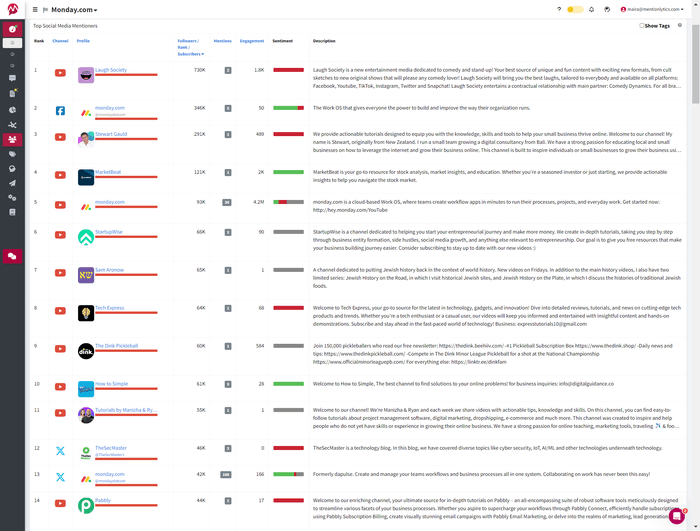
Top Mentioners
Discover the most influential users talking about your brand. Engaging with these individuals can amplify your reach and strengthen your online presence. You can level up your influencer marketing that way.
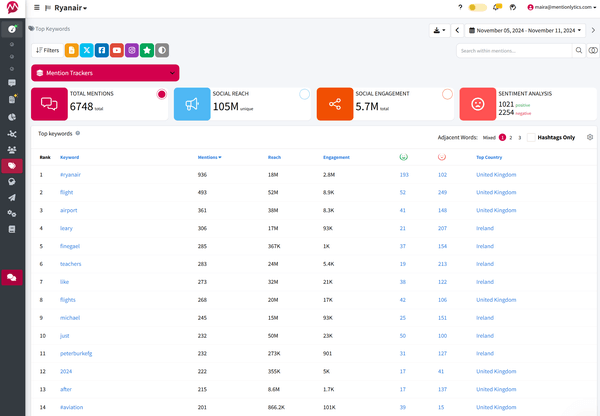
Top Keywords
Identify the terms most frequently associated with your brand. This will help you understand how your audience perceives your brand, and if necessary, you can adjust your messaging.
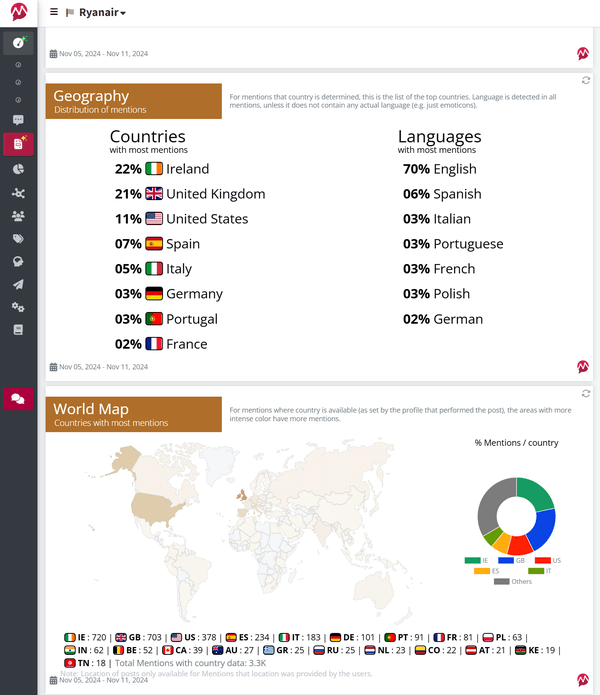
Top Countries
Pinpoint where your brand is being talked about the most. This geographic data can help you tailor region-specific campaigns and identify emerging markets.
With these insights, you’re not just guessing — you’re making informed, strategic decisions to drive growth.
Step 4: Create Custom Reports to Study and Present
It’s one thing to gather insights, but what’s the point if you can’t share them effectively with decision-makers? That’s where custom reports come in.
A great social media intelligence tool doesn’t just analyze data — it turns that data into clear, visually engaging reports automatically.
Why is this important? Decision-makers rely on concise, actionable insights to make informed choices. Well-structured reports with charts, graphs, and keyword clouds help them quickly grasp complex data without diving into the raw numbers.
Ditch Manual Reporting
Let Mentionlytics do the heavy lifting of collecting, analyzing, and visualizing the data. You just connect the dots and present the findings!
Automated reporting saves time, eliminates guesswork, and ensures everyone is on the same page. Whether it’s showcasing campaign performance, market trends, or competitor analysis, custom reports make your insights impactful and decision-ready.
Step 5: Uncover Insights and Inform Your Strategies
Whoever crafted even one social media strategy knows that without prior social media analysis, your social media marketing campaigns would be just like shouting into the void.
Social media intelligence transforms raw data into actionable insights, providing the foundation for strategies that actually work.
Here’s how it can guide key areas:
- Content Creation: By analyzing trending topics, top-performing posts, and audience preferences, you can craft content that resonates and drives engagement.
- Social Media Ad Campaigns: Use insights like audience sentiment, demographics, and competitor performance to fine-tune your ad targeting and messaging and maximize ROI.
- Product Development: Social media conversations often reveal unmet needs or desired features. Incorporating this feedback can help you innovate and create products that customers truly want.
- Customer Service Strategy: Identify common pain points or questions and proactively address them in your communications, improving customer satisfaction and loyalty.
- Market Positioning: Understand your brand’s position in the competitive landscape and adjust your positioning to highlight its unique strengths.
With social media intelligence, every strategy is built on solid insights, ensuring your efforts are focused, effective, and aligned with your audience’s expectations.
Try a Social Media Intelligence Tool for Free
And here we are, at the end of our journey. With social media usage at an all-time high, relying solely on manual efforts is like navigating without a map. Why risk your social media efforts falling flat?
Instead, equip yourself with a powerful social media intelligence tool and gain the competitive edge you need. Track, analyze, and act on insights that will transform your strategies and drive real results.
Why wait? Try a social media intelligence tool for free today and start outperforming your competitors with data-driven decisions.

