


Media monitoring might seem like a helpful add-on for the non-PR-savvy, but for those who are deep in the PR waters, it’s an essential part of their strategy.
Whether you’re building brand credibility, managing reputation, or preventing a crisis from spiraling out of control, knowing who’s saying what (and where) is the foundation of strategic communication.
The idea isn’t new. Back in 1906, when a Pennsylvania Railroad train derailed in Atlantic City, killing over 50 people, the Press was ready to tear the company apart. But instead of hiding, Ivy Lee, who is considered one of the founding fathers of public relations, advised the company to release a statement to the Press immediately (something unheard of at the time).
He pushed for transparency, urging the company to provide facts to journalists before they published speculations. It was the first-ever press release, and the crucial moment in crisis communication.
The result? This move shifted the narrative and helped the company avoid a complete reputation disaster.
So, what has changed since then? Well, you’re no longer tracking just a handful of newspapers; now it’s 24/7 online news, blogs, podcasts, Reddit threads, and a million voices across social media.
Staying ahead of that storm? That takes strategy, media monitoring software, and the right mindset.
In this article, we’ll break down the basics of media monitoring, explore the best tools for PR teams, and share practical tips to help you master the art of listening before the headlines get ahead of you.
Table of Contents
- What is Media Monitoring?
- What Media Types Should I Be Monitoring?
- What Are the Benefits of Media Tracking?
- Who Needs Media Monitoring?
- What’s the Difference Between Media Monitoring and Media Analysis?
- How Do I Do Media Monitoring?
- How Can AI Help in Media Monitoring?
- Top 3 Media Monitoring Tools for 2025
- Get Started with Online Media Monitoring for Free
- FAQ
What is Media Monitoring?
Media monitoring is the process of scouring all media for information that’s important to your brand. It encompasses tracking, collecting, and analyzing mentions of your brand, company, CEO, spokespersons, competitors, or even relevant topics across various media channels — including online news, TV, radio, print publications, blogs, podcasts, and social media platforms.
For PR professionals, media monitoring helps answer key questions, such as:
- Who’s talking about us?
- What are they saying?
- Where is the conversation happening?
- Is the sentiment positive, negative, or neutral?
- Are there any potential risks or opportunities to act on?
Done right, media monitoring is much more than listening — it’s a strategic tool for protecting brand reputation, measuring campaign impact, identifying influencers, and spotting early signs of PR crises or trends worth following.
What is traditional media monitoring?
The time machine has just turned on, and we’re in the press-clipping, TV, and broadcast monitoring era. That’s traditional media monitoring correlated with traditional media.
If you’re wondering how the monitoring process looked back then, let us tell you it involved a lot of manual work, time, and large physical storage.
Before smart dashboards and real-time alerts, media monitoring meant flipping through stacks of newspapers, recording late-night broadcasts, and clipping anything that mentioned your brand (or your client’s).

Agencies and in-house teams relied on literal cut and paste with scissors, not shortcuts. Mentions were filed away in binders, sorted by date, and sometimes mailed to clients at the end of the week (through regular mail/post office).
Want a sentiment analysis? That was called reading between the lines.
In short, traditional media monitoring was slow, labor-intensive, and prone to missing a beat. But it laid the groundwork for the sophisticated media monitoring solutions we have today — and taught PR pros the value of staying alert.
What Media Types Should I Be Monitoring?
It was simple back then when you had only two sources to track, but how do you manage tracking a zillion sources today? Where should you focus, and how do you do that efficiently?
If you think the traditional media sources are history, think twice. They are still present in everyday life (especially radio), and the list just expanded.
Online Media
Media coverage now lives in two worlds: the physical and the digital — with the latter clearly taking the lead.
In fact, 86% of the adult audience in the US checks online news at least once a day, making it obvious why tracking the digital space is no longer optional.
With thousands of news articles, blog posts, and press releases published daily, it’s nearly impossible to monitor everything manually.
That’s why smart brands rely on online media monitoring tools to catch mentions across news sites, industry blogs, online magazines, and niche publications.
Social Media
Another interesting statistic shows that 59% of X (formerly Twitter) users get their news directly from the platform, without even clicking out to a news site. That means if you’re not monitoring social media, you’re missing where conversations start, spread, and spiral.
Social media is the heartbeat of public opinion. It’s where trends are born, outrage goes viral, and customers speak their minds — in real time.
- Launching a new campaign? — Listen to social media.
- You have a new product? — Listen to social media.
- Doing market research? — Listen to social media.
- Wondering what users think of your competitors? — Yep, listen to social media.
From product feedback and influencer mentions to breaking news and brand criticism, social platforms give you unfiltered insight into what people really think.
That’s why media monitoring today must include social listening. It’s not just about tracking brand mentions; it’s about catching sentiment shifts, identifying risks early, protecting the brand’s reputation, and seizing opportunities while they are still hot.
Catch Your Audience’s First Reactions
Track mentions, sentiment, hashtags, and new keywords tied to your brand, campaign, or competitors with Mentionlytics!
TV & Radio
TV and radio may feel like yesterday’s media, but they’re still influential, especially in politics, finance, and regulated industries. In fact, many stories still start on local broadcasts before gaining traction online.
Unlike digital content, mentions on TV and radio can slip by unnoticed without proper monitoring. You won’t find them through a quick search — and if you miss a segment, it’s gone.
That’s why brands that appear in interviews, news stories, or even talk shows still invest in broadcast media monitoring.
It’s also a trust game: The EU survey (2023) shows that traditional media remains one of the most trusted sources of information, with public TV and radio stations leading with 48%, especially among older demographics.
So, when a company makes the news on TV, good or bad, people are paying attention.
Print Media
Print may be shrinking, but it’s far from irrelevant. Major newspapers and niche industry magazines still shape opinion, and often influence what gets picked up by radio, TV, and even online news outlets.
A front-page feature in a national paper still carries weight, especially in sectors like healthcare, legal, education, and government.
While many publications now have digital twins, some stories only appear in print, which means they’re easy to miss without monitoring.
Print also tends to reach highly specific, loyal audiences. Whether it’s a trade journal, a Sunday edition, or a monthly industry magazine, if your brand is mentioned, you’ll want to know.
Review Sites, Podcasts, and Forums
These channels might not always make headlines, but they heavily influence how people feel about your brand. If we know that there are almost 600 million people who listen to podcasts daily, and that this is a growing trend, you can imagine how impactful this medium can be.
A single mention from a niche industry podcast or influencer can spark awareness or backlash, especially since most of these shootouts fly under the radar unless you’re actively listening.
On the other hand, statistics show that 93% of buyers read online reviews before making a purchase. So, yes… these are very important if we’re talking about brand reputation and awareness.
Review platforms, like Google Reviews, G2, Trustpilot, Yelp, or Glassdoor, are where customers and employees leave honest (and sometimes brutal) feedback. These reviews don’t just affect reputation — they directly impact purchase decisions and even hiring.
And then, there are forums — Reddit threads, Quora answers, and community groups — where real conversation happens. This is where people go to complain, ask for recommendations, or compare products in depth.
Ignore these conversations; you’re missing out on raw, unfiltered insights.
What Are the Benefits of Media Tracking?
Tracking mentions is not only about the numbers; it provides strategic insights about your brand, environment, competitors, and industry trends.
Better Reputation Management and Crisis Prevention
It would be great if reputation is built on press releases… but it isn’t. It’s built (and broken) by what people say when you’re not in the room. Media monitoring allows you to spot negative (and positive) mentions early, before they snowball into a full-blown crisis.
A single bad article or viral tweet can trigger a domino effect — unless you’re here to catch it and respond fast.
Staying alert is an essential part of PR crisis management. By controlling the narrative and taking proactive steps to minimize damage, you can handle the crisis effectively.
Identifying Emerging Trends and Opportunities
But hey, it’s not only about damage control. Media monitoring can point you to a discovery path.
By tracking media across different social media channels, you can spot rising topics, shifts in audience sentiment, and unmet needs before your competitors do.
Maybe it’s a sudden buzz around sustainability in your industry, or a growing interest in a product category you haven’t explored yet. That’s your cue.
Because if you don’t spot the trend, someone else will.
Remember Nokia? At one point, they ruled the mobile market. But while Android was quietly taking over headlines, forums, and developer blogs, Nokia stuck to its own OS.
We all know how that turned out…
But a few minutes (decades) later…
Measuring the Impact of PR Campaigns
Was your campaign a hit, or did it barely make a ripple?
Media monitoring gives you the data to evaluate PR performance, from reach and volume to engagement and sentiment. You’ll know who picked up your press release, where it was shared, and how people responded.
In fact, there are some PR measurements you should track within your campaign, such as:
- Media coverage
- Share of Voice
- Brand mentions
- Reach
- Mention sentiment and emotion
- Engagement
- User-generated content (UGC)
- Website traffic
- Backlinks
- Email metrics
Monitoring and analytics are the foundation for smarter planning and better ROI. Without media monitoring and analysis, it’s just guessing.
Who Needs Media Monitoring?
You know the most used marketing rule: “If it’s created for everyone, then it’s not for anyone.”
Well, media monitoring is for everyone… almost. Think of it like WD40 — it works on just about anything, from rusted hinges to stubborn brand crises.
Jokes aside, every brand today needs to identify trends early, or keep an eye on social media to hear what people are saying about their brand, competitors, industry, etc.
Here’s who really can’t afford to skip media monitoring.

Large Organizations & Enterprises
Big brands have big reputations, and it is a bigger risk. Monitoring helps corporate communication teams stay ahead of PR crises, track media coverage, owned media, and keep internal stakeholders informed in real time.
NGO & Nonprofits
Nonprofits need to track how campaigns are resonating with the public, monitor coverage of causes, and respond to shifts in public opinion, especially when fundraising or policy is on the line.
PR & Communications Professionals
This one’s a no-brainer. Media monitoring is essential for tracking campaign success, journalist pickup, sentiment, and overall brand visibility. If you’re in PR and not monitoring, you’re flying blind.
Social Media & Community Managers
You can’t respond to what you can’t see. Social teams need media monitoring to track brand mentions, viral trends, influencer impact, and customer feedback across all platforms, not just where you’re active.
Marketing Teams
From competitor tracking to campaign analysis, marketers use social media monitoring to refine messaging, test positioning, and understand what’s clicking with their audience.
Crisis & Reputation Managers
Media monitoring is your early warning system. If something’s brewing — a bad review, a journalist digging into a story, or a hashtag gaining momentum — you’ll know about it before it’s front-page news.
Startups & Scaleups
When you’re trying to get noticed, every mention counts. Startups use media monitoring to track press hits, measure the impact of launches, follow investor buzz, and understand how they’re positioned against bigger competitors.
Political Campaigns
Whether it’s a local election or a national debate, campaigns rely on media monitoring to keep tabs on public sentiment, track media coverage, and respond to misinformation fast! Political campaigns and media monitoring go hand in hand.
What’s the Difference Between Media Monitoring and Media Analysis?
It’s easy to lump them together, but media monitoring and media analysis are two very different stages of the same game. Think of it like this:
Analysis tells you why it matters.
Media monitoring is the process of tracking, collecting, and organizing mentions across various media channels.
It gives the answers to these questions:
- What‘s being said about your brand?
- Who‘s talking about your competitors?
- Where are these conversations happening?
- When is the buzz peaking?
Media analysis is the strategic part of the process. Once you have all those mentions, media analysis steps in. This is where you interpret the data and pull out meaningful insights.
- What’s the sentiment behind the coverage?
- Are there patterns or shifts in public opinion?
- Who are the top influencers driving conversations?
- Where are the risks or opportunities?
Use the Tool That Does Both!
Let Mentionlytics cover the monitoring and analysis for you.
How Do I Do Media Monitoring?
Wondering how to do media monitoring? Here are a few steps to follow for effective media monitoring.
Step 1: Find the Best Media Monitoring Tool for You
It all starts with choosing the right tool. Now, how to choose a media monitoring tool that fits your needs (and budget).
Let’s be honest — there are a lot of tools out there. Some are all-in-one giants, others are niche specialists. The key is finding the one that aligns with your goals, your team, and the platforms you care about most.
Here are a few tips to guide your search:
- Test before you commit: Always start with a free trial or demo. This way, you’ll get a feel for the dashboard, alerts, and whether it’s intuitive enough for daily use for you and your team.
- Know what you want to track: Are you focused on social mentions, online news, podcasts, or all of the above? Some tools excel in specific channels — make sure yours does.
- Mind your budget: Expensive doesn’t always mean better. Many solid tools offer flexible plans or custom pricing, so don’t overpay for features you won’t use.
- Check the sources: The more data points, the better. Make sure the tool pulls from the platforms and regions that matter most to your audience.
- Read real reviews: G2, Capterra, or even Reddit can give you unfiltered insights into how the tool performs in real life.
Step 2: Add Your Branded Keywords to Monitor
Once you’ve selected your media monitoring tool, it’s time to set it up for success by adding your branded keywords. These are the specific terms that directly relate to your brand and are essential for tracking your online presence.
Branded keywords are terms that include your brand name, product names, slogans, or any unique identifiers associated with your company. It might even be a misspelling of your brand.

In Mentionlytics, you can easily add these keywords to your monitoring dashboard. The platform allows you to track mentions across various sources, including social media, news sites, blogs, and forums.

By inputting your branded keywords, you’ll receive real-time alerts and comprehensive analytics on how and where your brand is being discussed.
Step 3: Gather Your Media Mentions
No more manual tracking — everything is done automatically (at least with Mentionlytics).
Once you set your keywords, with just a click, the dashboard will display all the mentions of your branded keywords. Mentionlytics automatically scans thousands of sources across the web, from social media to news sites.
If you want to filter out social media, you can use the Web Mentions feature. It shows you only mentions of your brand from news outlets, online articles, reviews, and blog posts you might never find on your own.
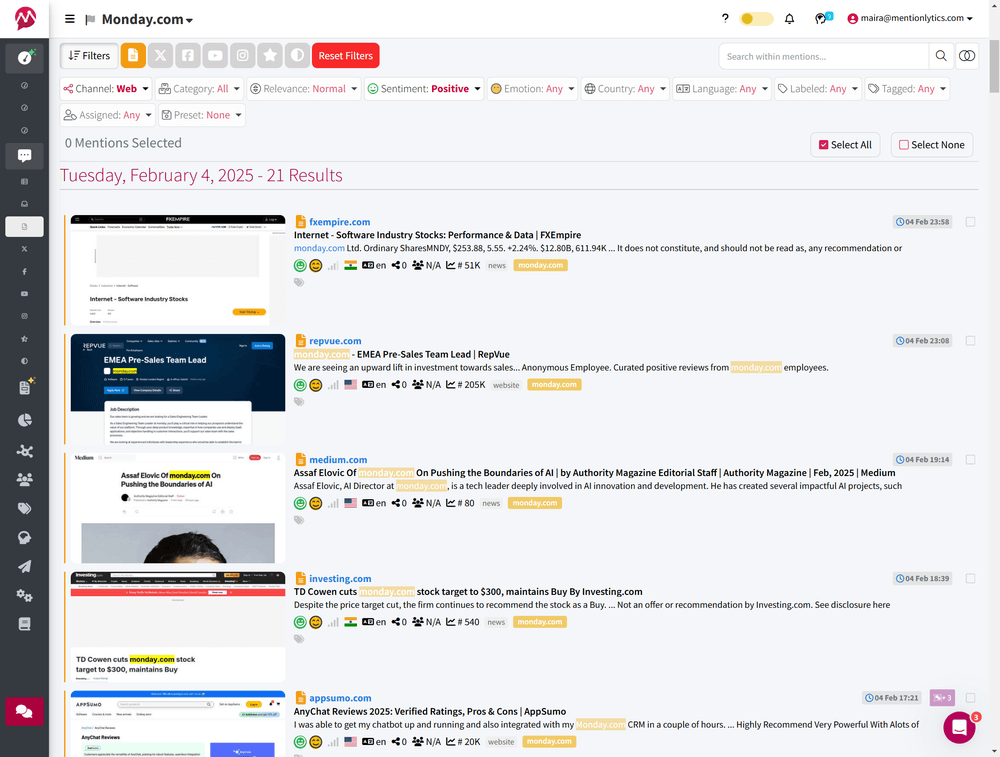
Each mention includes the source, snippet, sentiment, emotion, and even a direct link to the full post.
Step 4: Analyze Your Data & Create Reports
Okay, tracking mentions is an easy part. Making sense of them is a different pair of shoes. And it’s much easier when you have help in the form of a media tracking tool that provides key insights (analytics), such as:
- Sentiment analysis: Are people loving your brand or dragging it?
- Share of Voice: How much of the conversation do you own compared to competitors
- Influencer identification: Who’s talking about you, and who’s worth connecting with?
- Top keywords and trends: What topics are being linked to your brand?
- Campaign performance: Did your messaging land? Which channels performed best?
Mentionlytics, for example, has highly customizable media monitoring reports that can be used as a presentation whenever needed. You can choose what data to include, schedule reports, and export them with just a click. It’s perfect for internal reviews or client updates.

Step 5: Establish a Schedule
Ad-hoc monitoring won’t work. You need consistency in everything you do, including monitoring media coverage.
Media moves fast. Stories break overnight, and sentiment shifts in hours. If you’re only checking occasionally, you’re already behind.
That’s why it’s crucial to establish a regular media monitoring routine — daily, weekly, or real-time, depending on your industry and goals.
A steady monitoring schedule helps you:
- Track the long-term impact of your PR campaigns
- Detect trends and shifts in audience behavior as they happen
- Prevent crises from escalating
Bonus: Expand Your Monitoring to Competitor and Industry Keywords
Keeping tabs on your competitors and industry trends is much easier with real-time media monitoring. You can spot competitors’ activity on time or a new trend emerging on social media.
Competitive monitoring can give you insights into your rival’s media presence, upcoming launches, public perception, and even customer pain points.
It’s like having a front-row seat to their strategy.
How Can AI Help in Media Monitoring?
AI has completely transformed how media monitoring works, not just by making it faster, but by making it smarter. From analyzing tone to clustering conversations and detecting anomalies, today’s tools truly understand mentions.
Providing Human-Accurate Sentiment Analysis
There was a time when PR teams had to manually label mentions as positive, negative, or neutral. And even then, it was easy to miss the point. AI has changed that game.
Machine learning has advanced so much that modern algorithms are trained to read between the lines — they can detect irony, sarcasm, and subtle shifts in tone that basic sentiment engines completely miss.
For example, Mentionlytics uses advanced AI sentiment and emotion algorithms that go beyond simple labeling. They can understand when someone is joking (“Oh great, another Monday!”) versus genuinely happy.

Summarizing Publicity & Key Topics
Let’s be honest: No one has time to read through hundreds of mentions every morning. That’s where AI comes in.
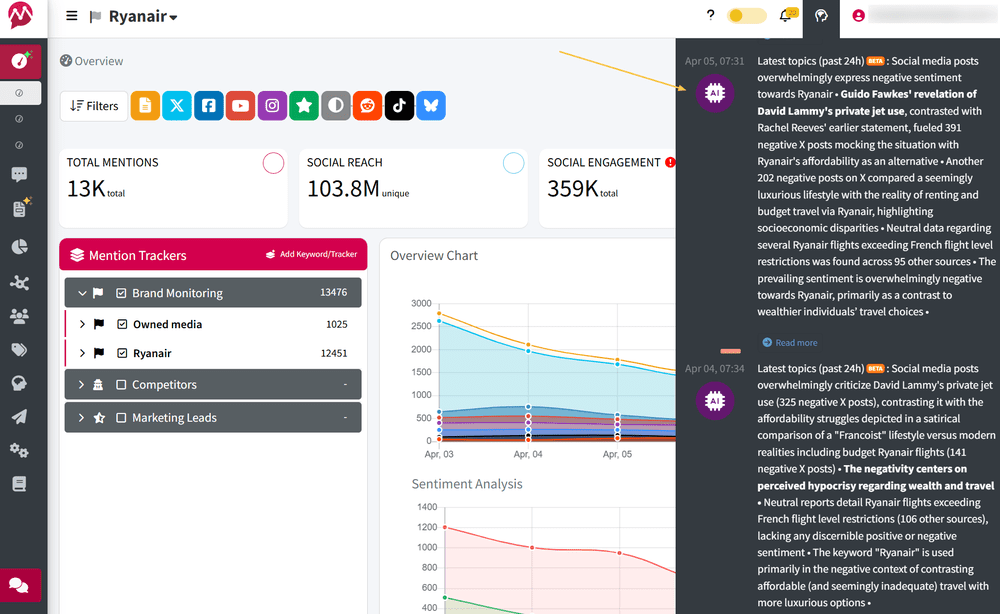
With mention clustering and smart summaries, AI now does the reading for you. It identifies trending topics, repeating themes, and the overall buzz and delivers it in digestible summaries.
For example, Mentionlytics SIA (Social Intelligence Advisor) tells you what happened in the last 24 hours. What people talked about, which mentions mattered most, and what tone they carried.
Alerting When Something is Off
Not every spike in mentions is something that should draw your attention. But when something “out of the ordinary” happens, you should get an immediate alert.
Thanks to AI, you don’t have to sift through every notification. Mentionlytics’ AI Anomaly Detection Alerts learn what “normal” looks like for your brand and only ping you when something’s truly off.

It’s like having an AI assistant who’s always quietly watching your back until it matters.
Top 3 Media Monitoring Tools for 2025
If you’re serious about tracking media mentions, understanding brand perception, and reacting in real time, you’ll need the right tool.
Here are three of the best media monitoring platforms for 2025 — each offering something unique depending on your needs and budget.
1. Mentionlytics – All-in-one Media Monitoring with Powerful AI Insights
Mentionlytics is an award-winning media monitoring and social listening platform used by hundreds of brands, agencies, and organizations worldwide. It tracks mentions across the web, news, social media, blogs, forums, and more — and yes, it tracks in real time.

It really stands out because of its AI-powered features, including sentiment analysis that understands sarcasm, anomaly detection alerts, and automated key topic summaries by SIA.
Bonus? It’s user and budget-friendly, and ideal for businesses of all sizes — from startups to enterprise-level teams.
What can you expect?
- Web & Social media monitoring (for your brand and competitors)
- Real-time alerts and custom reports
- AI-powered sentiment analysis, mention clustering, anomaly detection alerts, and trend analysis
- Downloadable owned media reports for Facebook and Instagram
- Excellent customer support and flexible pricing
Cision – Large PR Teams Choice
Cision is a PR tech heavyweight best known for combining media monitoring with a massive journalist and influencer database.
It’s especially useful for large enterprises and agencies that handle media outreach and need a high level of control over press distribution.
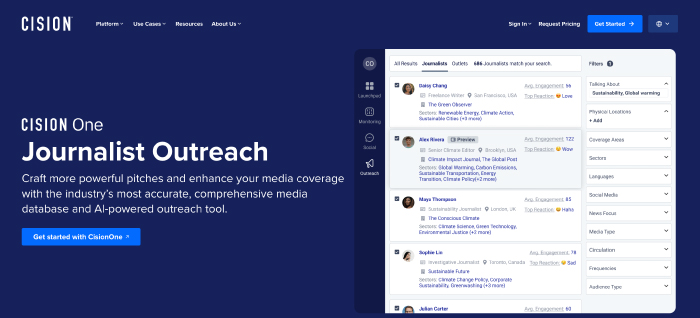
Its monitoring capabilities are strong, covering global media in multiple languages, with analytics built for PR performance tracking. That said, it may be a bit overwhelming (and pricey) for smaller teams.
What can you expect?
- Global media coverage
- Journalist and media contact database
- Press release distribution
- Custom reporting option
3. Meltwater – Media Intelligence Platform
Meltwater is a powerful media intelligence platform that tracks brand mentions, competitor news, and market insights across traditional and digital media. It offers broad global coverage and strong data visualization features and integrations.

It’s especially useful for multinational companies, but like Cision, it comes with a steeper learning curve and a higher price point, according to reviews.
Looking for Meltwater alternatives? We tested 11 of them →
What can you expect?
- Traditional and online media coverage
- Competitive benchmarking
- Trend and sentiment analysis
- Custom dashboards and alerts
Get Started with Online Media Monitoring for Free
Whether you’re protecting your brand, spotting new opportunities, or measuring the impact of your latest campaign, media monitoring gives you the power to act, not just react.
Ready to break out from the blind spot? Try Mentionlytics for free, and see what’s really out there — the trends, the conversations, the signals you might’ve missed.
Who knows? You might just catch something that changes the game.
FAQ
How can media monitoring prevent a PR crisis?
Media monitoring can prevent a PR crisis by catching the negative mentions and sentiment early. It lets you respond before issues escalate into full-blown crises.
What is the best media monitoring tool?
It depends on your needs, budget, and the size of your team. The best option is always to try the tool first and then decide if it fits.
What’s the difference between media monitoring and social listening?
Media monitoring tracks mentions across all media channels, while social listening focuses specifically on analyzing conversations and sentiment on social platforms.
How does media monitoring work?
A media monitoring tool automatically scans online news, blogs, social media, and more for your chosen keywords, organizes mentions, and alerts you whenever necessary.
How do I choose a media monitoring tool?
To choose a media monitoring tool, look for options that match your goals, fit your budget, cover the right sources, and offer free trials so you can test before committing.

