


Does the question, “What do we actually gain from social media?” haunt you? If so, you might be missing the most crucial part of social media marketing — social listening. When done right, a social listening strategy can unlock valuable insights about your industry, potential customers, competitors, and much more.
But here’s the catch — before you start listening, you need a clear strategy. Each department in your business needs different insights.
While your marketing team will be on the lookout for some trending topics, audience preferences, and competitor insights, to adjust their campaigns and boost engagement, other teams will probably have different priorities.
For example, your sales team might not care about sentiment analysis, but they will be interested in tracking potential leads. Meanwhile, your customer service team will want to identify pain points and recurring issues.
Let’s break down 18 powerful social listening strategies that can help you turn online conversations into actionable business results.
Table of Contents
What Are Social Listening Strategies?
Unlike social media monitoring, social listening isn’t just about tracking mentions — it’s about using the right social listening techniques to extract valuable data that can benefit your marketing, PR, sales, product development, and customer support.
But it doesn’t stop there. Social listening also plays a key role in competitive analysis, market perception, and more.
By using social media as a data source for every department, your business can gain insights that improve decision-making, customer engagement, and overall strategy.
18 Social Media Listening Strategies for Different Business Areas
Here we’ll analyze all the strategies you need to know to leverage social listening insights for various purposes across your business.
For Growth
Use social listening to grow your brand with the following techniques.
Identify Communities to Expand To
Online communities on Reddit or Quora, industry-related forums, and social media discussions are perfect places to spread the word about your brand.
Listen carefully to what people say, find influencers for your brand there, track trends, interact, and spark conversations about your brand.
How to do it: Monitor industry-related keywords to track the most active communities, become a member, and engage.
Spot New Leads Ready to Buy
Since the beginning of time, people have asked other people for advice.
And now, since people mostly interact online through channels like Facebook groups, TikTok communities, and forums (such as Quora or Reddit) when asking for references, these conversations are packed with hot leads, if only you can listen.

How to do it:
- Monitor keywords for competitors and industry-related keywords
- Add keywords such as alternatives or recommendations
- Detect conversations where potential customers ask for advice (which software to use, for example)
- Detect which are the most common pain points
- Detect profiles who posted a query
- Check out threads (they contain more leads)
- Engage, give advice, send a DM (make sure you don’t sound too promotional).
With the right social listening tool, you can mark certain keywords with tags and make the posts and profiles show up on your lead list automatically.
Automate Your Lead Search
Gold-mine hot leads from social channels and make them automatically listed with Mentionlytics! No big budget, no time-consuming scrolls, just a tool you can rely on!
For Brand Management
You can’t manage your brand without knowing what people say about it online. So, here’s what to do to manage your brand like a boss.
Protect Your Reputation
A social listening strategy can help you protect and improve your online reputation. Tracking customer sentiment over time helps you measure brand perception.
Listen to what the audience is saying about your brand or your latest campaigns. The more positive sentiment outweighs the negative, the better your brand reputation.
How to do it: Monitor your branded keywords and hashtags, check the sentiment analysis of your mentions, and keep track of your campaigns to determine if something needs to be adjusted.
Prevent PR Crises
The most important part is to react on time. If negative sentiment starts to prevail, it might be too late to prevent PR crises. The moment you spot things stirring up around your brand or campaign, take action.
Don’t wait until your stocks or sales fall like Starbucks. For over five years, Starbucks has been a case study in crisis mode — from racial controversies and illegal layoffs to CEO scandals, court battles, and even accusations of harmful substances.
The drama never stops. But last year, it all boiled over, and their finances took the hit.
@trtworld British American actor Michael Malarkey refused to drink Starbucks coffee and threw it away during an event hosted by the company in Florida, US on November 17. The actor calls for a boycott of the coffee giant, due to its complicity in the ongoing Israeli war on Gaza.
The result? A 7% drop in global store sales in Q4 and a 2% decline for the entire year.
How to do it: It’s almost impossible to have all online conversations in one place to determine which ones are burning. Especially if you have many mentions. That’s why it’s best to use AI-powered social listening tools with features that can automatically pull the hottest topics around your brand so that you can react timely and prevent a PR crisis.
Get Your AI Reputation Protector
Meet SIA, your 24/7 social listening guardian: listens, analyzes, and notifies you whenever an account spreads negativity about your brand.
For Social Media Marketing
A social media listening tool can help you craft better marketing strategies for social and beyond by measuring what truly matters.
Measure Your Social Media ROI
There are several methods for measuring social media ROI and evaluating the effect of your overall marketing strategy. Social listening helps you use existing data and turn it into actionable insights.
How to do it: You can utilize social media listening tools, and generate automated reports about sentiment, mentions, and Share of Voice.
All this data allows you to measure intangible results, such as brand awareness, how your customers perceive your brand, and your brand reputation.
Report Meaningful Metrics
Besides ROI, there are meaningful metrics you can tap into when it comes to social listening. For instance, Share of Voice can show you brand growth and many other things.

Also, growth in positive mentions that outnumber negative ones is an indicator of reputation repair and an increased engagement rate signifies higher brand awareness.
How to do it: Since these data are challenging to gather and analyze manually, you need a social listening tool that automatically gathers data and presents it in a report.
For Market Research
Use social listening not just to respond to mentions but to go deeper!
Gather Insights into Customer Preferences
Ever wondered what your customers really need? Once you answer this question, you’re on your way to success.
Social media platforms are an excellent source for finding out what customers want and look for.
All well-known brands use this strategy, including L’Oréal. Its team uses social listening to identify market trends and consumer desires.
By analyzing social media conversations, the company can detect emerging beauty trends and unmet needs in various regions. This proactive approach enables L’Oréal to develop products that cater to specific market demands.
How to do it: Track conversations related to your niche keywords, and they will point out what your potential customers are looking for.
You can adjust your existing product to enhance customer experience or launch a new one that meets customers’ needs.
Identify Market Gaps
Where are your customers? Perhaps a market with unmet needs exists, and potential buyers are familiar with your brand, but you don’t know it or have a presence there.
Identifying these markets is a great social media listening strategy if you want to expand your business internationally.
How to do it: If you see a lot of mentions from countries and regions you have no presence there, that’s your next market to expand to.

For Content Marketing & SEO
Who said listening to online conversations is just for brand management?
Keep Up with Trending Topics
Content that speaks directly to your audience’s current interests is more likely to drive engagement. Monitoring industry keywords and trending conversations can help you stay ahead of the curve.
By being among the first to analyze and write about the topics that are social media trends at that moment, you position yourself as the industry leader — a place to go to when it comes to hot topics.
How to do it: Use social monitoring and listening to track industry buzzwords, viral hashtags, and audience discussions. This helps you craft blog posts, videos, and social media content that resonate with your target audience.

Spot New Backlink Opportunities
Backlinks remain one of the strongest ranking factors for SEO, but finding high-quality backlink sources isn’t easy.
Social listening tools with web monitoring capabilities can help you discover websites and blogs that mention your brand but don’t link back to you.
How to do it: There are several methods of finding new backlinks. For example, you can track unlinked brand mentions across websites and blogs, and reach out to these sources to request a backlink or propose a content collab.
For Competitor Analysis
Social listening can help you gather valuable competitor intelligence. Here are a few ideas.
Benchmark with Share of Voice
Want to see how you stack up against competitors? Do social media competitor analysis.
Social Share of Voice (SOV) is a key metric that shows your brand’s visibility compared to others in your industry. The higher your SOV, the more influence your brand holds in the conversation.
How to do it: Track competitor mentions and compare them with your own using social listening tools. This helps you identify where you’re gaining traction and where you need to improve.
Analyze Competitor Performance
Your competitors are already leveraging social media — why not learn from their successes and mistakes?
By monitoring competitor brand names, hashtags, and campaign engagement, you can identify winning strategies to adapt to your own marketing efforts.
How to do it: Set up competitor tracking in your social listening tool to monitor their campaigns, sentiment, and customer feedback. Look for gaps where your brand can stand out.
For Influencer Marketing
Influencers and social listening go hand in hand.
Find Niche Creators
Influencers can help amplify your brand’s message, but the trick is to find the right ones. Instead of relying on follower count, look for content creators who already talk about your industry and align with your brand values.
How to do it: Use social listening to spot influencers who mention your brand, niche keywords, or industry topics. These influencers can help your influencer marketing efforts, regardless of the number of their followers. Reach out to them for collaborations.

Measure Influencer Campaigns’ Performance
Not all influencer collaborations bring results. Tracking the right metrics can help you identify which partnerships are worth continuing.
For example, did you know that Instagram nano-influencers (those with less than 10,000 followers) have the highest social media engagement rate (6.23%)?
That’s something you need to have in mind when crafting your social media strategy.
How to do it: Use social listening tools to monitor influencer-generated content, engagement rates, and audience sentiment. Compare campaign performance against your KPIs (increased number of followers, conversion rate, engagement, etc.)
For Social Customer Support
Here’s how a social listening tool can help your customer support team big time!
Answer Even the Untagged Mentions Promptly
Did you know that almost 1/5 of all unsatisfied customers express their dissatisfaction through social media posts?
Not all customers tag brands directly in their posts. Some just vent online, expecting brands to pick up on their complaints or express their frustration and share it with the online community.
Missing these mentions can lead to unresolved issues and negative brand perceptions.
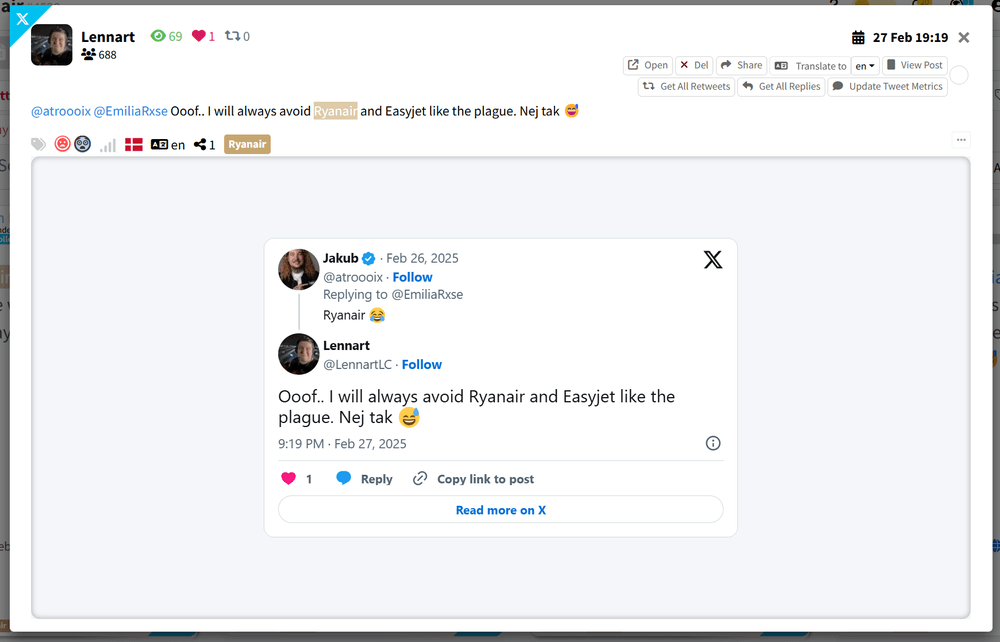
How to do it: Use social listening to track untagged mentions across social networks and respond proactively before negative sentiment spreads.
Social conversations can help you increase customer satisfaction and maintain your brand’s positive sentiment.
Prioritize Customer Requests Efficiently
Not all customer requests are equally urgent. Emotion analysis is one of the most effective social listening techniques to identify which issues need immediate attention.
How to do it: Run emotion analysis on social media mentions to detect frustration, anger, or dissatisfaction. Address these complaints first before moving on to lower-priority messages.
For Product Development
Social listening is only for marketing, huh? Of course not! Product teams can also benefit greatly from social listening insights!
Spot Product Flaws through Feedback
Your customers are already giving you product feedback — you just need to listen. Social listening helps brands refine their existing products and services by identifying pain points and unmet needs in real time.
Whether it’s a bug in your software, a flaw in your design, or an unmet need, social listening helps you catch issues early.
How to do it: Brands with one product can have an effective social listening strategy for product development with almost every social monitoring tool. All you have to do is add your product name as a keyword, and you will be notified whenever someone mentions your product online.
On the other hand, if a brand has many mentions and multiple products, it’s very difficult to filter only the mentions about your latest product.
Advanced social media listening tools have the option to filter data using boolean operators, such as “OR”, “AND” (when there are synonyms), or even “NOT” (when you want to exclude some mentions that are not related to your latest product, for example).

Identify Recurring Complaints & Suggestions
With Mentionlytics boolean search you can monitor product-specific mentions and filter conversations to identify recurring complaints or suggestions and create reports only for that specific product feedback.
Detect Emerging Customer Pain Points
Markets evolve, and so do customer expectations. Identifying new pain points early gives you a competitive edge. Social media channels are an excellent source of these insights.
If you listen carefully, you can hear what’s lacking on the market, and offer the solution before your competitors.
How to do it: Track new conversations around industry frustrations, service gaps, or feature requests to stay ahead of market shifts.
Get More Out of Your Social Listening Strategies
Social listening is only as powerful as the tools you use. Manually tracking online conversations is nearly impossible, and without AI-powered analytics, valuable insights can slip through the cracks.
A powerful social listening tool should track brand mentions, competitor activity, sentiment, and industry trends and offer advanced social listening techniques to refine your strategy.
Most importantly, social listening shouldn’t exist in a silo — integrate it across different business functions to drive real impact.
With the right tool, you don’t have to be an expert in crafting the best social listening strategies; it does it for you! Try Mentionlitics for free and test your strategic approaches!

