

Think about what you do before booking your next vacation: research, research, research (I know I do it!). A couple of years ago, I wanted to visit the Swiss Alps, and after a few weeks of searching online, I found the perfect little boutique hotel within my budget, and with a solid review score.
But then I dug a bit deeper and found a discussion on Reddit regarding low-quality breakfast and “towels smelling weird”.
I usually skip breakfast, so that didn’t trigger me at all, but the towels were my red flag. What I read between the lines was “the hygiene in this hotel was not on a high level”, and of course, it was a no-go for me.
As you can see, these “meaningless discussions” on forums, which you might be unaware of, can be the turning point and the destruction of your hotel’s reputation.
The good news? Hotels were among the first to understand the power of guest feedback. The better news? You’ve got smarter tools and strategies today to improve guest experience in every way.
In this article, we’ll walk you through the basics of hotel online reputation management, the best tools to use, and simple yet powerful tips to keep your digital image as fresh as your lobby orchids.
Table of Contents
What is Reputation Management in the Hotel Industry?
Reputation management in the hotel industry is all about controlling the narrative — before, during, and after a guest’s stay. It’s about shaping the way your hotel is perceived across online reviews, booking platforms, social media, Google searches, forums, and travel platforms like TripAdvisor, and even the good ol’ word-of-mouth.
Did you know that there are more than 31 million total reported accommodation listings on Booking.com? And if we add Airbnb and some other platforms, we have to admit that it’s so easy for your potential guests to scroll past you in a second.
In the hospitality industry, good just isn’t good enough anymore. You need stellar service, glowing reviews, and an online reputation so polished it could moonlight as a concierge.
And that’s why hotel online reputation management became a must. When done correctly, it serves as the foundation for guest acquisition and retention.
Damage control and replying to angry tweets? That too is a part of online reputation management. Sooner or later, someone will give you a one-star review or drop a TikTok review that doesn’t do your property any favors.
You can do a guest satisfaction survey, as a preventive measure, and that is great. But even with that, negative reviews will pop up from time to time.
If you don’t monitor and respond to reviews in real-time, they can pile up faster than towels in housekeeping and start to damage your brand perception.
How Can Hotels Manage Their Digital Reputation Effectively?
It’s relatively easy to manage a hotel’s online reputation today, since there are a lot of hotel reputation management software solutions available.
But how can these management tools help you keep your online presence in a positive vibe? Let us walk you through a guide to reputation management in the hotel industry.
Step #1: Monitor Online Reviews Across Platforms
In the hotel industry, guest reviews are the alpha and omega of online reputation. Why? Because everyone read them. You could run a picture-perfect 5-star hotel with infinity pools and pillow menus, but if your reviews are stuck at 2.7 stars… Houston, we have a hospitality problem.
Bad reviews hold you back from bookings, brand collaborations, and even that fancy “Best Stay” badge on Booking.com.
That’s why it’s crucial to monitor reviews across all platforms, not just the one you like most. TripAdvisor, Google Reviews, Booking.com, Expedia, Yelp (yes, it’s still a thing).
But here’s the problem: manually checking each platform is a full-time job (and you already have one…or three.)
That’s where a hotel online reputation management tool like Mentionlytics comes in handy. You can filter out the results and set alerts to inform you in real time, which helps you respond faster and get the full picture of your reputation.
Step #2: Track Brand Mentions Everywhere Online
And as you probably know, reviews come in many shapes and forms. They’re powerful pieces of user-generated content (UGC) that reflect real guest experiences and shape first impressions.
The tricky part? They’re scattered all over the internet, from booking platforms and social media to hotel websites and review hubs. But no matter where they live, one thing’s for sure: they influence potential guests more than any glossy brochure ever could.
A good hotel reputation management tool can help you track all of them, without breaking a sweat.
Take Mentionlytics, for example. It spots whenever someone talks about your hotel, whether it’s on Instagram, TikTok, Reddit, TripAdvisor, a blog post, or even in a travel journal titled “My Month in Mykonos.” If it’s out there, you’ll know about it.
It makes your review management much easier, since everything comes to one dashboard. Positive and negative reviews are all labeled (with 96% accuracy in sentiment analysis) and served to you on a plate. All you need to do is reply to them.
Step #3: Respond Promptly and Professionally to Customer Feedback
Alright, you’ve gathered all the reviews and mentions, and now comes the catchy part: how you respond.
Some feedback will make your day (or your whole week). Others? Not so much. But the hard truth is that those negative reviews are the first ones you should respond to.
Here’s your response checklist:
- Check feedback with sentiment analysis: Your reputation management tool needs to have highly accurate sentiment analysis so that you can spot the negative reviews at once.
- Acknowledge both positive and negative feedback: Whether it’s praise or criticism, every guest took the time to share their experience, and that deserves recognition. If complaints start stacking up about the same issue (say, spotty Wi-Fi or unhelpful staff), that’s a wake-up call.
- Respond quickly (ideally within 24–48 hours) and show empathy in negative responses: Silence is not golden here. Responding promptly shows guests (and future ones) that you’re present, attentive, and care about your brand image.
- Avoid generic replies: Customize responses to demonstrate genuine attention: “We’re sorry to hear that” won’t cut it anymore. If a guest went out of their way to describe the issue, your reply should go out of its way to feel human. Acknowledge their experience, empathize, and when possible, offer an explanation or a way to make it right.
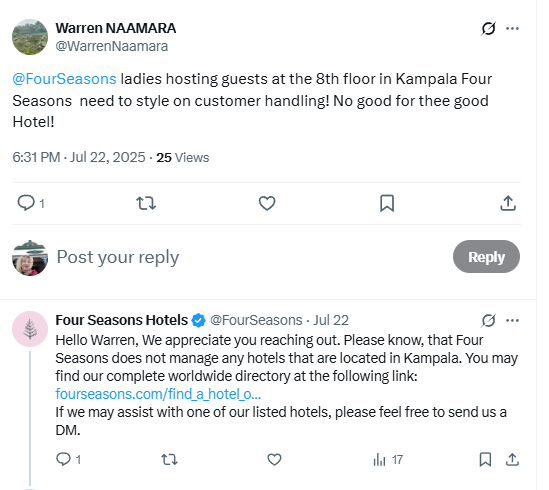
Look at how Four Seasons responds to feedback on X. Their tone is warm, their replies are personal, and they treat each complaint like an opportunity, not a threat.
Step #4: Optimize Hotel Listings and Online Presence
Your hotel might be stunning, with marble floors, a rooftop pool, and a breakfast buffet people write poems about, but if your online presence is outdated or inconsistent, you’re losing bookings in silence.
Here are some points you need to pay attention to:
- Keep your listings accurate and consistent across all platforms: Booking, Expedia, Google Business, TripAdvisor, Agoda, and more. Mismatched room details or outdated photos? That’s a recipe for bad reviews before guests even check in.
- Use high-quality images (and lots of them): Show off your rooms, amenities, lobby, views, breakfast spread, and even small perks like welcome drinks or pet-friendly features. People book with their eyes.
- List what you offer and hotel policies clearly: From Wi-Fi strength to cancellation terms and check-in hours, transparency earns trust and prevents post-booking complaints.
- Refresh your content regularly: Update seasonal promos, new renovations, events, or even fun staff introductions. (Yes, people do want to know who’s behind that perfect room service.) Look at Marriott Hotels; this brand is on it.
View this post on Instagram- Provide search engines and AI platforms with positive content: If you want Google (and now, Gemini and ChatGPT) to recommend your hotel, you need a steady stream of trustworthy, high-quality content that is now crucial for AI search engine optimization. Think blog posts, landing pages, updated FAQs, and media-rich listings. In the age of AI, if it can’t “read” you, it won’t rank you.
- Use local SEO to your advantage: Include keywords that reflect your location and niche (e.g., “romantic hotel in Amalfi Coast” or “eco-friendly lodge near Banff”). That’s what searchers are typing — and what search engines are prioritizi
Step #5: Leverage UGC for Reputation Marketing
Now that Google indexes public Instagram content, UGC has gone from “nice-to-have” to “SEO power tool”. Encourage guests to tag your hotel, share photos, and leave shoutouts. It boosts visibility, builds trust, and tells future guests, “This place is worth it.”
The best thing about user-generated content is that it’s shareable. You can easily share the voice of your satisfied guests on your Instagram profile, for example. That’s probably the best advertisement you may get.
If UGC is not a part of your reputation marketing strategy, it’s time to include it because they are the easiest way to improve your reputation. And the best thing is that you don’t need a budget for that.
Shangri-La Maldives does a great job. They turn online positive reviews into one of the feed posts.

Real-World Example: How Electra Hotels Managed Its Reputation with Mentionlytics
Now let’s switch from theory to practice, and check in with a real-life case study of how Electra Hotels does online reputation management effectively with social listening.
Electra Hotels & Resorts, one of Greece’s most iconic luxury hotel groups, needed a way to monitor their reputation across multiple online channels. With six properties and a brand known for exceptional service, they weren’t just after basic reviews but wanted to see everything guests were saying online, in real time.
Before using Mentionlytics, they were juggling multiple tools (and a lot of manual effort) to stay on top of mentions, reviews, and hashtags. But that quickly became overwhelming, especially during high season when the buzz was constant.
Mentionlytics gave Electra Hotels a centralized view of their online reputation.
From social media to blogs, forums, and review sites, they could track everything: mentions, brand sentiment, hashtags, and competitor activity, from a single dashboard.
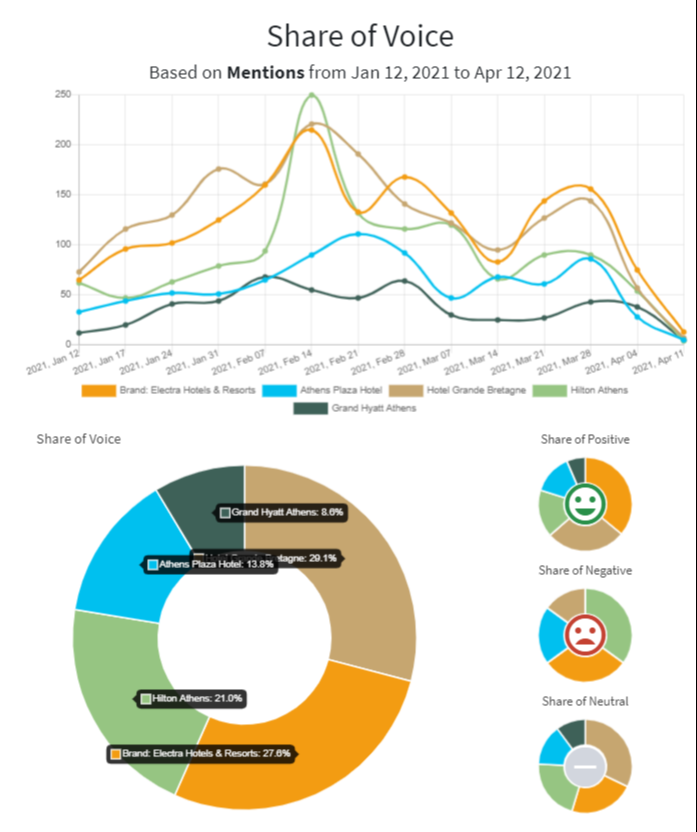
Here’s what changed for them:
- They spotted negative mentions early, allowing them to respond fast and prevent negative buzz from spreading.
- They monitored user-generated content across Instagram, where guests often tagged the brand during their stay.
- They used sentiment analysis to measure guest satisfaction and identify recurring issues.
- They tracked hashtags and campaigns to see what was performing well (and what wasn’t worth the investment ).
The result:
- Mentions increased by 57.9% over the period studied.
- Positive sentiment around campaigns increased by 46.3%, and total engagement rose 22.4%.
- Better internal process and coordination allowed staff to respond faster to guests and improve retention/public perception.
- Insight into brand awareness, competitive benchmarking, and customer satisfaction improved thanks to enhanced tracking and reporting.
Top 3 Hotel Online Reputation Management Tools Reviewed
Where there’s a will, there is a way. And today, we have so many useful hotel review management solutions that it’s only important to choose the one that fits your needs the best. These are our choices for the top three.
1. Mentionlytics: Comprehensive and Accurate Hotel Reputation Management Software
Mentionlytics is an ideal solution for hoteliers who want to improve their brand reputation and speed up the review response rate.
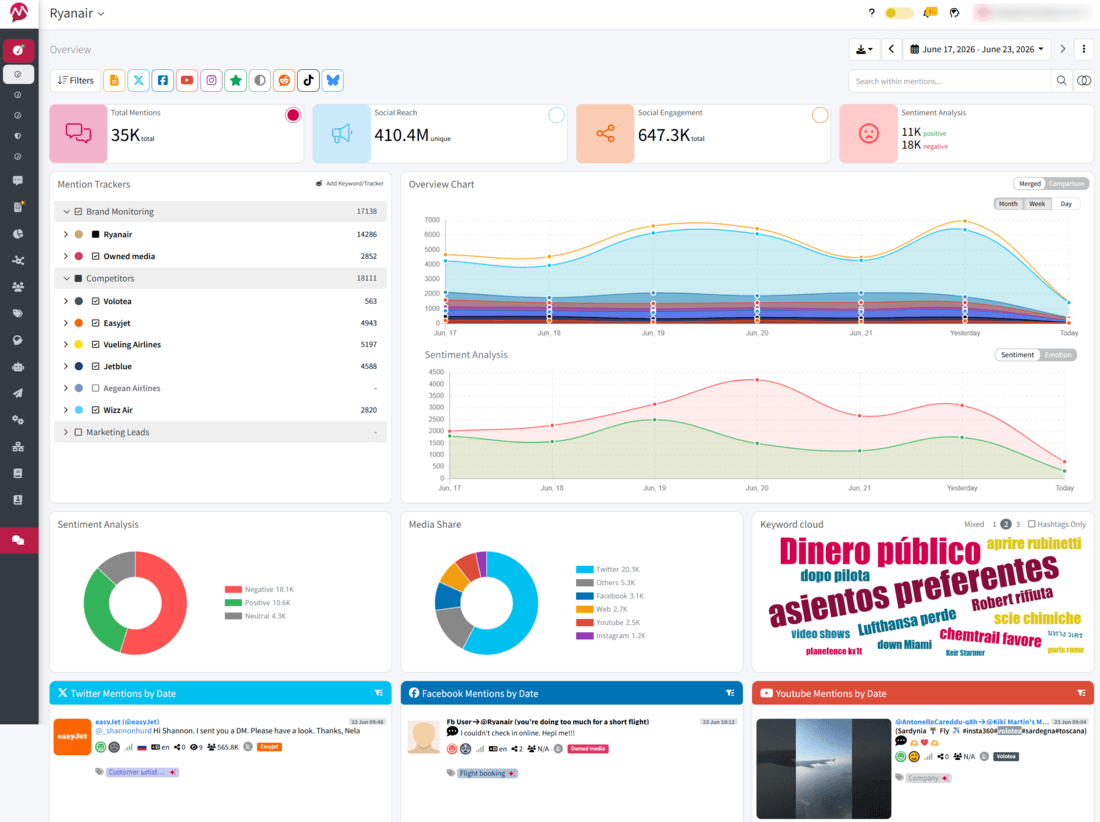
It has a 4.9 score on the G2 platform, broad coverage (Instagram, TikTok, Reddit, TripAdvisor, YouTube, X (Twitter), and wherever your good reputation might be jeopardized), and provides 96%+ sentiment analysis accuracy (even in sarcasm-filled reviews and multiple languages), so whether your guests write in English, Spanish, or Greek, you won’t miss a beat.
Despite its advanced AI features, it’s built to be hotel-staff friendly (no tech degree needed). From the front desk to marketing, anyone can use it with ease.
How It Can Help You:
- Tracks reviews and mentions everywhere: Social, blogs, forums, booking sites, news articles, and they are all in one dashboard.
- Has sentiment analysis that understands different languages, tone, context, and even snarky comments.
- Sends smart alerts only when it matters: No need to filter through 57 “Nice pool” comments to find where the crisis is boiling.
- AI Anomaly Detection: Instantly flags unusual activity, such as a spike in mentions out of your ordinary pattern.
- Custom dashboards and shareable reports: Perfect for presenting insights to management or briefing your hotel staff on weekly trends or guest feedback.
2. TrustYou: A Hospitality-Focused Platform Built for Guest Feedback at Scale
TrustYou is a guest feedback platform developed specifically for the hospitality industry, helping hotels gather, analyze, and respond to reviews and surveys all in one place.
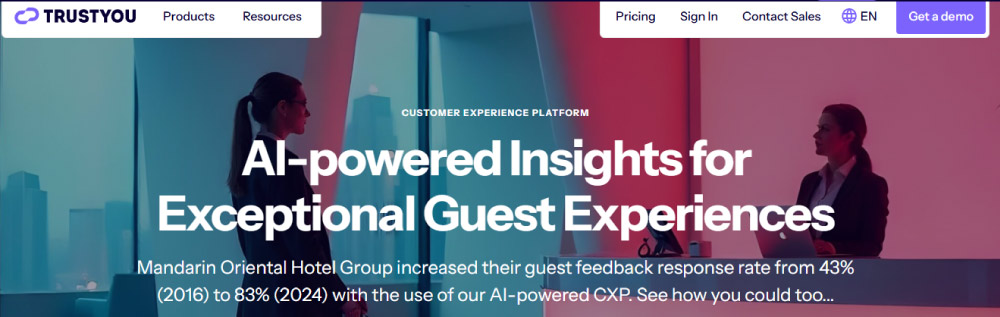
The platform stands out for its ability to collect structured feedback directly from guests via post-stay surveys, and then turn that into review content that boosts visibility on platforms like Google and Booking.
While it doesn’t have a huge number of public reviews on G2, it is scored with 4.4 stars on the HotelTechReport.
How It Can Help You:
- Collecting guest feedback at scale through automated surveys.
- Generating more positive reviews by encouraging happy guests to post publicly.
- Analyzing trends in guest satisfaction to improve operations and service.
- Responding to reviews across platforms from one central dashboard.
- Boosting Google visibility with verified review content.
3. Medallia: The Enterprise-Grade Experience Platform
Medallia is a well-established platform designed for managing customer experience across industries, including hospitality.
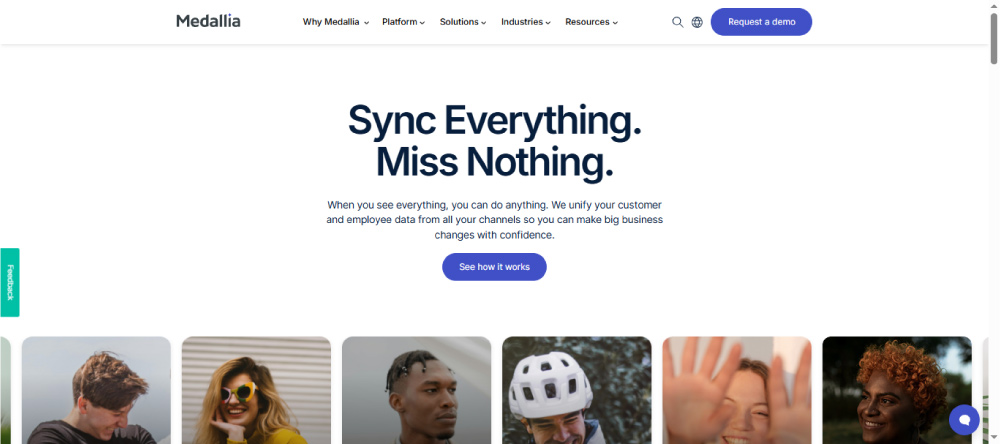
Its strength lies in its ability to collect data from multiple channels, including surveys, contact centers, social media, and review sites. It uses AI and machine learning to detect patterns in guest satisfaction, and offers dashboards for internal reporting and benchmarking across locations.
How It Can Help You:
- Feedback collection across multiple channels: Surveys, calls, digital interactions, all captured and presented.
- Video feedback: This software can capture emotion behind the voice, so you know for sure how your customers feel.
- AI-driven trend detection and predictions: Based on the collected data, the software gives predictions for further actions.
- Custom dashboards for reporting and benchmarking so hotel groups can compare performance across properties and track progress over time.
- Integrations with internal systems, though implementation can be time-consuming and may require IT support.
6 Tips for Hotel Online Reputation Management
If you’re in the hospitality business, you know the most important thing for a hotel’s online reputation is to have the right management system. Here are six practical tips to help you build (or improve) a reputation management workflow.
1. Encourage Satisfied Guests to Leave Reviews
Happy guests are often the quietest ones. They had a lovely stay, checked out with a smile… and then moved on with their lives. Meanwhile, the guest who didn’t like the hallway lighting? Already writing a 500-word review.
If you want to reverse the statistics as part of your review management strategy, consider sending a “Thank you for your stay” email or message within a day or two after check-out, and kindly ask for a review.
Don’t forget to send the link to the review site where you want your guests to leave the review.
And you can always offer small incentives, but be careful! Loyalty points, future discounts, or a chance to win a free night can help motivate reviews, as long as you’re not breaking platform rules.
2. Address Negative Feedback Constructively
Negative reviews are never fun, but they’re not the enemy. In fact, they can be one of your most valuable sources of insight, as long as you approach them with the right mindset (and not with steam coming out of your ears).
The key is to respond, not react.
Acknowledge the guest’s experience, express genuine regret, and avoid sounding defensive. A short, empathetic reply like “We’re sorry to hear this… we’re looking into it and appreciate your feedback” can do wonders.
Investigate the issue internally, and follow up publicly (if possible).
Future guests are watching how you handle criticism. A polite, professional response shows that you care, and that alone can rebuild trust.
3. Make Social Media Your Showcase
Think of social media as your hotel’s digital lobby; it should be warm, inviting, and full of charm.
Post regularly to highlight your best features: cozy rooms, rooftop views, seasonal offers, and hidden gems nearby. Look how the Plaza Hotel does it.
View this post on Instagram
Show potential guests what it feels like to stay with you. And don’t just post; engage. Reply to comments, answer DMs, and thank guests who tag you.
A lively, responsive social presence builds trust before guests even book.
Leave No Mention Without An Answer
With Mentionlytics, you can discover all your brand mentions (even the untagged ones) and engage with your community timely.
4. Invest in Staff Training
Your team is your first line of defense, and your biggest reputation asset. A single warm welcome or quick problem-solving moment can turn a 3-star experience into a glowing 5-star review.
Make sure your staff understands how their interactions directly impact guest satisfaction and online feedback. From reception to housekeeping, everyone plays a role in shaping your reputation.
Empowered, well-trained staff prevent bad reviews and inspire great ones.
5. Track Reputation Metrics
You can’t manage what you don’t measure. That’s why it’s crucial to track key reputation metrics, like sentiment, Share of Voice, average star ratings, and review volume, to understand whether your online image is improving or slipping.
That is all possible when using a reputation management software.
For example, Mentionlytics has the Share of Sentiment feature, which gives you a quick, visual breakdown of how much of the conversation around your hotel is positive vs. negative, and how you compare to competitors.

It’s like a reputation scoreboard, and yes, you want to be winning.
6. Say “Yes” to Influencer Collabs
Influencer marketing works wonders for hotels. A well-placed post or story can spark curiosity, build credibility, and bring in bookings.
Partner with travel influencers or bloggers who align with your brand, but don’t just chase follower counts. Micro- and macro-influencers often have more engaged audiences and can deliver authentic, location-specific content that resonates with future guests.
Actually, your influencers don’t even have to be humans to promote your hotel, as Topi does below. How cute is this!
View this post on Instagram
Don’t be afraid to get creative. Invite content creators to co-host a yoga retreat, review your breakfast menu, or test out your new rooftop bar. If they love the experience, their followers will want to check in next.
Manage Your Hotel Reputation Online with Mentionlytics
Meet the support team that’s actually praised in reviews. At Mentionlytics, we know people matter most, which is why we’re so aligned with the hospitality industry. It’s all about the experience, right?
Start managing your hotel’s reputation with Mentionlytics. Enjoy a free 14-day trial, no strings attached, just powerful features scanning the internet for every mention, tag, and whisper about your brand.
Hotel online reputation is a fragile thing; catch the vibes and steer the story before someone else writes it for you.
FAQ
What is hotel reputation management?
Hotel reputation management is the process of monitoring, responding to, and influencing how your hotel is perceived online, through reviews, social media, and guest feedback.
What are the top reputation management software integrations for hotel review aggregation?
Top tools often integrate with platforms like TripAdvisor, Booking, Google Reviews, Facebook, and OTAs, along with CRMs and PMS systems for smoother guest data syncing.

