Ho – ho – ho! Holiday marketing can’t be merry and bright unless you start planning the strategy you’ll follow early on.
Holiday seasons, especially the end-of-year celebrations, offer your brand the perfect opportunities to connect with your audience emotionally and promote your products and services at a time when most people are searching for the ideal gift for their loved ones.
It’s true that in the US only, 25% of the year’s total retail sales happen from October to December, a.k.a the holiday season.
Holiday shopping is an important ritual for most people to buy presents for their family and friends and indulge themselves with some goodies too.
So, you have to tap into this potential for increasing your sales and revenue.
In this article, you’ll find how to plan a winning holiday marketing strategy, some ideas and tactics to implement, and, of course, how you can track the performance of your campaigns.
Table of Contents
Planning a Perfect Holiday Marketing Strategy in 4 Steps
Let’s begin with how to prepare your holiday marketing strategy with specific steps.
Remember that your strategy should be in place months before the festive season so you have plenty of time to craft your campaigns without a rush.
Step 1: Setting holiday marketing goals
When setting holiday marketing goals, start with a clear vision. Think about what success looks like for your brand.
Are you aiming for increased sales, brand awareness, or repetitive purchases? Break these goals into achievable milestones. For example, set a specific sales target.
Also, consider your budget constraints. Realistic goals respect financial limits.
Furthermore, keep your goals flexible because the holiday season can be unpredictable. Adjust as needed to stay on track.
Step 2: Understanding your target audience
Having a deep understanding of your target audience is vital not only for holiday campaigns but for your whole marketing strategy.
During the festive season, people’s emotions and spending habits shift.
Knowing your audience’s preferences, pain points, and holiday desires can help you tailor your messages to resonate with them.
For instance, if your audience values sustainability, you may highlight eco-friendly products or practices in your holiday promotions.
Step 3: Analyzing customer shopping behavior
In addition, to understand your audience deeply you have to analyze their shopping behavior.
For example, do they prefer online shopping or in-store experiences? Do they respond better in ecommerce marketing tactics or offline offers? Are they buying months ago or they’re likely to make last-minute purchases?
Use these insights to tailor your holiday marketing strategies according to your customers’ unique profiles. You need more than one approach to succeed.
Step 4: Planning with a holiday campaign calendar
Now, you can’t plan your strategy without using a holiday marketing calendar to help you organize everything. After all, it’s your roadmap for the festive season.
Start by marking key dates. We don’t talk about just the big holidays like Christmas, but also any relevant shopping days such as Black Friday or Cyber Monday which are in the middle of the holiday quarter.
This helps you time your holiday campaigns perfectly. Plan for your content creation, promotions, and special offers.
A calendar keeps you organized and prevents last-minute rushes, ensuring quality in every campaign.
It also helps you allocate your resources effectively. For example, by anticipating busy periods, you can manage staff, stock, and budgets better.
Pro Tip: Keep a social media posting calendar, supplementary to your main campaign calendar, to define the best times to post on each channel and stay consistent even in this hectic time.
Well, that’s it! That’s all you need to kick-start your holiday marketing efforts.
Now, let’s dive into the juicy part, with tactics and ideas you can follow to win the holiday game!
Best Holiday Marketing Tactics
Here we’ve got the perfect holiday marketing guide for you to get some inspiration on what exactly you should do to attract more customers this festive season.
Pro Tip: A general advice that applies to all the tactics we’ll analyze below is that you should dress your brand up for the occasion. We mean modifying your branding to show you’re in the holiday mood. From your website to your emails and product packaging you should be merry and bright!
1. Harness email marketing for audience reach
Email marketing seems the most straightforward and budget-friendly tactic you can implement to reach more and more potential customers effectively. With an impressive average ROI of $36 to $40 for every dollar spent, it’s a strategy you can’t ignore.
You can start early your email campaigns with holiday gift ideas and promotions, even before November, to catch the attention of early shoppers. Include direct shoppable links to product pages to streamline the buying process.
You can personalize your campaigns by promoting gifts based on your customers’ previous purchases, showcasing unique items, and how to pair more than one together for the perfect present. Also, a good idea is to add a reward, like a discount on these gift bundles, to encourage more purchases.
Furthermore, make sure you stay on top of your audience’s inbox by sending regular emails with gift suggestions, flash sales, limited edition products, and more as the holidays are approaching. However, don’t bombard them with a holiday email every other day. And keep the copy short and sweet.
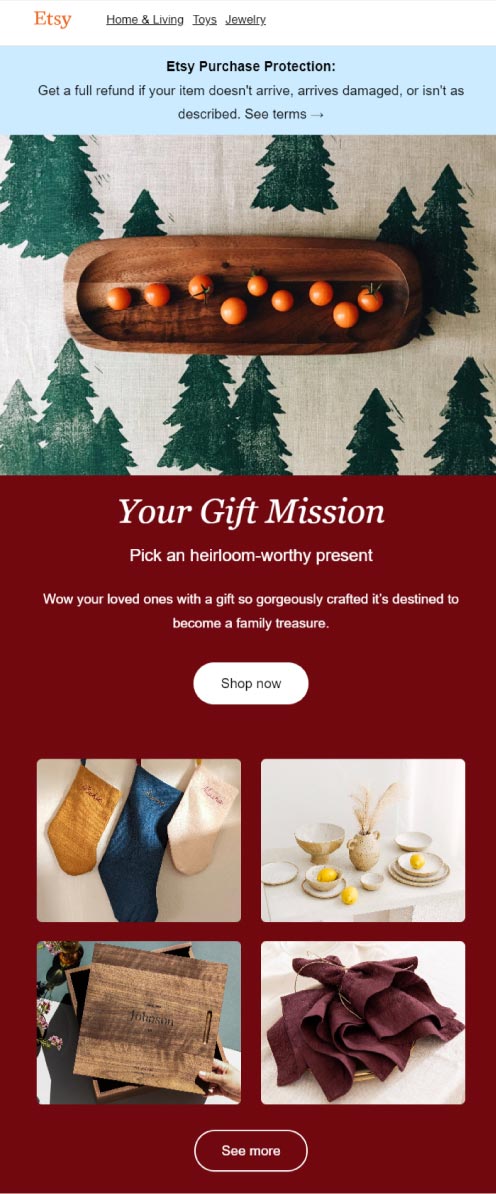
For example, see how Etsy is motivating their subscribers to start their holiday shopping, with elegant and festive visuals and a few catchy lines.
2. Leverage social media for customer engagement
You can blend social media into your holiday marketing strategies with holiday-themed content, contests, and influencer collaborations to resonate with your audience’s festive spirit.
For example, you can host product giveaways to boost your social media engagement and encourage potential customers to post about their wishlist items and tag your brand.
This tactic will increase your brand awareness and give you a chance to generate leads, as more and more people will get familiar with your products.
Also, you can partner up with popular influencers in your niche to promote your products in their festive posts to expand your target audience.
3. Implement PR tactics for brand reputation
Implementing PR tactics such as TV and OOH ads, events, and press releases can significantly boost your brand reputation. Here the goal shouldn’t be sales but creating a better brand image.
You can start by crafting a compelling holiday story about your brand. This story should embody the season’s spirit and your brand values. Then, build your holiday PR campaigns around this narrative.
Take, for instance, Coca-Cola — a legendary brand for its Christmas commercials and its connection to all things Christmas. This year’s campaign is “The world needs more Santas” and its holiday advertising campaign is based on this narrative.
Additionally, you can organize community or charity events, showcasing your commitment to social responsibility. Such initiatives connect with customers on a deeper level.
Then, you should take a step further and issue press releases about your holiday initiatives, capturing media attention. This increases visibility and credibility.
Finally, use a news monitoring tool, like Mentionlytics, to capture the buzz you’ll create on the media with your holiday campaigns. Mentionlytics can help you see how your Share of Voice has grown during the holiday season and measure the impact of your campaigns on your brand reputation.
4. Create attractive, informative content
Creating attractive, informative content is crucial for successful marketing during the holidays.
This content will capture the attention of your target audience. Here are a few holiday marketing tips you should remember for your content:
- Use vivid visuals and engaging narratives to stand out. These elements make your brand memorable amidst holiday noise.
- Focus on storytelling that resonates with the festive mood. Stories evoke emotions, driving customer connection and loyalty.
- Ensure your content provides value, like holiday tips or gift ideas. Valuable content builds trust and positions your brand as a helpful resource.
- Use different formats like videos, blogs, or infographics to appeal to diverse preferences. This variety caters to different audience segments, maximizing reach.
- Regularly update content to keep it fresh and relevant. Fresh content keeps your audience engaged and coming back for more.
5. Optimize your website for higher ranking
SEO is another important component of your holiday marketing strategy. As a matter of fact, an astonishing 87% of holiday shoppers say that they use Google to help with their shopping.
Therefore, optimizing your e-commerce website to rank higher in SERP is essential. High search rankings increase visibility to potential customers.
So, you have to optimize your product pages for relevant holiday keywords to capture seasonal search traffic. This targets users actively searching for holiday-related products or ideas.
For example, see how Sephora and Amazon have dedicated, optimized pages for the query “Christmas makeup gifts”.
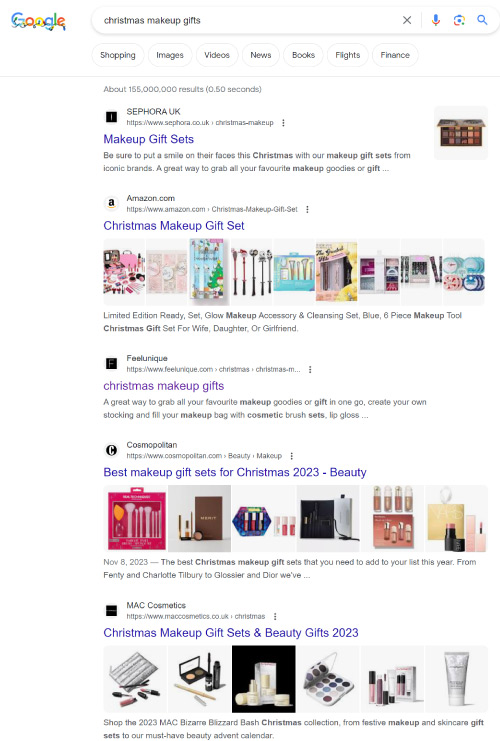
You can optimize your website to rank high for any kind of holiday, from Christmas, as in the example, to Valentine’s Day and all the other popular celebrations.
Also, you need to ensure your website is mobile-friendly, as many users shop on their phones. A mobile-optimized site elevates user experience and ranking.
Furthermore, you should improve website loading speed for better user experience and search ranking. Faster sites retain visitors better, reducing bounce rates.
6. Use paid ads for a wider reach
Using paid ads is key in holiday marketing, especially with U.S. retail sales expected to increase 3,7% year-over-year this season, according to Mastercard SendingPulse.
Paid ads target specific audience segments effectively. This ensures your message reaches those most likely to be interested. But you need to incorporate a holiday vibe in ad copy and visuals.
Use Google Ads or social media platforms for targeted advertising. Adjust your budget to prioritize high-traffic holiday periods. Higher ad spend during peak times maximizes visibility and impact.
Pro Tip: Tailor your ads for both in-store and online shopping experiences. This approach caters to different consumer preferences and shopping habits.
Finally, leverage retargeting ads to re-engage visitors who have shown interest but haven’t yet purchased.
Holiday Marketing Ideas
Now, in this section, you’ll find some very effective ideas that shouldn’t be missing from your holiday marketing plan.
Let’s jump right in!
1. User-generated holiday campaigns
User-generated content (UGC) is one of the best testimonials you can get from your customers.
In fact, 56% of consumers say they want to see mostly user-generated photos and videos from brands. And an estimated 90% of them say that UGC is influencing more their buying decisions than promotional emails and even search engine results!
So, what should you do? Of course, start a UGC marketing campaign during the holiday season. Create a holiday-inspired hashtag for your brand and encourage your customers to create content using your products or when they’re in the store to do their shopping!
You can take this holiday social media marketing idea to the next level by offering prizes and discounts to those who will create the most engaging UGC posts.
Also, you can tailor your products and services to align with the holiday spirit offering moments that are worth a place in people’s Instagram and TikTok accounts.
For example, see how Starbucks is implementing this strategy with new festive cups every year and special decorations.
View this post on Instagram
2. Attract local buyers
Attracting local buyers using hyperlocal social media marketing is highly effective during holidays.
With 76% of users being influenced by social media for purchases and 75% of them using social media to research products, you have to target people near your physical stores.
You can use Facebook advertising to tap into the local market, driving foot traffic to your location.
Also, you can retarget previous customers, both online and in-store. This reminds loyal customers of your offerings, encourages repeat purchases, and reaches those who’ve visited but not purchased.
Pro Tip: Make some social media optimization tweaks in your profiles to increase your organic ranking in social media search results as well.
In addition, hyperlocal targeting, combined with festive displays, enhances local appeal. It creates a sense of personal connection. By focusing locally, you cater directly to the needs and preferences of nearby shoppers, making your marketing efforts more relevant and impactful.
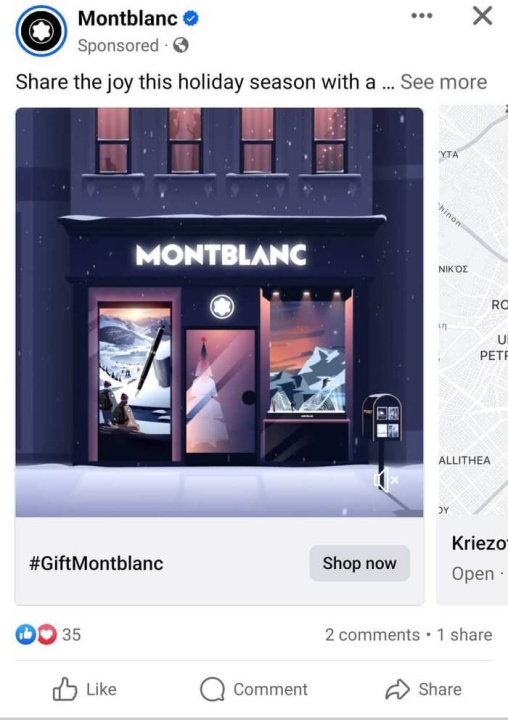
For instance, see how Montblanc encourages nearby shoppers to purchase a gift from their physical stores with a Facebook ad.
3. Flash sales
If you’re looking for a fast increase in revenue, flash sales are a dynamic tool as it creates a feeling of urgency.
Flash sales captivate customers with time-limited offers, encouraging quick decision-making.
You can promote this kind of sales through your email marketing campaigns and other marketing channels to grab immediate attention. Highlight exclusive deals to create a sense of exclusivity and value.
Also, offering free shipping during these sales can be a major draw. Make sure to prominently feature this offer in your online store. It removes a common purchasing barrier, enhancing customer satisfaction.
See for example Sephora’s holiday flash sales below.

4. Donate to a cause
Donating to a cause during the holidays is a powerful aspect of holiday marketing.
It embodies the spirit of giving, resonating with the festive mood. Integrating charity into your strategy shows commitment to the community. This enhances your brand’s image as socially responsible.
Shoppers appreciate brands that contribute to meaningful causes. Knowing a part of their purchase aids others can encourage spending.
Highlight your charitable initiatives in your marketing materials. Offer products where a portion of sales goes to charity. Such initiatives give customers a sense of participation in the giving process.
For example, see how Conscious Steps highlight their charitable work and engage their customers.

5. Advent calendar
Creating an advent calendar is a captivating way to engage customers during the holiday season.
It builds anticipation with daily surprises or offers. Each day can reveal a new product, discount, or content piece. This keeps customers returning to your website or store regularly.
It’s an interactive and fun approach to holiday marketing. Advent calendars can be digital or physical, suiting from small businesses to large enterprises. They provide a resourceful way to showcase a range of products or services.
The daily reveal format also encourages social sharing, increasing your UGC.
Overall, an advent calendar is a creative, engaging tool that enhances the customer experience, boosts holiday sales, and is a great holiday gift.
For example, see Cadbury’s advent calendar for this year below.
Δείτε αυτή τη δημοσίευση στο Instagram.
6. Personalized gift recommendations
Using AI marketing techniques to provide personalized gift recommendations to your website or in-store visitors is a smart holiday strategy.
AI analyzes customer data to suggest tailored gift options. This personalization enhances the shopping experience, making it efficient and enjoyable.
Additionally, it can predict preferences based on past purchases and browsing behavior.
Personalized recommendations increase the likelihood of customer purchases. They also help in discovering new products that customers might like.
To wrap it up, these are our holiday marketing ideas to spice up your marketing strategy.
Now, it’s time to see how you can monitor the performance of your holiday campaigns and ensure positive results.
How to Track Your Holiday Marketing Campaigns
1. Use analytics tools
The thing is you can’t track the performance of your holiday campaigns without using analytics tools. From Google Analytics to social listening tools, it’s important to monitor closely your campaigns’ performance and gather as much data and insights as you can.
Start by setting up tracking for key metrics like website traffic, conversion rates, and customer engagement.
Track the performance of specific pages or promotions to see what captures attention. Monitor traffic sources to understand which marketing channels are most effective.
Additionally, use these tools to segment your audience and analyze behavior patterns, such as how different groups respond to your campaigns.
2. Track email performance
Tracking the performance of your emails is key in measuring the success of your holiday campaigns.
Start by monitoring open rates and click-through rates (CTR). These reveal how engaging your subject lines and content are.
Also, pay attention to conversion rates, which show how many recipients take the desired action, like making a purchase.
Don’t overlook the bounce rate and unsubscribe rate as they indicate the health of your email list.
Use A/B testing for different elements like subject lines or CTA buttons. This helps in understanding what resonates best with your audience.
Finally, analyze the peak times when your emails are opened to optimize future send times.
Remember, regular monitoring and adjusting based on these insights can significantly boost your campaign’s effectiveness.
3. Monitor social media engagement
Your social media engagement can be a strong indicator of how well your holiday campaigns are going. Social platforms offer a direct line to customer reactions and behaviors.
Start by tracking likes, shares, comments, and brand mentions related to your campaign. These metrics indicate how well your messaging resonates with your audience.
Pay special attention to the sentiment of the comments and feedback. Positive engagement can signal campaign effectiveness, while negative responses offer valuable insights for improvement.
A social listening tool like Mentionlytics can help you keep track of these metrics efficiently. Plus, in Mentionlytics you can do hashtag tracking for your campaign hashtags and see how often they’re used and in what context.
4. Implement UTM parameters
Setting up UTM parameters is necessary to track your holiday digital marketing campaigns.
Start by identifying the source, medium, and campaign name. For instance, for your holiday email campaign, your source could be ‘newsletter’, medium ’email’, and campaign ‘holiday_sale’.
You can use a UTM builder tool to create these parameterized links easily.
Add these UTM links to your marketing materials like emails, social media posts, or banner ads. This way, you can track which campaigns drive traffic, conversions, and sales.
Analyzing this data helps in understanding the effectiveness of your holiday marketing strategies and making informed decisions for future campaigns.
5. Monitor sales data
Sales data is the fundamental indicator of successful holiday campaigns.
Pay close attention to sales figures before, during, and after the holiday season to understand your campaigns’ impact.
Look for spikes in holiday sales that correlate with your marketing efforts.
It’s also important to analyze the average order value and the number of repeat customers, as these metrics indicate customer loyalty and satisfaction.
Compare this data with your set goals to evaluate performance.
6. Conduct surveys
Collecting feedback is another valuable tool for assessing the success of your holiday campaigns.
Design a short, focused survey. Ask specific questions about your campaign’s visibility, appeal, and impact. Include questions on customer satisfaction, product quality, and overall shopping experience.
Distribute the survey through email, social media, or even as a pop-up on your website.
To boost your response rate you can offer a small reward, like a discount.
For your surveys, you can also use a social listening tool to gather informal feedback through social media comments and brand mentions.
For example, Mentionytics will help you not only gather it but also perform sentiment analysis to understand what’s the overall feeling of your audience toward your holiday marketing campaigns.
This direct input from your audience is invaluable for understanding the effectiveness of your holiday marketing strategies and for making improvements in the future.
7. Review and adjust in real time
Finally, you have to keep in mind that reviewing your campaigns’ performance and pivoting in real time is necessary to ensure better results.
In today’s fast-paced digital world, consumer behaviors and market trends can change quickly.
Stay up-to-date by monitoring key metrics like website traffic, conversion rates, and social media engagement regularly. Use tools like Google Analytics and social media monitoring tools to track performance.
If something isn’t working as expected, don’t hesitate to tweak your strategies. This could involve adjusting ad spend, refining your target audience, or changing your messaging.
Also, keep an eye on competitor activities and industry trends for any necessary strategic shifts.
Successful Holiday Campaigns Example: IKEA Canada
IKEA Canada, a division of the famous Swedish retailer, is the perfect example of holiday marketing done right.
Their 2023 strategy encompasses various tactics we analyzed in this article, so let’s take a closer look at this case.
IKEA Canada built their holiday campaign around a single particular message: “Take a Holiday from the Holidays.” The holiday season can be a busy period for many of us, so IKEA suggests we take a moment to enjoy our solitude and slow down alone.
In their ad, which you can watch below, they take the opportunity to highlight their products with a resourceful way of showing even their prices but not appear salesy or overly promotional! As a member of the audience, you don’t concentrate on the price but on the feeling, right?
Δείτε αυτή τη δημοσίευση στο Instagram.
This ad will run across TV, cinema, OOH, online, and on social media for more than a month until Christmas, according to The Drum.
However, advertising isn’t the only thing that IKEA does to increase sales this festive season.
From holiday in-store decorations and festive, limited edition items to special offers on social media, IKEA Canada promotes its products in a merry and bright way!
Δείτε αυτή τη δημοσίευση στο Instagram.
Conclusion
Well, to be honest, holiday marketing isn’t easy because you have to catch people’s attention at a time of year when everyone in your league is promoting their offers and trying to engage with your customers.
So, you have to be creative and dedicated to your holiday marketing campaigns. To make sure your campaigns are going well you must keep an eye on them at all times.
Mentionlytics can save you precious time by automatically monitoring your campaigns and providing you with actionable insights and data-rich reports. Give it a try now for free!