Are you feeling swamped by the sea of articles you can find out there about various SaaS marketing strategies that promise to work miracles for your sales funnel?
You know the usual “limit user’s choices”, “have an effortless signup process”, “extend your free trials”, and so on.
We know there’s an overwhelming amount of repetitive information about how to create your SaaS strategy. But you need something to stand out, something different to inspire you!
That’s why we’ve gathered below the 7 most effective SaaS marketing strategies you need to know to increase sales, reinforce your brand presence, and retain existing customers.
Without further ado, shall we begin?
Table of Contents
- What is SaaS Marketing?
- 7 Best SaaS Marketing Strategies to Try
- Leveraging AI and Personalization in Marketing
- Tailored Content Marketing for SaaS
- Data-Driven SEO and SEM Approaches
- Strategic Use of Social Media and Influencer Marketing
- Customer-Centric Email Marketing Strategies
- Partnerships and Affiliate Marketing Programs
- Continuous Testing and Analytics for Optimization
What is SaaS Marketing?
SaaS marketing is a combination of digital marketing techniques that Software-as-a-Service (SaaS) companies employ to both acquire and retain customers for their online, cloud-based products.
These techniques include all kinds of digital marketing campaigns, SEO, affiliate marketing, and more.
Marketing for SaaS is a relatively new field that has seen tremendous growth in the past few years, as more and more businesses rely on apps and digital services to do their work faster and more efficiently.
In fact, businesses are now using 130 apps on average. This is a huge increase if you consider that the same businesses were using only 16 apps five years ago.
However, SaaS marketing strategies differ from other marketing strategies for three reasons.
Reason #1: SaaS products are intangible
SaaS products are digital tools, cloud-based platforms, mobile apps, and others. Basically, you don’t sell the product itself but a monthly or yearly subscription to it.
So, you don’t have to persuade the user to buy your products once. You have to keep them interested and happy with their subscription, or they will cancel.
This brings us to the second reason.
Reason #2: Importance of keeping your existing customers
Talking from experience, as Mentionlytics is a SaaS company, it’s equally important to give your energy and resources to both customer acquisition AND retention.
You need to build a customer base that will fuel your revenue to survive in this competitive landscape.
So, you need a SaaS marketing strategy to draw more and more leads to your funnel. But at the same time, you need to offer a satisfying customer experience to prevent your existing customers from churning. Only this way you may have a steady profit.
Reason #3: Longer customer journey
Last but not least, most SaaS companies are in the B2B game, which means a longer customer journey as their target customers need to understand how to integrate a new online service into their processes.
This takes time. And there isn’t one person that makes the decision. It’s a whole buying team that you need to convenience, from the actual user to the budget holder.
This means your B2B SaaS marketing strategies should be highly personalized and include numerous touchpoints to stay top-of-mind.
Now, are you ready to create an effective SaaS marketing plan? Then, keep reading to learn 7 battle-tested strategies to fuel your growth!
7 Best SaaS Marketing Strategies to Try
Before we begin our long list of strategies we want you to remember that any SaaS marketing strategy you’ll find below can be executed for any kind of SaaS product.
And it’ll work only if the product itself is of quality and high value to your target market.
With that said, let’s jump right in!
1. Leveraging AI and Personalization in Marketing
Leveraging AI is no longer a luxury but a necessity.
This approach transforms how your business interacts with the audience, particularly through personalized content and insightful AI analytics. Let’s elaborate on these points.
Effortlessly Personalized Content
AI marketing is here to stay. In fact, this year 61,4% of marketers said they have used AI in their marketing activities, with 44,4% of them using it for content production.
The more you adopt AI tools and techniques in your SaaS marketing strategy the more time and resources you’ll save.
For example, AI can personalize your content and messages to address specific buyer personas, like generating social media captions, or email sequences.
Also, you can use AI to personalize the user experience on your website by showcasing tailored copy, images, and CTAs based on who is visiting.
AI Insights
Furthermore, AI algorithms can help you analyze vast amounts of customer data and uncover actionable insights on what your prospects want and need from your products. This can help you from creating more engaging content to propose vital tweaks to your product team.
In addition, AI can give you custom tips and tricks to improve your brand on social media based on your performance data.
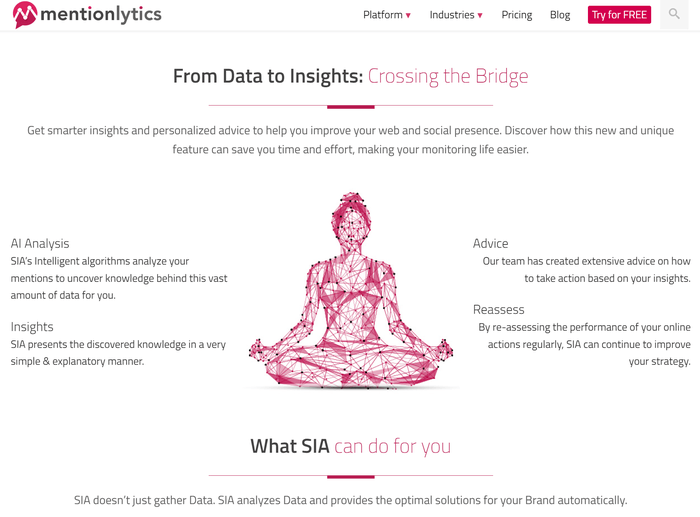
This is what our AI-powered Social Intelligence Advisor, SIA, can do for you. SIA algorithms analyze the mentions of your brand, competitors, and important keywords and give you data-driven recommendations, such as which hashtags to use more, what works better for your competitors, notify you of potential reputation threats, and more.
Bonus: Learn How to Use SIA to Improve Your Social Media Performance
2. Tailored Content Marketing for SaaS
Content marketing is key for your B2B SaaS marketing strategy since it can increase your website traffic and convert qualified leads into customers. This may sound cliché but you have to focus on creating engaging and high-quality content for people to get interested.
Creating Engaging, High-Value Content
We live in a world with an information clutter than ever before. You have to make sure your resources, your blogs, and every piece of content you create and share is valuable to your target SaaS customers.
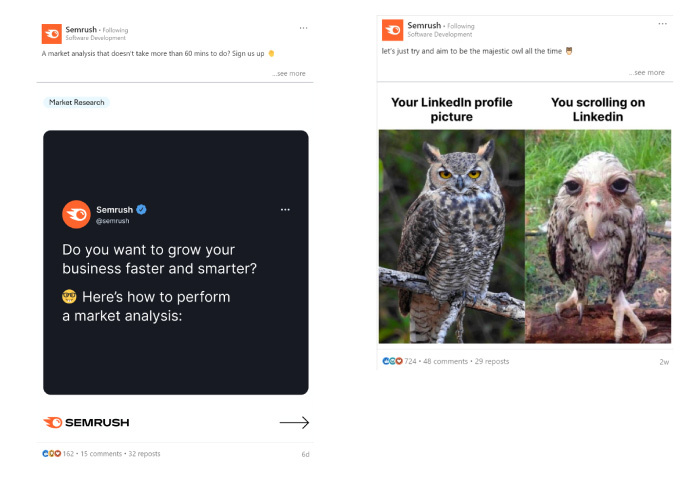
Educational content is what most SaaS businesses go for but you can also entertain your audience to build an emotional connection with them.
For example, SEMrush does a great job in both.
Source: LinkedIn
Using Various Content Formats
Additionally, you should add to your SaaS content marketing strategy various content formats, that will better resonate with each of your buyer personas, your leads’ stage down the funnel, and your team’s capacity.
For instance, your fresh leads might need more to nurture their interest in what your platform does for similar companies by reading a case study, which, by the way, is still the #1 marketing tactic to increase sales.
On the other hand, your leads in the consideration phase might need a video to explain how they can integrate your platform into their processes. For the record, a whopping 91% of businesses use video for marketing purposes.
Now, some additional ideas of content formats you can include in your SaaS marketing strategy are white papers, how-to guides, webinars, and podcasts.
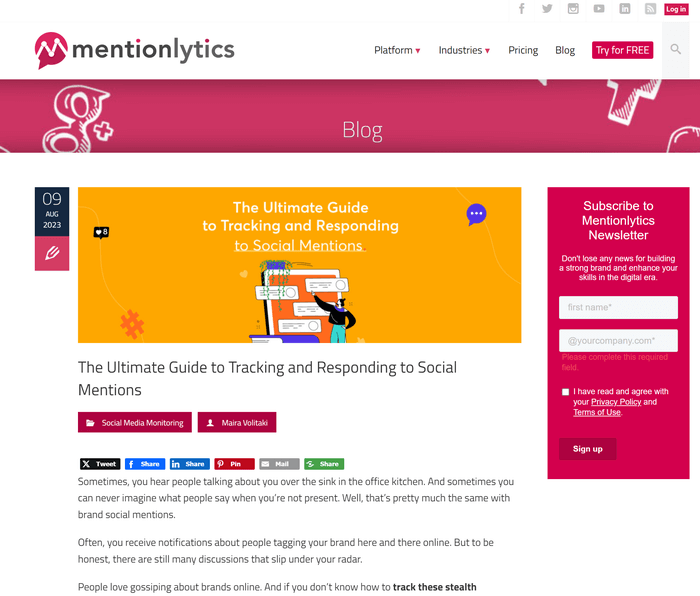
As an example, take a look below at how we use our blog to nurture the interest of our website visitors with how-to guides.
3. Data-driven SEO and SEM Approaches
Content marketing’s best friend is Search Engine Optimization (SEO). As a matter of fact, 60% of marketers say that inbound (SEO, blog content, etc.) is their highest quality source of leads.
Advanced Keyword Research and Optimization
By optimizing your entire website and blogs to rank higher in SERP you increase your chances of a potential customer seeing your solution before your competitors.
Thereby you boost your chances of them clicking and digging into your content which will lead to a higher conversion rate.
However, you can’t just randomly insert keywords in your blog posts and hope for the best. You need an effective SEO strategy inside your SaaS marketing strategy to guide your actions.
You have to select your target keywords based on important data such as the average search volume and keyword difficulty, to make sure you’re optimizing for valuable user queries rather than insignificant industry keywords that no one talks about.
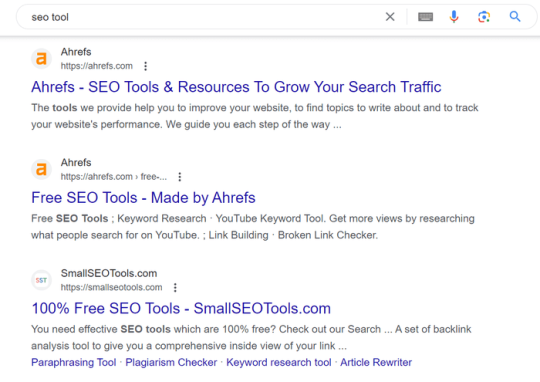
Furthermore, you take care of your on-page SEO with optimized URLs, title tags, meta descriptions, image alt-texts, and internal linking.
Also, your website’s loading speed plays a huge role along with being mobile-friendly!
Effective PPC Campaigns for Higher Traffic
Nonetheless, SEO isn’t the only way for your website to be on top of Google’s results.
You can run Pay-Per-Click (PPC) campaigns via Google Ads to get high traffic sooner than with SEO. SEO takes time because it’s an organic approach. Now we’re talking fast results.
Pro Tip: You must have PPC ad campaigns for your branded keywords (e.g. your brand name). Otherwise, your competitors might take advantage of it in their ads and you will lose all this sales potential.
Remember though, PPC might be a quick solution to your low traffic but it’s not a cure-all.
You need to build an organic traffic stream with your SEO techniques for your SaaS marketing strategy to succeed.
However, until SEO starts working well for your website you can rely on PPC ads to do the work. Just make sure that the landing pages the users will be visiting after clicking on your ads are highly relevant to their pain points.
4. Strategic Use of Social Media and Influencer Marketing
By taking advantage of influencers’ persuasive power and the wide reach of social platforms, you can create impactful, authentic connections with your audience.
Building Brand Awareness and Community Engagement
Social media shouldn’t be missing from your SaaS marketing strategy. You can use social media marketing to build your brand awareness by sharing valuable content through your official accounts.
Then, you can take it a step forward to spark conversations around interesting topics in your industry, to increase your social media engagement with potential or existing customers and your target audience.
You can announce your new features, post your blog articles, or reshare user-generated content to thank people for using your product and promote it as social proof.
Another idea is to leverage a social listening tool, like Mentionlytics to keep track of your brand mentions and respond to them all promptly to start building a brand community. As a matter of fact, 71% of people expect companies to interact with them personally on social media.
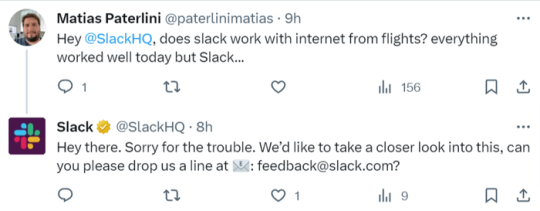
Source: X (Twitter)
Bonus: Learn more B2B Social Media Marketing Strategies to Follow
But with social listening, you can do more than just monitor mentions. You can perform hashtag tracking to see which hashtags are worth a place in your captions.
Collaborating with Influencers for Wider Reach
Social listening can help you with your influencer marketing campaigns too.
For example, through Mentionlytics Top Mentioners you can find influencers that talk about your brand or important keywords in your industry and reach out to them to forge collaborations.
Pro Tip: We recommend you choose nano-influencers who specialize in a specific niche and have higher engagement rates than celebrity influencers who might have nothing to do with your SaaS product.
Thought leaders and esteemed professionals are the best for your SaaS marketing strategy.
For example, see how Hootsuite leverages influencer marketing to tap into the audience of a popular social media marketer.
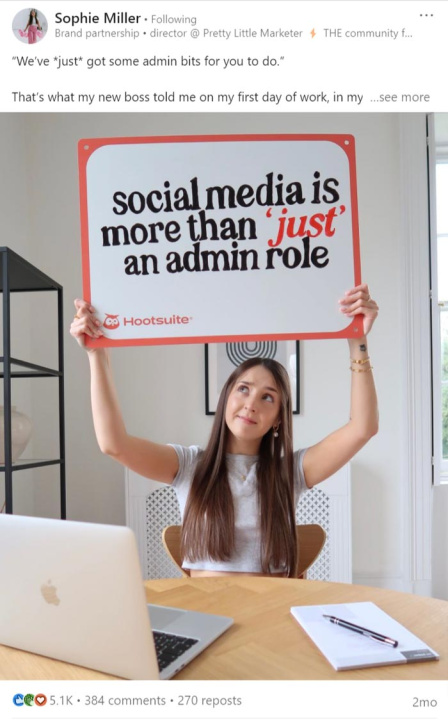
Source: LinkedIn
5. Customer-Centric Email Marketing Strategies
Customer-oriented email marketing is key to creating lasting relationships and driving engagement.
You should focus on using personalized, relevant content to foster a deeper connection with your customers and automate this process as much as you can to save time.
Personalized Email Campaigns
Email campaigns and newsletters are an integral part of your SaaS marketing strategy to catch the attention of your target customers and nurture their interest until they purchase.
Personalizing as much as you can the emails they’ll receive from your brand is of the essence. From addressing them by their first name at the beginning of each email or putting it right in the subject line to the very content of the email.
For example, you can track what they read lately on your blog and send them an email with other relevant content pieces of yours to keep them engaged with your brand.
Or you can create different newsletters based on your different buyer personas’ needs and interests and segment your newsletter recipients lists accordingly.
Email marketing is still the ultimate marketing strategy for SaaS products to keep your existing customers engaged too.
Product updates, flash sales for upsells, special offers, and new content, all can be used to keep your existing customers in the loop and spark their interest in your products again and again.
See below how Wordtune is keeping existing customers informed about new product updates.
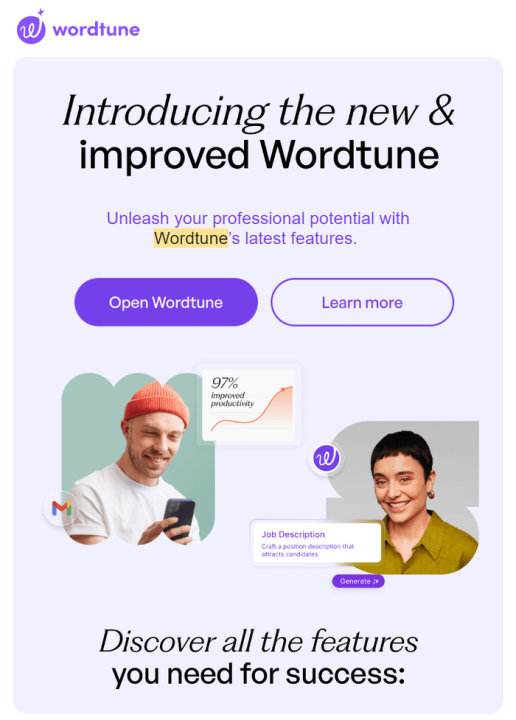
Pro Tip: Personalization will get you a long way but vivid visuals are also necessary to catch the eye of your audience and get them to read your emails until the last line.
Developing Automated Email Sequences
We can’t talk about email marketing today without referring to automated sequences that get triggered every time your prospects do a specific action. Actually, 63% of marketers said that they used automation in their email marketing efforts this year.
For example, you can create an automated email sequence of four messages nurturing the interest of website visitors who downloaded your latest white paper.
In addition, you can have automated email sequences, a.k.a drip campaigns, for any kind of action from downloading digital goodies to onboarding messages full of useful tips on how your new customers will use your platform or app.
Remember though to keep each email short and sweet, personalized to the interests of your recipients, and don’t overdo it with their frequency. You don’t want people to get bored of seeing your brand name in their inbox.
6. Partnerships and Affiliate Marketing Programs
Another effective SaaS marketing strategy example is to forge brand collaborations with other businesses that aren’t your direct competitors.
Creating Mutually Beneficial B2B Partnerships
Ideally, you can find other SaaS products that can be combined with yours as a holistic solution to your target customers’ pain points.
That way you can split the cost of an ad campaign or content creation for your mutually beneficial partnership and other expenses.
Plus, your audiences will be brought together, so you increase your brand’s visibility and engagement to a new audience and customer base, boosted by the credibility that this partnership gives you.
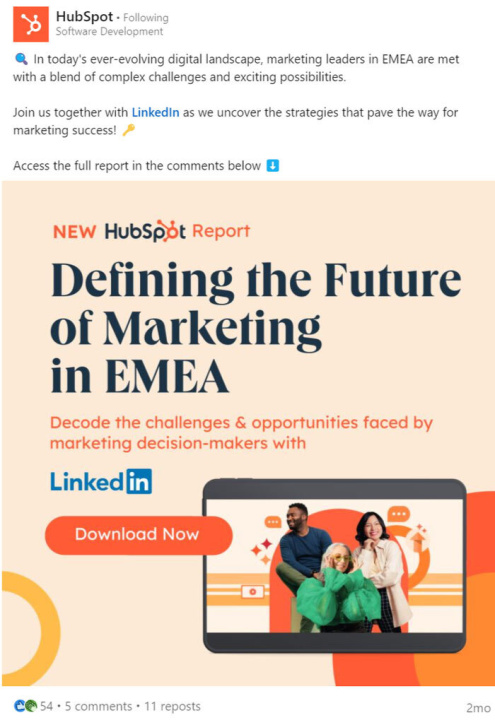
See, for example, how Hubspot partnered up with LinkedIn to boost awareness and credibility.
Source: LinkedIn
Utilizing Affiliates for Extended Market Reach
Taking brand partnerships to the next level, you can include affiliate marketing among your SaaS marketing strategies to reach a greater audience.
This strategy works like this: You become affiliated with one or more SaaS companies that have no competitive products. You get featured in their websites and every time someone visits your website or landing page connected to their website they receive a commission.
In fact, 81% of brands use affiliate programs to boost brand awareness and drive sales.
It’s a much more budget-friendly strategy than PPC. Plus, if your brand is new it looks more trustworthy and credible if it’s featured and recommended by another well-established brand in the industry.
7. Continuous Testing and Analytics for Optimization
By constantly analyzing performance data and testing different approaches, you can fine-tune your SaaS marketing, ensuring maximum efficiency and effectiveness.
Implementing A/B Testing for Marketing Elements
Philosophically speaking, marketing is all about testing. Testing different prices, different visuals, and different CTAs.
That’s what you should do in your SaaS marketing strategy as well. A/B testing will help you understand what resonates better with your target customers, and what speaks to their hearts. It’ll give you valuable data on their preferences and pain points.
Some useful tips to remember:
- Testing too many things at once makes it harder to determine which changes are making a difference. Test only one thing at a time.
- Your A/B tests will be effective, only if you have enough traffic.
- Don’t rush! Ensure the A/B tests have time to run and that you analyze the data carefully before you make any changes.
Bear those points in mind.
Analyzing Performance and Adjusting Strategies
To measure the success of your SaaS business it’s necessary to analyze your performance data to see how the above-mentioned strategies are paying off.
Now, because your SaaS marketing strategy is implemented mostly online, due to the nature of your product, most of your data will be from digital campaigns, social media, and other online channels.
So, to analyze your performance you’ll need a social media analytics tool to monitor your brand online, gather and analyze data from your campaigns, and present them to you as valuable insights, not just metrics.
For example, the Mentionlytics platform can help you keep track of all your campaigns on social media and the web and analyze your reach, engagement, sentiment, Share of Voice, and more.
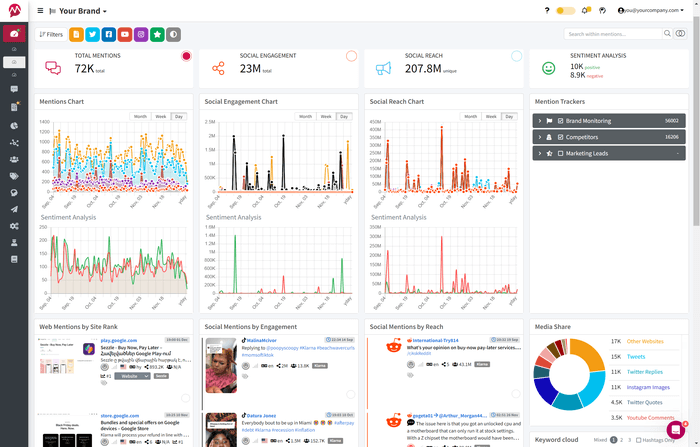
Having access to these insights can help you determine if your strategies are working well for your brand or if you need to pivot. After all, “data-driven companies are more profitable than their peers”, according to a Harvard Business Review survey.
In SaaS marketing, you can’t succeed without performance data to guide your decisions and help you adjust your strategies when needed.
Bonus: Find more Digital Marketing Tools
Conclusion
To sum up, you need to try various SaaS marketing strategies to see what fits your brand the best. In the article, we proposed the most effective ones that can’t be missing from your marketing plan, because you’re operating in a highly competitive landscape with new players entering your league every day.
The key takeaway to remember is: Start small by implementing 1-2 strategies that we analyzed above and have your performance data lead your way.
That said, you’ll need an intelligent social listening tool to help you gather that data and provide you with the gist of actionable insights to make informed decisions.
Mentionlytics can help you with that. Try it now — 14 days free, no card required!