If you worked in PR a hundred years ago, your biggest challenge was convincing journalists to print your story. Today, with digital PR, your biggest challenge is convincing the entire internet not to tell a different one.
Public relations has moved from print news to comment sections, social feeds, online communities, and, lately, insights provided by AI search engines and LLMs.
So, challenges multiplied… channels changed… but the mission has stayed the same: shape perception and build trust.
And we’re not talking about advertising here. It’s a completely different game.
With digital PR, you have far less control, and once something is published online, it can live there forever. But the upside is enormous: stronger credibility, wider reach, and long-term trust. Advertising lets you control the message, timing, channels, and budget. But the impact usually disappears the moment the campaign ends.
In this article, we explain in detail everything you need to know about digital public relations if you want to start your journey in 2026, what is digital PR, types and benefits, how it is different from traditional PR, what it has to do with content marketing, and how to adjust your strategy to the AI era.
Article Summary (TL;DR)
Digital PR is the modern version of public relations, built for a world where conversations happen across news sites, social media, podcasts, online communities, and AI search.
Instead of focusing solely on press coverage, brands can earn visibility, authority, backlinks, referral traffic, and even a stronger AI visibility through tactics such as expert commentary, community-driven PR, original research, creator partnerships, reactive PR, and brand sentiment management.
The big shift is that PR is no longer linear or tightly controlled. It is rather fast, public, measurable, and constantly evolving.
To make it work in 2026, brands need clear goals, social listening, strong story angles, the right media and creator contacts, and a system for tracking mentions, sentiment, and performance over time.
In short: digital PR is about shaping how your brand is discovered, discussed, trusted, and remembered.
Table of Contents
- What is Digital PR?
- Traditional PR vs Digital PR: What’s the Difference?
- What are the Main Types of Digital PR?
- What are the Benefits of Digital PR?
- What is the Relationship between Digital Marketing and Public Relations?
- How to Build a Digital PR Strategy in the AI Era
- How to Amplify Your Content through Digital PR?
- How to Integrate Digital Public Relations with Content Marketing?
- 3 Digital PR Examples of 2026 to Get Inspiration
- Take Your First Steps in Online PR for Free
- FAQ
What is Digital PR?
Digital PR is a strategy focused on building brand visibility, authority, and trust through online publications, media coverage, and positive brand mentions across the internet. The goal is to get your brand mentioned, referenced, and linked to by credible sources. In other words, earned visibility. In practice, digital public relations can include securing media coverage on online publications, earning backlinks from authoritative websites, collaborating with influencers or industry experts, publishing data-driven studies, or launching creative campaigns designed to attract media attention.
What press clipping once did for traditional PR, social listening does for digital PR now. Instead of collecting newspaper articles and TV mentions, brands now track online discussions, media coverage, and social conversations across thousands of digital sources.
Is link building the same as digital PR?
No, link building is just one piece of the digital marketing puzzle, with the main goal of improving SEO and increasing SERP ranking position. On the other hand, digital PR’s goals are much broader and include building brand awareness, credibility, and relationships with journalists, influencers, and online communities.
So, while link building aims to boost rankings, digital PR aims to shape perception and create long-term trust (with links being a valuable byproduct, not the only goal).
Traditional PR vs Digital PR: What’s the Difference?
Traditional PR and digital PR have the same goal, but the environment has changed. Media outlets such as newspapers, radio, and television have been displaced by digital channels, including news websites, blogs, podcasts, social media platforms, and online communities. So public relations had to undergo a transition as well.
But the real difference isn’t just where PR happens, but how fast it moves, how it’s measured, and who controls the narrative.
| Aspect | Traditional PR | Digital PR |
| Channels | Newspapers, TV, radio | News websites, blogs, social media, podcasts, and online communities |
| Speed | Slow (days to weeks) | Instant (minutes to hours) |
| Audience role | Passive consumers | Active participants (comments, shares, content creation) |
| Control | Higher control over messaging | Limited control (conversations evolve publicly) |
| Measurement | Media/press clipping, estimated reach | Real-time data, analytics, sentiment tracking |
| Core tactic | Press releases, media outreach | Content campaigns, backlinks, influencer collaborations, partnerships, and press releases in online media outlets |
| Longevity | Short-lived coverage | Long-term visibility (search + evergreen content) |
| Feedback loop | Delayed or indirect | Immediate (comments, shares, reactions, sentiment) |
| SEO impact | Minimal | Strong (backlinks, brand signals, visibility in search) |
| Crisis management | Slower response | Requires real-time monitoring and fast reactions |
With traditional PR, the process was slower, more controlled, and far more linear. A typical campaign meant drafting a press release, pitching it to a handful of journalists, and waiting to see if it would be picked up.
If the press release landed in a newspaper or made it onto TV, that was considered success. Feedback was limited, and you could get it through public opinion polling, focus groups, sales results, or “letters to the editors” (real, physical letters that readers would write and send to the editor of the story).
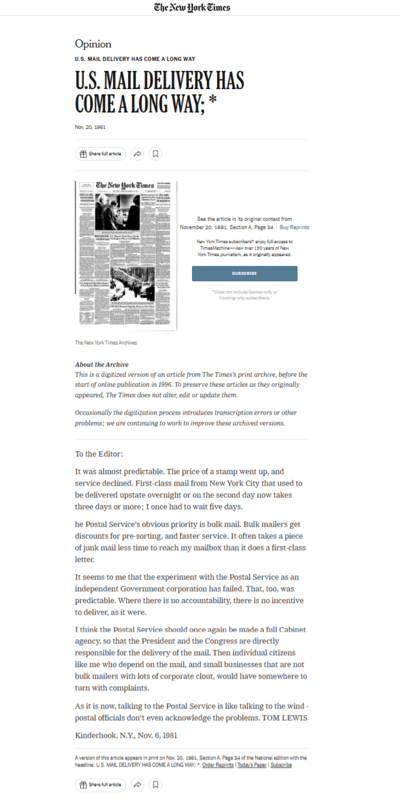
They served as a direct expression of public opinion. That was the only way the public could influence the narrative (if they were selected for publishing). For example, below you may see a letter published in The New York Times on November 20th, 1981, highlighting public frustration with the U.S. mail service.
Source: The New York Times
But let’s not forget that the editor had the right to choose whether to publish the letter, so this feedback was always interpreted subjectively. And the results? Well, the impact was really short-lived because “Yesterday’s news is tomorrow’s fish and chips paper.”
Fast forward, and we’re now in a much faster environment with far more channels than before. That’s why digital PR differs from traditional PR.
Today, feedback or opinion doesn’t wait for approval; it’s instant. The audience is no longer a quiet observer and consumer. People react, comment, share, and create their own versions of the story. What used to be a single published letter is now thousands of public reactions happening in parallel.
Look, for example, at a Ryanair incident from March 2026, about being almost seized (a plane) after refusing to pay compensation to a passenger for a flight delay.
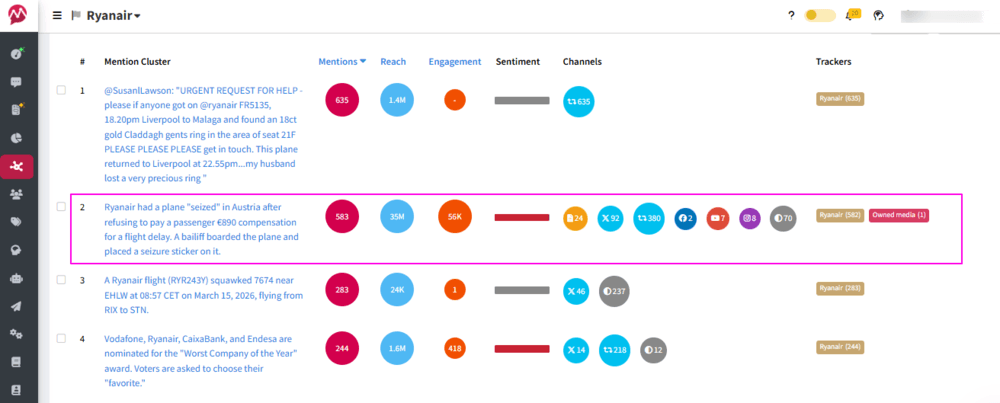
So, they had 24 web mentions, mostly from online news outlets and niche websites, but overall, they had 583 mentions on that topic, reaching 35 million people. You can see the high engagement (56K), meaning people reacted to the news, shared it, and commented on it, which caused it to explode across multiple channels.
And you can see that the flow is no longer linear. A story can start on social media, get picked up by blogs, amplified by influencers, covered by online media, and eventually appear in search results (sometimes within hours). And other times, the process can go completely the other way, starting with the news outlet and ending up on TikTok.
But that’s not the only thing that changed. Measurements have changed as well. Instead of relying on media clipping, Advertising Value Equivalent (AVE), and estimated reach, PR teams now track mentions, sentiment, engagement, backlinks, and visibility in real time. The question is no longer “Did we get coverage?” but “How far did the story travel, and how is it being perceived?”
And then, there’s control… or lack of it, to be more precise.
In traditional PR, distribution was limited, so the narrative was easier to manage. In digital public relations, once something is published, it evolves publicly, and you don’t have control over the narrative. Yes, you can influence a conversation, but not fully control it.
After all this is said, you might think that traditional PR had a longer impact, but no. Digital PR is carving news, comments, and reviews into the internet’s eternity; they will stay there forever (or as long as the platform exists, or until the creator removes them) and sporadically resurface in search results.
What are the Main Types of Digital PR?
Digital PR tactics don’t rely on a single thing but on a combination of strategic moves across multiple segments and channels that create a positive online brand image.
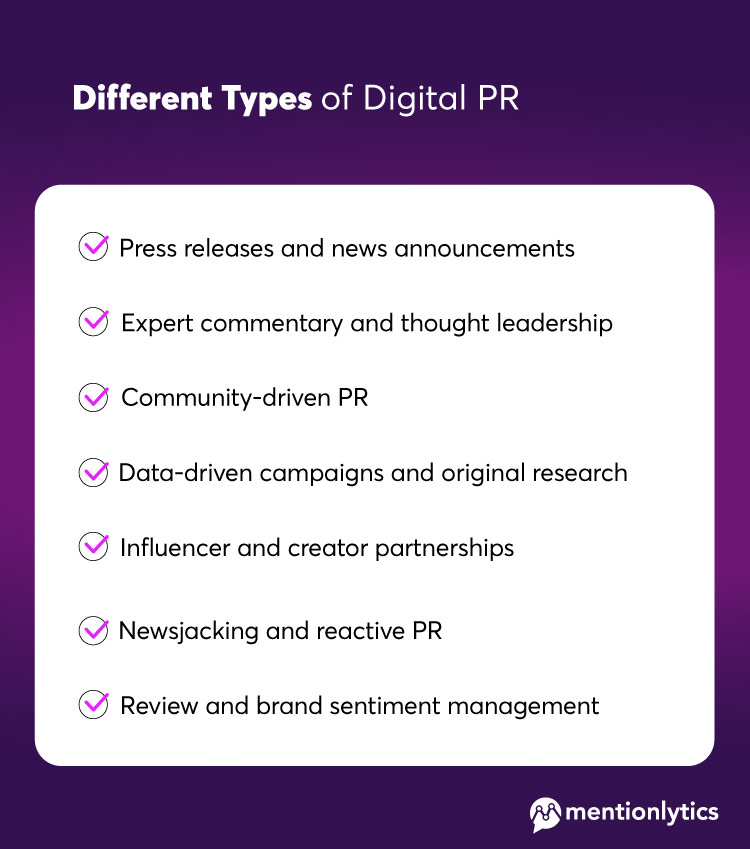
If you rely on just one of these, you’re only influencing part of the conversation. The real impact comes from combining them to keep your brand visible, credible, and consistent across all the places where people talk about it.
Press Releases and News Announcements
We can say that press releases and announcements are the remains of the old system. Press releases didn’t disappear. They just moved online and got smarter.
In traditional PR, a press release was a static document sent to journalists, hoping it would get picked up. In digital PR, it’s a searchable, linkable asset designed to live online and drive visibility beyond a single publication.
Modern press releases are:
- Optimized for search (yes, even PR cares about keywords now)
- Structured for readability (headlines, quotes, key facts)
- Enriched with links pointing back to your website or key pages
- Distributed through press release submission sites, online newswires, and directly to digital journalists
But here’s the catch (and this is where most brands get it wrong): If you’re a big brand that everyone knows, whatever the press release is about, usually it’s going to be picked up by well-known news outlets anyway. If you’re a small brand struggling with brand awareness, press releases only work when there’s actual news.
The press releases that have a chance of getting picked up (sometimes even land in well-known publications or media outlets) are tied to something bigger.
So here are a few hints what it could be:
- a market shift or something that affects more than just your company
- new data or insights
- a bold move or announcement
In other words, a press release shouldn’t just say “We did something” but instead answer the question “Why should anyone care?”
Expert Commentary and Thought Leadership
Not every PR win comes from campaigns. Sometimes it comes from a person. Your CEO, founder, and some of the managers could be magnets for brand awareness. If they hold industry knowledge, their quotes or opinion pieces can be very useful and effective.
This type of digital PR is about positioning founders, CEOs, or key team members as people who actually know what they’re talking about, and proving it publicly.
Instead of pushing company updates, they contribute:
- Quotes in media articles
- Guest posts and bylined articles
- Opinions on industry trends
- Podcast and video appearances
The logic is simple: If journalists need a comment, they won’t look for brands. Instead, they’ll look for people with something useful to say. And the more someone shows up with relevant insights, the more they get invited back.
That’s how this turns into PR:
One quote = media mention
One article = backlink
One podcast = new audience
Repeat enough times = authority
Take Neil Patel, for example. He didn’t build authority through PR campaigns, but by building his personal brand. Neil takes the smartest path by constantly:
- publishing insights
- appearing on podcasts
- creating educational content
Community-Driven PR
Community-driven PR happens in places where people already talk freely: Reddit, niche forums, Discord servers, Facebook groups, comment sections, and other online communities. The point is not to control the conversation, but to show up in it without sounding like a walking press release.
It’s basically where digital PR stops being polished and starts being real. Yes, it overlaps with community management a lot. But PR happens where people are, and on the platforms they actually use, so it naturally moved there too.
Some brands spotted the opportunity early on, like ClickUp. They have a strong community on Reddit, with 12K weekly visitors. And when they introduced their Super Agents, they published a standard press release on their website in the News section in December, 2025. But what is interesting is that they’ve chosen a different path than usual.
You can’t find their press release anywhere in the media, but they are fully covered on Instagram, YouTube, LinkedIn, and Reddit.
Speaking of Reddit, this is the perfect example of community-driven PR. What they did was create an Ask Me Anything (AMA) session on Reddit, “I’m ClickUp’s Product Manager for Super Agents! Ask Me Anything!” where they explained to the community everything about their new Super Agents.
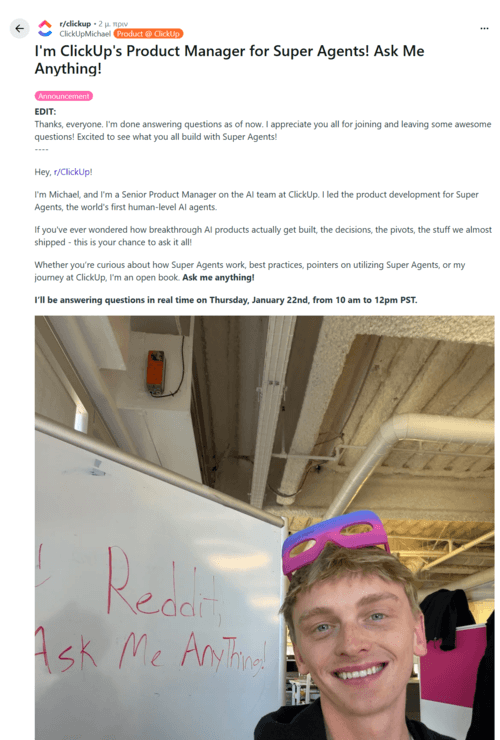
In a way, it was a press release rewritten for the community era, different wording, different tone, different newsroom.
People go to communities for honest opinions, recommendations, and real user experiences, not brand slogans. Reddit itself positions the platform as a place where conversations influence decisions, while its business materials position communities as spaces people trust to learn about products and brands.
That completely changes the role of PR. So instead of pitching journalists, brands monitor discussions, clarify issues, and sometimes just listen before saying anything. Focus has shifted from broadcasting to community-driven PR, which is highly effective.
Data-Driven Campaigns and Original Research
If you want journalists to notice you, give them something they can actually use. That is exactly why data-driven campaigns work so well in digital PR. Instead of pitching a vague opinion or another “exciting update”, brands publish original surveys, studies, reports, or trend roundups that already contain the raw material for a story.
That is the whole advantage of this format. You are not forcing a story into the media. You are handing journalists a story with numbers already attached.
Numbers travel fast… A good dataset can become a news article, a chart on social media, a newsletter mention, a podcast talking point, or a backlink from a niche publication. That is also why original research is one of the strongest formats for earning backlinks and brand mentions in digital PR.
Of course, not every spreadsheet deserves press coverage. The research has to say something people actually care about. Ideally, it should reveal a trend, confirm a shift, challenge an assumption, or put numbers behind a topic everyone is already talking about.
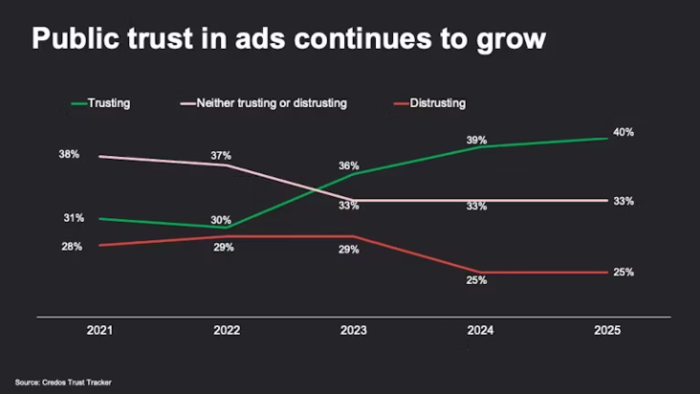
For example, below you may see a graph by Credos showing trust in advertising reached its highest point in five years, published by Marketing Week! Again, this is exactly why data-led PR works: the numbers themselves become the hook, and the brand or organization behind them becomes the source.
Source: Marketing Week
As you can see, original research does not just make your content look smart. It makes your brand quotable.
Influencer and Creator Partnerships
This type of digital PR goes far beyond paid sponsorships. Yes, brands still pay creators for visibility. But in digital public relations, the real value is not just the post itself, but the credibility around it. A useful review, a casual social mention, a creator testing the product in public, or a niche expert talking about your brand can feel far more convincing than a polished ad.
That is why creator partnerships matter.
People follow creators because they trust their taste, opinion, or expertise. That trust is exactly what brands borrow when the collab is done well. The smartest move here is usually not going after the biggest name on the social platform, but micro and nano influencers as a much better option because they have:
- tighter communities
- stronger engagement
- more specific kind of authority
Data show that 38.7% of marketers prioritize nano-influencers and 32.3% prioritize micro-influencers, noting that these creators deliver higher engagement at a fraction of the cost of macro-influencers and celebrities.
Your goal here is to find the perfect fit for your business: an influencer or creator who is already part of your niche and has a community that trusts them.
Find Your Nano-Influencer!
With Mentionlytics, you can find the perfect creator for your brand in just a few clicks!
Newsjacking and Reactive PR
If you think of speed, this is the type of digital PR you want to opt for. (Disclaimer: This is also the type of digital public relations easiest to mess up.)
Newsjacking, or reactive PR, is the practice of fitting your brand into a breaking news story with a timely, relevant angle. Usually, that means expert commentary, a fast response, or a clever piece of content that connects naturally to what is already happening.
But speed alone is not enough. Yes, you have to move fast, but you also have to make sense. A slow response misses the moment, but a forced response misses the point entirely. Reactive PR works only when the connection feels obvious, useful, or at least clever enough not to look desperate.
A great example is Böcker, the German machinery company that got huge attention after the Louvre jewel heist. Why? Because the criminals used a Böcker ladder truck in the robbery, which gave the company a real connection to the story.
Coverage of the stunt described how Böcker turned the AFP photo of its machine at the scene into a tongue-in-cheek ad campaign and quickly gained wide attention.
And that is exactly why newsjacking works. It wasn’t a random jump into the trending topic, but a real connection to the event used properly. Böcker had a reason to be there. That made the response feel timely instead of opportunistic.
So if there is one rule for reactive PR, it is this: be fast, but only when you belong in the story.
Review and Brand Sentiment Management
Here’s the big truth: Not every PR problem starts with a headline. Sometimes it starts with a one-star review, and PR professionals (like yourself) know it too well.
Review monitoring and brand sentiment management focus on tracking what people say about your brand and responding before that feedback becomes a larger perception problem. That includes review platforms, Google Business Profile, social media comments, forums, and anywhere else people leave public opinions.
Though this isn’t a flashy type of digital PR, it’s equally important because once feedback is public, it stops being just customer service. It starts shaping reputation, and your primary goal is to protect and shape it.
Remember that a negative review speaks not only to the brand but also to everyone else reading it. That is why platforms like Google let businesses reply to reviews directly and also provide ways to report reviews that violate policy. In other words, the worst thing you can do is to ignore it.
The positive side matters too. Good reviews, testimonials, and visible customer feedback act as social proof. They help people feel more confident about a brand, especially when they are hearing about it for the first time. In fact, studies show that 90% of buyers are influenced by social proof when deciding between several products.
That is why this type of digital PR works on two fronts at once:
- Reducing the damage of negative sentiment
- Strengthening the impact of positive sentiment
That is really the point of review and sentiment management: not just replying to negative comments, but understanding how those comments affect your brand image over time.
Don’t Wait Until It’s Too Late!
Mentionlytics will notify you the moment negative reviews start flooding the internet.
What are the Benefits of Digital PR?
A good digital PR strategy helps brands get discovered by new audiences, build authority over time, earn stronger backlinks, and stay visible in places where people search, including AI-generated results.
Google itself says AI Overviews are designed to help people understand information from a range of sources and link them back to the web, which makes online visibility even more valuable now.
That is why the benefits of digital public relations go way beyond just “nice exposure.” PR creates benefits that continue to work long after the original brand mention is published.
Benefit #1: Increases Your Brand Awareness
The most obvious benefit of digital PR is visibility. When your brand appears in online publications, niche blogs, podcasts, newsletters, social posts, or community discussions, it reaches people who probably would not have found it otherwise. Because that visibility is driven by earned media rather than paid placement, it typically feels more natural and authentic to the audience.
Your target audience is generally more likely to trust you if they discover your brand through a credible article, an expert quote, or a recommendation than if you interrupt them with an ad.
So a good digital public relations strategy puts your name out there and introduces your brand in a context that already feels more convincing.
Benefit #2: Builds Brand Authority and Credibility
Visibility alone is nice, but credibility is what makes it stick. When your brand keeps appearing in relevant publications, industry blogs, podcasts, or expert roundups, it sends a very clear signal: you are a legitimate player in the league. The medium lends part of its credibility to the brand, and over time, those signals begin to stack up.
That is how authority is built. Not through one lucky mention, but through consistency. Eventually, people stop seeing the brand as “someone trying to get attention” and start seeing it as a source worth paying attention to.
And yes, search engines notice that kind of pattern too.
Benefit #3: Improves SEO Through High-Quality Backlinks
This is where digital PR and SEO start flirting. Every time a credible website mentions your brand and links back to your site, that backlink can help search engines better understand your authority and relevance.
Not all links carry the same weight, though. Editorial links from reputable publications are far more valuable than random directory listings, bulk submissions, or shady link swaps.
Google is pretty clear that buying links or participating in link schemes to manipulate rankings violates its spam policies, which is exactly why naturally earned editorial backlinks are so valuable in the first place. They are hard to get, harder to fake, and much more meaningful than artificial links built just for SEO.
So, digital PR helps SEO because good coverage often comes with the kind of backlinks Google actually respects.
Benefit #4: Increases Brand Visibility in AI Search
AI search engines do not invent answers out of thin air. They pull from sources across the web, summarize them, and learn from them.
You can have a good SEO reputation, well-structured content, but if your brand has never been mentioned in the industry circles or if no one from Reddit or other forum communities has ever mentioned you, there’s very little chance of you getting noticed by LLMs or AI search engines.
At the beginning, for example, having a Wikipedia page about your brand would help you rank your website on ChatGPT, since it relied a lot on Wikipedia back then. That happened because ChatGPT was fed by information from Wikipedia initially, but the second reason is that you can not just show up on Wiki… you need to be notable.
That principle hasn’t changed; it just expanded sources. That means digital PR now has a new benefit: it can help brands improve their AI visibility.
If your brand is consistently mentioned in trusted articles, quoted in relevant coverage, and discussed across authoritative sources and niche communities, it becomes much easier for AI systems to recognize it as part of the conversation.
Benefit #5: Drives Referral Traffic
Not all traffic comes from rankings. Sometimes people click because they just read about your brand in the right place, at the right moment, in the right context. That is referral traffic, and it can be incredibly valuable because the audience is already ready to buy.
The audience is not landing on your site cold. Instead, they are arriving after reading an article, review, expert quote, or mention that made them curious enough to click. That is why digital PR traffic often feels different from random traffic spikes.
It is usually more relevant, more intentional, and more likely to come from people already interested in the topic your brand is connected to. Which means digital public relations is also about bringing the right people to your website in the first place.
What is the Relationship Between Digital Marketing and Public Relations?
The connection between digital marketing and public relations is pretty close, though they used to look very different: they were two separate departments with two distinct functions. PR handled brand reputation, media, and public perception. Digital marketing focused on traffic, channels, clicks, and conversions.
But today, that line is much blurrier because the channels are mixed.
It was easier ten years ago to make a clear border between PR and digital marketing, but when your audience stops reading physical newspapers, and when they change TV channels and radio stations to chat with LLMs and listen to podcasts, it’s obvious that PR had to change to be able to reach the target audience.
Digital public relations borrows the storytelling, positioning, and relationship-building from PR, but uses digital marketing’s distribution channels to make those stories travel further. In other words, PR helps shape the message, while digital marketing helps amplify it.
That is why the two work better together than apart.
A strong digital PR campaign can give marketing better assets to distribute: media mentions, expert quotes, podcast appearances, original research, and brand stories that feel more credible than a standard ad. At the same time, digital marketing channels help PR content keep working after publication. For example, through search, social media, emailing software for campaigns, and content repurposing.
The overlap becomes even more obvious when you look at outcomes.
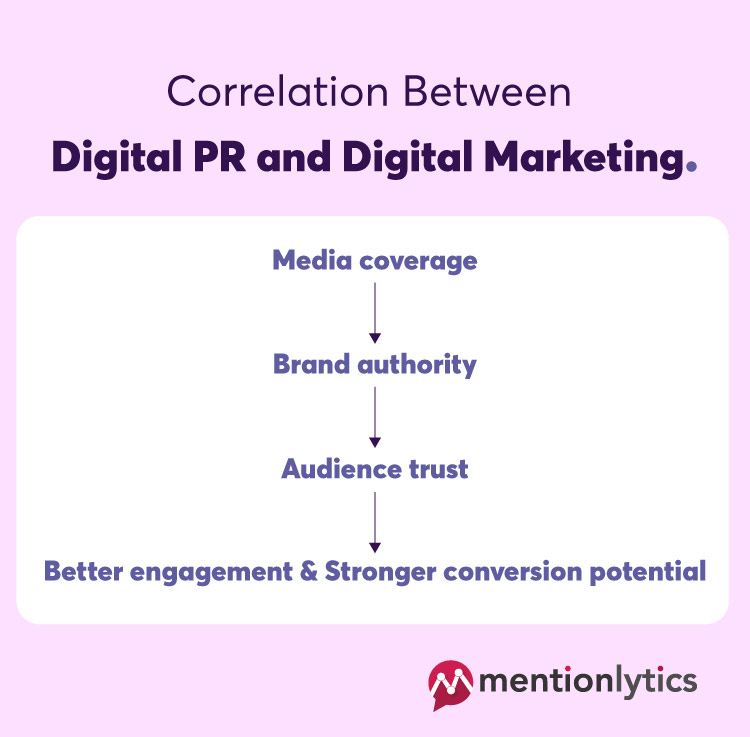
A media mention builds authority → That authority improves trust. → Trust improves click-throughs, engagement, and conversions. → And if the mention includes a link, it can also help search engines understand your site’s relevance.
How to Build a Digital PR Strategy in the AI Era
Brand visibility is no longer limited to search results, news coverage, and social feeds. It also affects whether your brand gets surfaced in AI-generated answers, summaries, and recommendations.
So if your brand is not showing up in the right places, in the right context, and with enough consistency, you are missing out on future discoverability. That is why a digital PR strategy today needs to be intentional, measurable, and much more connected to search, social listening, and AI visibility than it used to be.
Step #1: Define Your (or Your Client’s) Goals and KPIs
A digital PR strategy without goals is just random outreach with a nicer spreadsheet. So, before you pitch anyone, decide what success actually looks like.
Are you trying to earn more backlinks? Increase brand mentions? Improve share of voice? Get quoted in industry media? Or strengthen your visibility in AI search?
Each goal needs a PR metric attached to it, otherwise you are just collecting activity, with probably no results.
So here are some examples of measurable goals you can set:
| Goal | KPI |
| Backlinks | Number and quality of earned links |
| Brand mentions | Volume of mentions across channels |
| Share of Voice | How often your brand is mentioned compared to competitors |
| Authority | Placements in relevant publications and expert roundups |
| Sentiment | Increased positive sentiment |
| AI visibility | Whether your brand appears more often in the kinds of sources that LLMs and AI search engines are likely to summarize or cite |
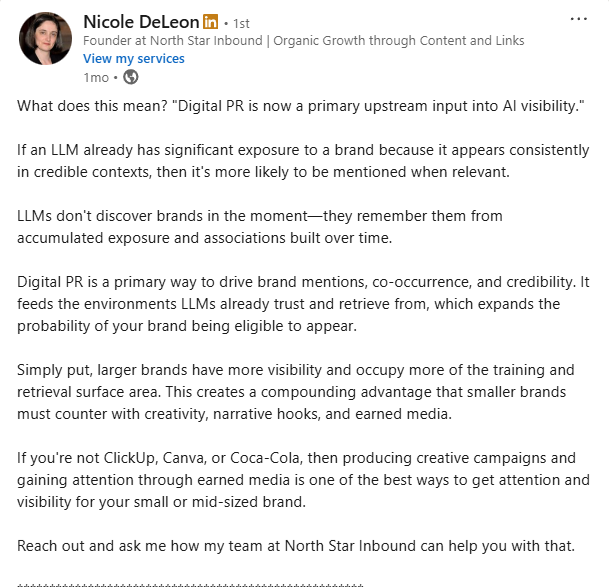
And yes, AI visibility deserves to be here as a goal in its own right because digital public relations is becoming an upstream input into AI visibility. Brands that appear consistently in credible contexts are more likely to be recognized and mentioned by AI.
Step #2: Gather Data on Where Your Audience Searches & Consumes Content
You cannot build a smart PR strategy if you do not know where your audience actually gets information from.
That means looking beyond the old “which blogs should we pitch?” question and asking something more useful: where do these people search, read, watch, compare, complain, and ask for recommendations?
Because the answer is no longer just Google.
Yes, Google still dominates global search, with roughly 90% market share worldwide as of February 2026. But the way people use search is changing, and Google itself is now layering AI Overviews and AI Mode directly into the search experience.
So, your target audience might discover your brand through:
- classic search results (SERP)
- AI Overviews
- AI Mode
- Reddit threads
- YouTube reviews
- newsletters
- podcasts
- social media platforms
- LinkedIn posts
- niche communities
And it’s impossible to track everything on foot. A social listening tool, such as Mentionlytics, is very useful in practice. By tracking mentions of your industry keywords with Mentionlytics, you can start to see which channels generate the most discussion and what people are actually saying there. That gives you a much better idea of where your digital PR efforts should show up first.
Step #3: Use Social Listening to Spot Trends and Opportunities
Treat social listening as the foundation for all your PR activities. With Mentionlytics, you can monitor conversations and easily spot trending topics or hashtags that are most used in your niche. It’s a great way to identify stories worth jumping on before they peak, get ideas for your new brand collab, or just notice what journalists write about.
Without social listening, it’s unlikely you’ll be able to spot a newsjacking opportunity or do reactive PR.
Now, as for the not-so-glamorous PR part, social listening and brand monitoring can point out what is going in the wrong direction.
For example, if people keep raising the same complaints over and over again, that’s not a customer service issue anymore; that’s a reputation signal. If you catch it before it grows out of proportion, you can change the narrative. Otherwise, you’ll be stuck with a bad reputation for a long time, and you’ll have to double your efforts just to make it even.
Step #4: Research and Build Your Media and Influencer List
Your digital PR strategy needs a curated list of the right people:
- journalists who actually cover your topic
- bloggers writing for your niche
- podcasters with the right audience
- content creators who already influence the kind of people you want to reach
And no, the “right one” is not always the one with the biggest audience. You need to pay attention to relevance, engagement, and how this journalist, blogger, or podcaster fits your brand voice. Look at what they have covered recently. Check their tone. See which angles they respond to. Find out whether they prefer expert commentary, data stories, trend pieces, or case studies. This makes your outreach much more likely to land.
Mentionlytics can speed this process up too. Features like Top Mentioners help identify the voices already shaping conversations in your niche, which is much more useful than guessing who is influential based on follower count alone.
Step #5: Develop Pitchable Story Angles and Content Assets
You have a product, an announcement, your founder is excited, but… you don’t have a story. And stories are what catch eyes and create a response.
So, instead of asking yourself, “What do we want to say?” perhaps the right questions are:
- What is changing in the market?
- What are people worrying about?
- What assumptions can we challenge?
But the strongest digital public relations assets usually include at least one of these:
- original research
- a clear data point
- an expert opinion
- a timely hook tied to a broader conversation
Step #6: Use AI to Streamline Outreach and Personalization
AI can help a lot here, but it should not be the one making the final call. PR teams can benefit from using AI to:
- draft press releases faster
- summarize a journalist’s recent coverage
- suggest tailored pitch angles
- personalize outreach at scale
- identify patterns in what has worked before
So, AI can help you with the process, but it can not replace the human relationship that you build over time with journalists or creators, nor can it replace editorial judgment, because how people perceive news might not have anything to do with logic.
Step #7: Monitor Brand Mentions and Conversations Continuously
Social listening is not something you set up once and admire like a new lamp. It should run in the background at all times to catch brand mentions, track sentiment shifts, and surface new PR opportunities as they emerge.
Mentionlytics can give you a clear picture of whether:
- brand sentiment is improving
- journalists or creators picking up the story
- people reacting positively, negatively, or somewhere in the middle
- a small issue starting to grow into a PR crisis
If momentum is building, you can double down; if mentions are flat, you can adjust your strategy; if sentiment starts to drop, you can investigate before a full PR crisis erupts.
Step #8: Measure, Learn, and Refine Your Approach
This is the part that separates PR activity from PR performance. Once the campaign runs, go back and measure what actually happened:
- How many placements did you secure?
- How many backlinks did you earn?
- How much referral traffic came in?
- Did brand mentions increase?
- Did sentiment shift?
- Did the share of voice improve?
- Did the campaign help strengthen visibility in the kinds of sources AI systems pull from?
Then look at what worked and what did not.
Maybe one angle got picked up everywhere while another died in inboxes. Maybe a podcast mention drove more qualified traffic than a big publication. Or maybe sentiment improved, but backlinks did not. That is exactly the kind of learning that sharpens the next campaign.
And if you need to prove results to clients or stakeholders, Mentionlytics has a solution for that as well. You can present your results through:
- Shareable, customizable reports, where your client or stakeholder can see the metrics influenced by the campaign.
- Custom dashboards that can be embedded in a CRM, so that a client has a real-time insight into what’s going on with the campaign.
- Metrics like Earned Media Value (EMV), where you can put an estimated price on earned mentions gained from a press release or PR campaign, and provide an estimation on how much it would cost if your client had to pay for all these mentions.
Put a Number to Your PR Efforts
Mentionlytics helps you present your results in a language every client understands💲💲💲
How to Amplify Your Content through Digital PR?
One of the smartest things about digital PR is that it does not always require brand-new content. Sometimes the best move is to take something you already have and make it travel further.
Not everything is about SEO. Sometimes content has value even if it doesn’t rank. It may be picked up, mentioned, linked to, reposted, or discussed, and you want that kind of content.
Here are four important things to remember:
- Strong blog posts can become an expert pitch.
- An internal dataset can become a media story.
- A research report can turn into five smaller angles for niche publications.
- An infographic can become a visual asset that journalists embed or creators share.
In other words, you create once, and distribute with intent! That’s where digital PR changes the game. It stops content from living in one place only and turns it into something that can move across channels.
How to Integrate Digital Public Relations with Content Marketing?
Here’s what’s happening: A blog post, research report, infographic, expert article, or case study can sit on your website, waiting for traffic. Or it can be pushed further through media outreach, creator collaborations, community discussions, and strategic brand mentions.
The moment you opt for the second option, you’re turning the existing asset into digital PR content.
If you want digital PR and content marketing to work together, here are a few practical ways to do it:
- Create content with PR potential in mind: Keywords are just a piece of the puzzle, don’t create the whole world just around them. Create some assets journalists, creators, and communities might actually want to reference, like original research, expert commentary, bold opinions, or useful visual explainers.
- Turn one content asset into multiple PR angles: Reuse your article whenever possible. A single report can be a media pitch, a guest article, a LinkedIn post, a short video, a podcast talking point, or a subreddit thread. Same content, different packaging.
- Use content as proof inside your pitches: Instead of saying “our client is an expert”, send the article, report, or dataset that proves it. Content gives your outreach something solid to stand on.
- Build campaigns around flagship assets: If you have a strong report, survey, or infographic, you don’t just publish it and move on. Build a mini-campaign around it with social media PR activities, newsletter placement, and outreach.
- Repurpose top-performing content into earned media opportunities: If a blog post performs well, that is already a signal. It may have the potential to become an expert quote or a story for niche media.
- Use PR feedback to guide future content: If journalists keep asking the same questions, or if one angle gets picked up more than others, that means the audience considers that interesting, and that is great input for your next content piece.
- Watch trending topics and seasonal hooks: Content and PR should not run on two separate timelines. If your content team knows what trends, events, or discussions are coming, they can create assets PR can use at exactly the right moment.
- Track which content earns mentions, links, and discussion: Not every content piece will be a hit, and that’s okay. Some pieces attract backlinks, some spark conversations, and some quietly collect dust. Your goal is just to recognize the capacities of each, and you can use PR tools for that.
The big idea here: to make content that PR can use to spark conversation online and boost your reputation.
3 Digital PR Examples of 2026 to Get Inspiration
Now, here are three examples that use different PR hooks: emotion, cultural icon status, and product-led storytelling.
Jacquemus First-Ever Brand Ambassador
A famous fashion brand Jacquemus was founded in 2009 by Simon Porte Jacquemus when he was just 19. The brand is widely celebrated for its “marketing genius” and its ability to go viral through social media-focused storytelling.
Now, in January 2026, after Simon Porte’s brand became a favorite among celebrities worldwide, including Beyoncé, Dua Lipa, Rihanna, Kylie Jenner, and Kendall Jenner, he decided to twist things and announce the brand’s first-ever brand ambassador: his grandmother, Liline Jacquemus.
The story, of course, was covered by Vogue, but the most important effect of this move was the emotion it evoked in people, even those who were not fans of the brand. It’s a unique idea that screams “human”, that has roots and wisdom.
View this post on Instagram
Adidas Superstar Sneakers Back On Track
Adidas does not need much introduction, but the Superstar does deserve a reminder. First launched in 1969 as a basketball shoe, it went on to become one of those rare sneakers that moved far beyond sport and into music, streetwear, and pop culture.
Now, in early 2026, Adidas decided to bring that legacy back into focus with a new Superstar campaign fronted by names like Samuel L. Jackson, Kendall Jenner, JENNIE, Lamine Yamal, and James Harden. But this was clearly not just another sneaker push. It was built as a cultural moment, with large-scale activations and a cast designed to remind people that Superstar is an icon.
What makes this a strong digital PR example is that Adidas did not sell the shoe through features. It sold the status, the memory, and the cultural weight around it.
View this post on Instagram
Heinz Turned a Ketchup Problem Into a Global PR Story
In January 2026, Heinz launched The Heinz Dipper, a fry box with a built-in ketchup compartment, and rolled it out across 11 countries. It is a small packaging tweak, but that is exactly what made it so effective. The idea was simple, visual, easy to understand, and highly shareable.
Instead of pushing a big brand message, Heinz turned a familiar eating habit into a story people could immediately relate to. It is a great example of how a very practical idea can still generate global attention when it is packaged the right way.
Take Your First Steps in Online PR for Free
If you want to start building a smarter digital PR strategy without jumping straight into expensive enterprise tools, Mentionlytics is a strong place to begin. It can help you find the right opportunities and easily prove your results.
Find the answers to the right questions with Mentionlytics’ 14-day free trial. Test ideas, scan channels to see complete media coverage, find backlink opportunities, mentions, and those journalists and creators that fit your brand voice.
FAQ
Is online public relations part of digital marketing?
Yes, online public relations is considered part of digital marketing because it uses online channels to build visibility, trust, and brand awareness. At the same time, it still keeps its PR roots, since the goal is not just promotion, but shaping reputation and public perception.
How effective is digital PR vs traditional PR in online awareness?
For online awareness, digital PR is usually more effective because it works across websites, social media, communities, podcasts, and search engines. Traditional PR can still build credibility, but digital PR gives brands faster reach, measurable results, and content that stays discoverable online.
What is digital PR in SEO?
In SEO, digital PR is the practice of earning backlinks, brand mentions, and media coverage that help improve a website’s authority and visibility in search results. It supports SEO by generating the kind of editorial links and signals search engines value most.
Why digital PR is important?
Digital PR is important because it helps brands build awareness, credibility, and trust in the places where people actually search, read, and talk. It also supports SEO, referral traffic, reputation management, and even visibility in AI-powered search experiences.
Is there a difference between public relations and digital communications?
Yes, public relations focuses on managing reputation and relationships with the public, while digital communications is a broader term covering all online communication, including email, social media, websites, and content. Digital PR sits somewhere in between, combining reputation-building with digital channels.
How does digital PR complement traditional media outreach?
Digital PR goes hand in hand with traditional media outreach by extending PR efforts beyond print, TV, and radio into online publications, social platforms, podcasts, forums, and search engines. In practice, it helps brands turn one story into wider and longer-lasting visibility.
How can startups achieve quick results in digital PR?
Startups can get faster results by focusing on strong story angles, niche publications, expert commentary, community-driven PR, and founder visibility. Instead of trying to be everywhere, it is usually smarter to target a few relevant channels where the right audience is already paying attention.